Whiskey, Sugar, Bitters
Last time, we started our exploration of cocktails with a brief historical overview and a quick look at some base spirits and liqueurs. It’s finally time to start mixing. In this part, we will start with the components of a cocktail, and dissect an all-time classic.
The primary ingredient of a cocktail is usually the base distilled spirit. Indeed, Embury specifies that cocktails, with a few exceptions, must have at least 75% of the base spirit. Although the modern accepted definition is not as strict, most cocktails still have a base spirit which can sometimes be replaced by a non-distilled spirit like wine, often fortified (as in vermouth) or beer, which are then modified by a modifier. Embury beautifully describes the modifier adding “that elusive je ne sais quoi which makes the cocktail a smooth, fragrant, inspirational delight and not a mere drink of gin or whiskey”.
If a cocktail just has two ingredients, a base spirit and a modifier (usually a liqueur), the resulting cocktail is called a duo cocktail. An example in this category would be Black Velvet, a 1:1 mixture of sparkling wine (originally champagne) and stout beer (like Guinness). It was created on the occasion of Prince Albert’s death in the Brook’s Club in London, by adding dark stout to champagne as a symbol of mourning. In that sense, the stout acts as the modifier while the champagne is the base spirit.
Other duo cocktails include the Black Russian (a drink made in Belgium to honour an American diplomat), consisting of vodka (a typical Russian spirit) and a coffee liqueur; Stinger, a mixture of brandy and white crème de menthe; and Godfather, consisting of Scotch whiskey and amaretto. Apart from the ones mentioned above, other main category of two ingredient drinks use a base alcohol and a non-alcoholic mixer, resulting in the familiar highball drinks like rum and coke and gin and tonic. However, they are usually considered separately as highballs and are not considered as duo cocktails.

At its most basic, stripped-down essence, these two ingredients are enough to make a cocktail. However, a third type of ingredient is often added, which Embury describes as “the special flavouring agent or the coloring agent”. something which I like to call as a ‘balancer’ to balance out the drink. Since both the modifier and the balancer help in the transforming the base spirit into a cohesive cocktail, it can be argued that they can be clubbed under one umbrella, thus defining a cocktail as a spirit whose flavours are modified by another ingredient.
However, it is best to consider the balancer and modifier as two separate components. This distinction stems from the taste and flavours of the cocktail. We will see that often, at its most basic level, it is easy to characterize the flavours of the cocktail as a trio instead of a duo. It is important to note that a modifier of one cocktail can sometimes be used as the balancer in another, and vice versa, although the balancers are usually the sweeter liqueurs or syrups which are classically not considered modifiers. This stems from the original Embury classification, whose Spartan definition of cocktails excluded the usually sweeter liqueurs from being included as a modifier in a cocktail.
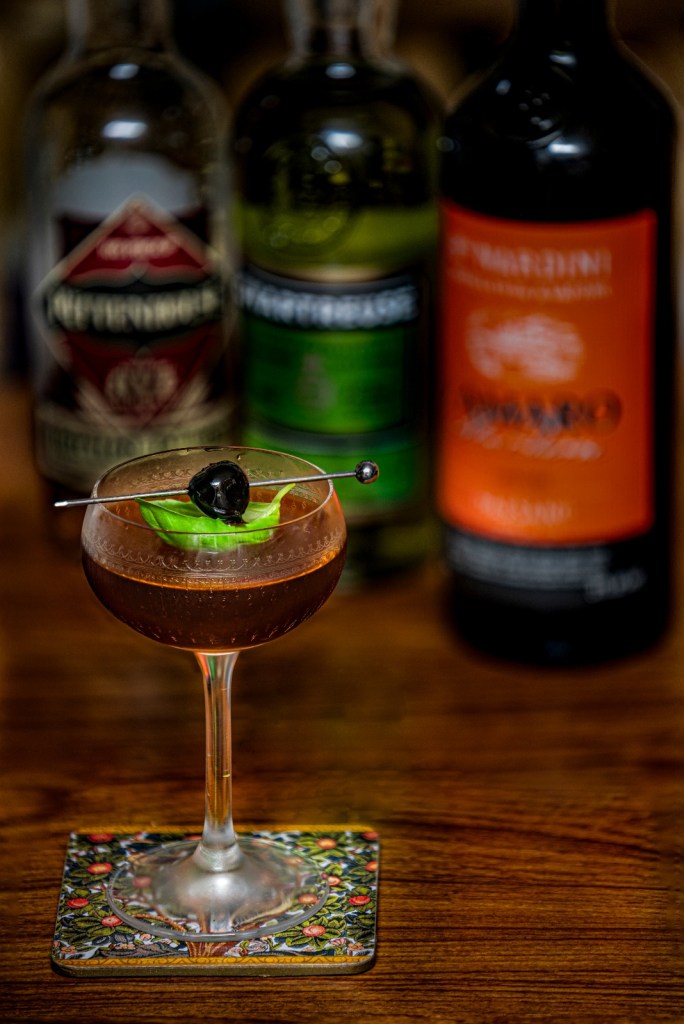
However, while the foundations of Embury’s logic remains true, the recipes of drinks depend on the palates of the drinkers, and it is not unusual to find recipes (both modern and classical) where liqueurs are used as modifiers, or indeed just used large enough amounts to run roughshod over Embury’s carefully considered ratios. We can delve further into the structure of a cocktail and its components by considering one of the biggest stalwarts of the cocktail compendium, the Old Fashioned, the base spirit of which is whiskey.
Whiskey is probably one of the most diverse category of spirits. It is a distilled beverage made from fermented grains, typically aged in wooden (usually oak) casks. The type of the grain, the fermentation and distillation times, and the aging environment (including the nature of the casks, the time spent in them, the weather of the area, and even the position of the casks in a warehouse) all affect the flavour of the final product, resulting in a staggering breadth of flavours. The two main types include the Scotch and Irish whiskeys and the American bourbon whiskey.
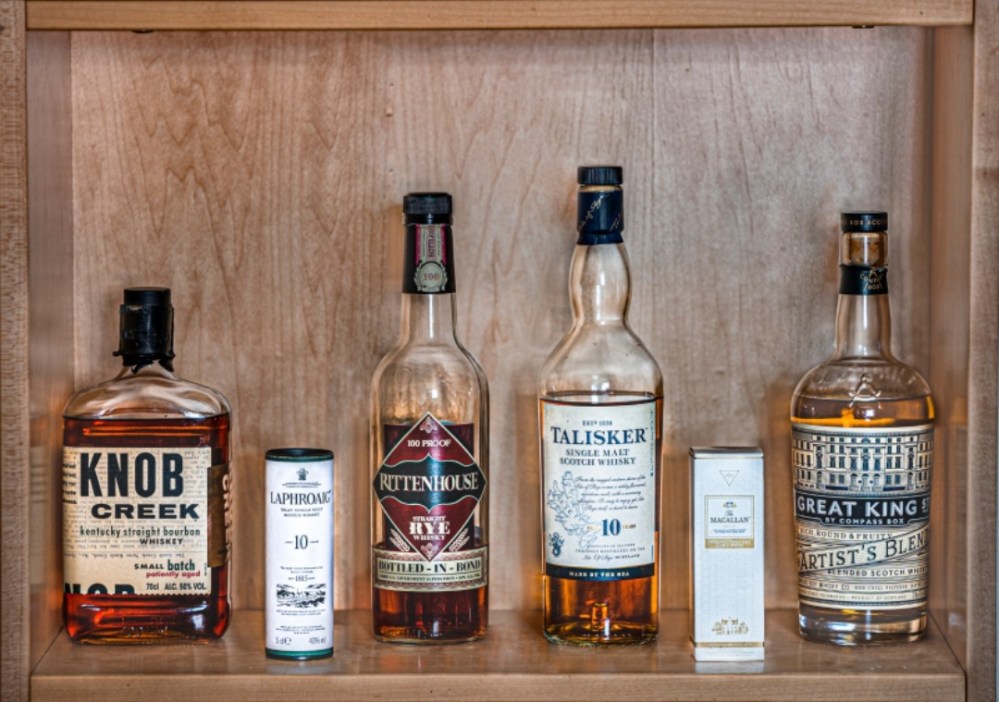
Both Scotch and Irish whiskeys are made from barley (malted barley in case of malt whiskeys, or unmalted barley in case of grain whiskey) and are then aged in used oak barrels. Scotch whiskeys typically possess the widest spectra of possible flavours, ranging from floral to nutty to fruity to smoky and medicinal. Irish whiskeys are often characterized by a relatively smoother taste (as they are often triple distilled as opposed to most Scotch, which is double distilled) and a buttery shortbread note.
Bourbon is an American whiskey and made with corn as the dominant grain and unlike the Scotch and Irish whiskeys, are aged in new oak barrels. Another whiskey variant is the rye whiskey, which uses rye as the primary grain base. Usually, bourbon and rye better intermingle with and stands up to the various modifiers, and their (usually) smaller window of possible flavours lends themselves to cocktails better than a good Scotch, which can either lose its subtlety, or else overpower everything as in case of some smoky Scotches. The use of new oak in Bourbon results in strong notes of caramel, vanilla and wood spice, while rye is often characterized by a spicy and licorice-like finish.

In an old-fashioned, the whiskey (usually bourbon or rye) forms the base spirit, bitters act as the modifier, and simple syrup (sugar syrup or muddled sugar) acts as the balancer. Bitters originally started their life as medicinal tinctures and are usually characterized by a much higher alcohol strength (arguably the most famous of all bitters, Angostura, clocks at 44.7%) and usually unpalatable bitterness which necessitates their use in drops and dashes.
Indeed, Angostura bitters are exempt in alcohol duty despite their high alcohol content as they are considered unpotable, although that has not stopped adventurous mixologists from coming up with recipes like the Trinidad Sour and A Moment of silence, which uses anything between 15 to 45 ml of bitters. Angostura is perhaps the most famous of all bitters- originally produces in the Venezuelan town of Angostura as a tonic, its production formula has remained a closely guarded secret and is now made in Trinidad and Tobago. They’re a key ingredient in many cocktails, and has a bitter and spicy taste, with flavours of clove and cinnamon.
Another classic example of bitters is Peychaud’s, often referred to as Creole-style bitters, which retains the spiciness of angostura with an additional aniseed-mint aroma. Along with these two stalwarts, bitters of every conceivable flavour are available- orange bitters are probably the third most commonly used, but a specialist cocktail joint might have bitters ranging from grapefruit to chocolate and celery.
Next time, we will turn our attention to yet another classic cocktail, probably the most famous of all cocktails, not least due to a certain secret service agent.


 The Gourmet Glutton