Variations on an Old-Fashioned
Last time, we talked about the multiple variations spawned by the basic martini formula. Similar to the martini, the old-fashioned has also given rise to number of variation and eponymous drinks.
The drink most similar to the old-fashioned is the Sazerac, the official cocktail of New Orleans; it is an important cocktail in its own right and some considers it to be one of the oldest American cocktails. It was originally made with cognac, with rye whiskey being substituted when cognac became difficult to obtain because of tariffs and import restrictions.
A mixture of rye whiskey (or bourbon or cognac), Peychaud’s bitters, and sugar, the defining feature of Sazerac is its method of preparation- an old-fashioned glass is rinsed with absinthe (or a similar anise-flavoured liquor), and a second glass is used to mix the other ingredients, stirred with ice, and strained in the absinthe-washed glass. As with the martini, most upscale cocktail bars serve a large number of cocktails modelled on the old-fashioned as house cocktails, often as a way to showcase innovative combinations of flavour in a minimalist recipe.

Such variations can be relatively simple, like the smoking rosemary old fashioned of the 41 Ocean bar in Santa Monica, which is a simple old-fashioned infused with the smoke from a burning rosemary and the Tamarind old-fashioned of Grey Ghost at Detroit, a combination of bourbon, tamarind demerara syrup, grapefruit oil, and roasted chicory and Angostura bitters, to more baffling-sounding recipes like the Orange Creamsicle old-fashioned of Boston Shaker of New York City- it used a combination of bourbon, Japanese whiskey, an orange whey cordial (a mixture comprising orange juice, whey liquid, sugar, vanilla extract, and makrut lime leaf) and tiki bitters.
The various alcohol and/or sour-type modifiers are often the starting points of experimentation when it comes to developing new drinks, and often the sweetener is assumed to be simple syrup- but as the tamarind and the orange creamsicle old-fashioned shows, that need not be the case. Depending on the flavour profile of the drink in mind, one can use a large variety of infused and spiced syrups as the sweet balancer in cocktails.
The almond flavoured orgeat syrup, an important ingredient in many tiki-type drinks (something which we will discuss later), and the deep red grenadine, originally made with a pomegranate reduction are common examples of flavoured syrups which are common ingredients in many traditional cocktails. Indeed, one can also swap a sugar-based sweetener with other sweetening agents, like various types of honey, agave/maple syrup or even date palm jaggery or nolen gur, a quintessential flavour of the Bengali winter.
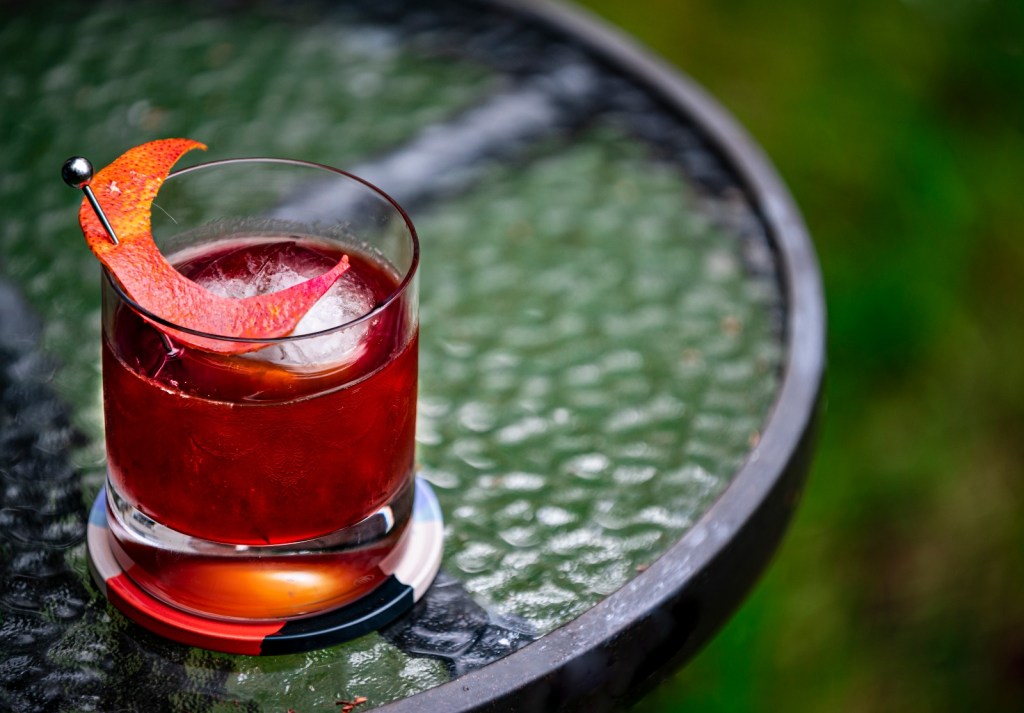
Another variation involves the use of infused alcohols, like the brown butter old fashioned, which used a brown butter washed bourbon, crown sugar syrup, and Angostura bitters; and the Bacon old-fashioned, which used a bacon infused bourbon, coffee pecan bitters, and maple syrup. The base alcohol can also be substituted, as in the Navy Strength old-fashioned of Queen Mary Tavern of Chicago-a gin and rum old-fashioned with Smith and Cross Jamaican rum, Hayman’s Royal Dock gin, demerara syrup, Angostura bitters, and a dash of saline solution; or the Not Your Dad’s Old Fashioned at Openaire in Los Angeles, a concoction of mezcal, St.Germain liqueur, dry chile honey, and orange and lemon bitters.
Cocktails can also have multiple examples of base spirits- a particularly famous classic example is Vieux Carre, which uses a 1:1 mixture of Bourbon/Rye whiskey and Cognac as the base, with sweet vermouth as the modifier a mixture of Benedictine and both Angostura and Peychaud’s bitters as the balancer (equal parts whiskey, cognac, sweet vermouth, spoonful of Benedictine, and dashes of bitters). The possibilities are truly endless- a Google search of modern old fashioned will result in thousands of similar recipes, and can provide an enterprising Indian bartender with inspiration to create recipes influenced by a symphony of Indian flavours.
Although we have previously spoken about the base liquor of a cocktail being the primary ingredient, the few examples in the previous paragraph have shown that the ratios of the ingredients can vary substantially from the at least three-fourth of a base spirit as advocated by Embury. The classic example of a cocktail using a reduced amount of base spirit (and an increased amount of modifier and balancer; probably the diametrical opposite of an old-fashioned, where the whiskey makes up probably more that 95% of the cocktail) is Negroni, usually built with equal parts of gin, sweet vermouth, and campari.

As with the various swaps described above, various ingredients of the Negroni can also be swapped around to give rise to a large number of Negroni family of cocktails- a classic example is the Boulevardier, with a 3:2:2 ratio of bourbon to red vermouth to Campari. Negroni (and similar cocktails) are probably a bartender’s dream- a simple ratio, small number of ingredients, and can be whipped up without much faff.
While the previous paragraphs outline the basis of development of an ever-increasing number of cocktails based on swaps of various ingredients, modern mixologists often develop novel recipes with the ingredients to evoke memories of a particular place, or a specific setting, or even memories of a person. Even the home mixologist can be hit by such moments of inspiration.
One of the most unconventional aromatic cocktails I have created is a mixture of fino sherry and sake, and Talisker whiskey, with a splash of saline water and colatura di alici, an anchovy sauce from Italy. I call this The Old Sailor and The Sea- too often sea inspired cocktails evoke a picture of beach parties and tiki drinks with exotic parties and decorations; however, the sea has a different aspect too- one that is uncompromising, wild, rugged, and often tempestuous.

I decided to highlight the rugged aspect of the sea- the savoriness of the sherry, accentuated with the intense coastal briny peaty nature of Talisker, and balanced by the sake. The drink is finished by a touch of saline solution and a dash of colatura de alici, a homage to sea bounties of the salt and the fishes and to the toiling souls who bring us such treasure.
Another of my ‘setting-inspired’ cocktails is called Bon Vivant (which refers to a person who enjoys a sociable, luxurious lifestyle). It uses a Perique liqueur made from fermented tobacco, and invokes a feeling of aristocratic decadence- one of leather armchairs in a wood-panelled and gilded library, with bon vivants holding their smoking pipes in a dilettante-like pursuit of arts. To that effect, I chose a smoky, but clean base of mezcal, with sweet vermouth as the modifier, and the Perique and a very subtle yet complex spicy Pierre Ferrand curaçao as the balancer.
As discussed before, the primary modifier apart from aromatic types are fruit juices, which are often described as modifiers of the sour types. Sour cocktails are probably more numerous than cocktails of aromatic types, and are often more approachable as they are less spiritous in nature. In the next parts, we will dissect at the anatomy of a sour cocktail in some detail and look at some of the classic and modern examples.


 The Gourmet Glutton