Tropical Tipsy
Last time, we explored two sour-type cocktails in Embury’s list of six basic drinks, with a detailed look at brandies, before concluding with a brief mention of the third sour cocktail in that list, the daiquiri. In the present article, we will spend some more time on the daiquiri, delving into the wonderful yet maddeningly chaotic world of rum.
Daiquiri is a traditional rum sour, whose main ingredients are rum, citrus (usually lime) juice, and sugar. As with many other rum cocktails, daiquiri was invented in Cuba, and boomed in popularity during the World War 2 years. The drink is possibly named after the Taino word Daiquiri (Dayquiri), which is a small village and iron mine near Santiago de Cuba.
Numerous daiquiri variations are available, with all possible fruits added to the base recipe, and it also lends its name to frozen daiquiri, a large variety of alcoholic drinks made from crushed ice. The drink was initially built in a manner akin to a mint julep (more on that in a future article) with lemon juice and sugar added over crushed ice, with the addition of rum completing the mixture. Although the present rendition of daiquiri is shaken with ice and served straight up in a coup glass, various frozen daiquiris still play homage to the original way of making the drink.
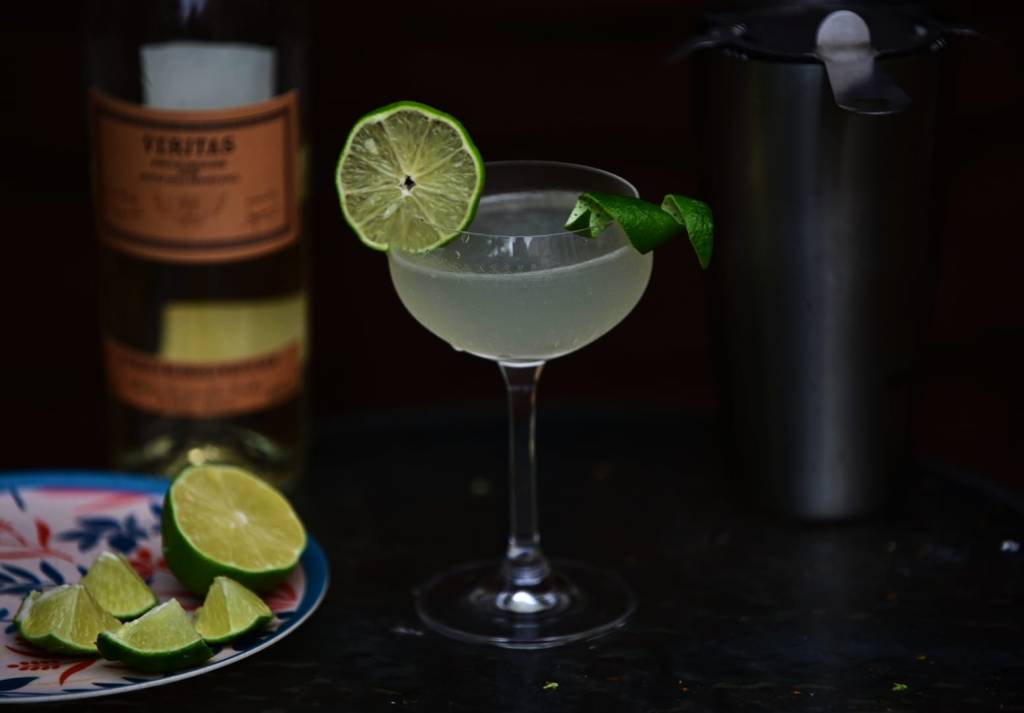
Rum, the base spirit of a daiquiri, is made by fermenting and distilling sugarcane molasses (or less commonly, sugarcane juice). Rum is made in every sugar-producing region of the world, and is intricately linked with the culture of the West Indies islands. The beverage was once an integral part of the Royal Navy, where it was the part of the ration until the 1970s, and has integral associations with maritime trade, naval activities, and piracy. Frustratingly for a connoisseur, rum can often be the wild west of spirits–there is no single standard for production methods, and the often-allowed use of additives further complicates the scenario.
Rum is perhaps the only spirit classified based on colours, with such unhelpful names like gold, light, and dark. For the purpose of cocktails, rum is often classified as white and dark rums, which refer to unaged and aged rum respectively. Whereas unaged rums from most regions are interchangeable in cocktails, different regions produce vastly different types of aged rums, ranging from the light Cuban and Bajan styles, to the more dark, sweet and intense Demerara rum from Guyana, and the wild, funky ride that is a Jamaican rum.
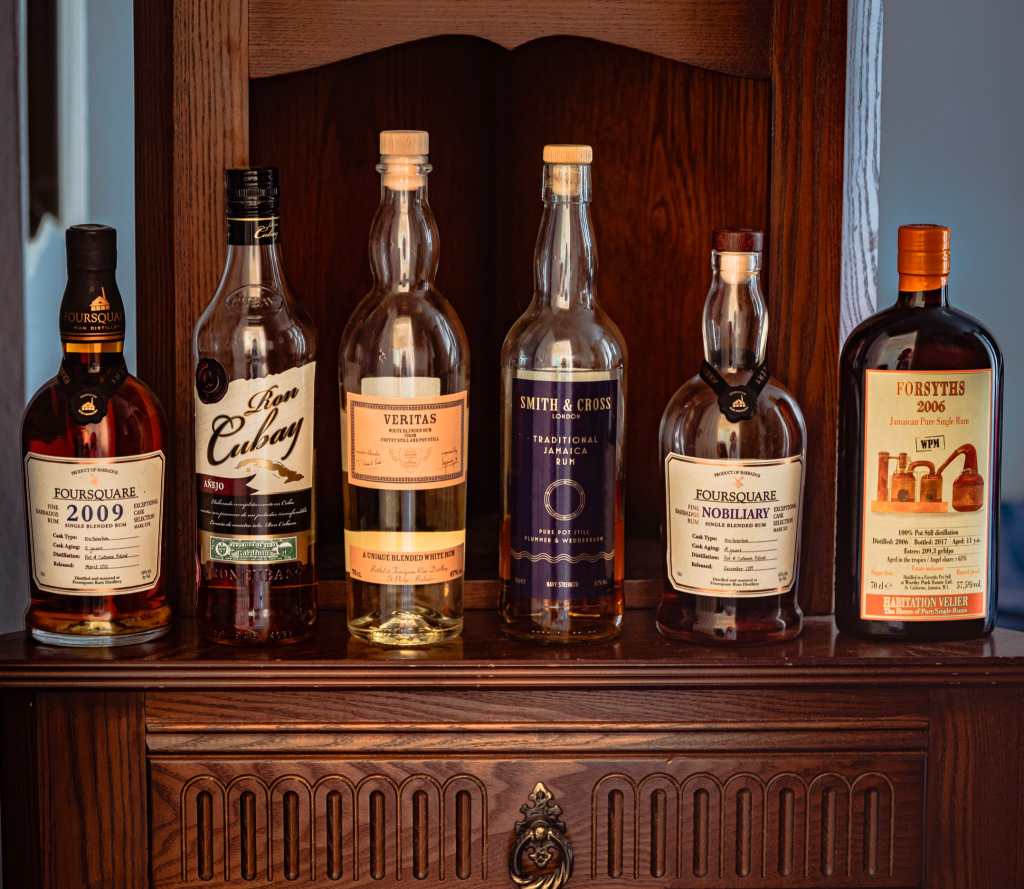
Unlike the molasses-based rums mentioned above which hail from erstwhile British and Spanish colonies, the erstwhile French colonies like Martinique produces a sugarcane juice-based rum called Rhum agricole, which is characterised by a vegetal flavour profile. It is very similar to Cachaca, a Brazilian spirit also made from sugarcane juice. Most common bars refer to Cuban rum when they talk of dark rum, primarily due to the industrial behemoth Bacardi, which makes Cuban-style rums (although they are manufactured in Puerto Rico and often of distinctly middling quality). On the contrary, Jamaican rums are usually specified when they are called for, as they have very strong characteristic funk or ‘hogo’.
Rum has been often viewed as an unsophisticated drink in the past—associated with rebellions, piracy, and the purported uncouthness of the sailors. This association of rum with the working class meant that the early age of cocktails saw relatively fewer rum cocktails documented in literature. Rum cocktails were mostly popular in areas with strong naval influence, or amongst bohemians like Ernest Hemingway. This drastically changed in the 1940’s, when U.S. president Franklin Roosevelt’s Good Neighbour policy encouraged trade with Latin America, including Cuba and the West Indies islands. This, coupled with World War 2, which affected the availability of whiskey and vodka, resulted in an explosion of interest in rum.
This period also saw the rise of the Tiki culture and the Tiki cocktails, a fusion of unrelated cultures from Polynesia, Melanesia, and Micronesia, in what is probably the most egregious and long lasting of cultural appropriations. Tiki cocktails were created by entrepreneurs like Donn Beach and Victor J. Bergeron (of Trader Vic fame), who created cocktails based on rum, the quintessential Caribbean spirit, and served them in a setting inspired by an idealised American view of Polynesia. Intricate and exotic carvings, beautiful scenery, the craving for adventure–they seamlessly combined with cocktails based on rum and tropical fruit juices to cater to the colonial nostalgia. The tropical fruit juices and intricately curved vessels of tiki cocktails symbolised the wild dancing ecstasy of the beach, something diametrically opposed to both the dark speakeasy dens during prohibition, as well as the understated elegance of the old aristocratic luxury.
Tiki cocktails served as a cornerstone of the tiki culture, and are characterised by the use of a mixture of rums, fresh fruit juices and exotic flavoured syrups, all dressed up in elaborate garnishes and serving vessels. Indeed, many of the initial tiki cocktails which originated from the restaurant of Don the Beachcomber are characterised by a highly secretive list of ingredients, with the use of proprietary mixes and syrups. This often led to different bars serving drinks of the same name with completely different ingredients, and intense competition between various establishments regarding the origin of various drinks.

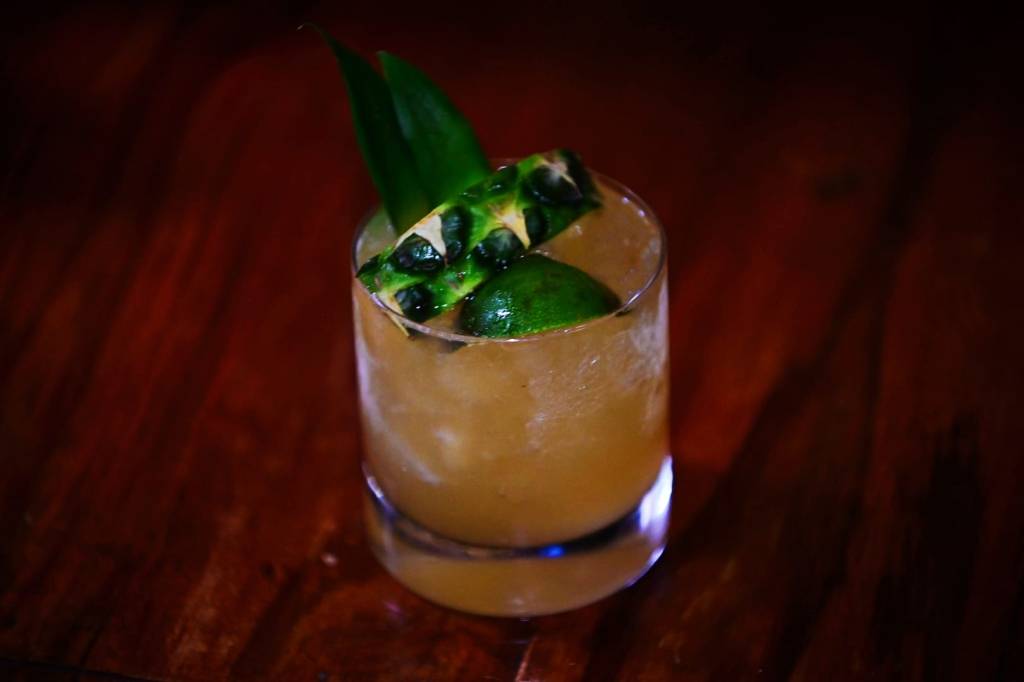
The quintessential tiki cocktail is the Mai Tai, a mixture of rum, orange curacao, lime juice, and orgeat and simple syrup in its most recognisable form, the former being an almond-based sweetener. Usually, two different rums are used- one being Jamaican and another a Martinique molasses-based rum (often unaged, although this is often replaced by a Cuban, Bajan, Demerara depending on availability). The drink is said to have been invented in the 1940s by Victor Bergeron, although in a manner befitting the poster cocktail of tiki culture, Donn Beach claimed to have created this cocktail in the 1930s, which had a very different list of ingredients. The Mai Tai of Trader Vic’s became THE Tiki drink, and Victor Bergeron became the leading figure in the tiki bar scene, something which led to numerous lawsuits (and eventually out of court settlements).
Tiki drinks have been described as “like blues songs. There are too many to count, and … they’re based on the same three chords… those chords are rum, lime and fruit.” In the following article, we will look at some more tiki cocktails, including classics like the Singapore Sling and the Jungle Bird, perhaps the most recognisable cocktail to originate in Asia.

 The Gourmet Glutton