The set menu concept is unfamiliar in Kolkata. Granted, it’s one of the least popular formats of eating out, but other cities like Delhi and Bangalore provide a few options for choice-free degustation. The idea of walking into a restaurant and letting the chef make the choices about what you eat appeals to a niche audience, which includes yours truly.
And then there’s the whole farm-to-table, nose-to-tail philosophy of sustainable dining, slowly becoming a rarity in today’s era of fast food chains. In that respect, Bengal still holds on to its culinary traditions, but in a local scale, and strictly rooted in tradition. The time is ripe for a change, to blend tradition and innovation into a dining experience like never before.
That is where Amar Khamar comes in. An organic food store that ships organically grown produce from Bengal to most of India, Amar Khamar is doing a fabulous job in bringing Bengali produce to a bigger market, from amshotto made with Himsagar from Malda in the North to an array of aromatic honeys sourced from the Sunderbans in the South to an astounding selection of rice from all over the state.
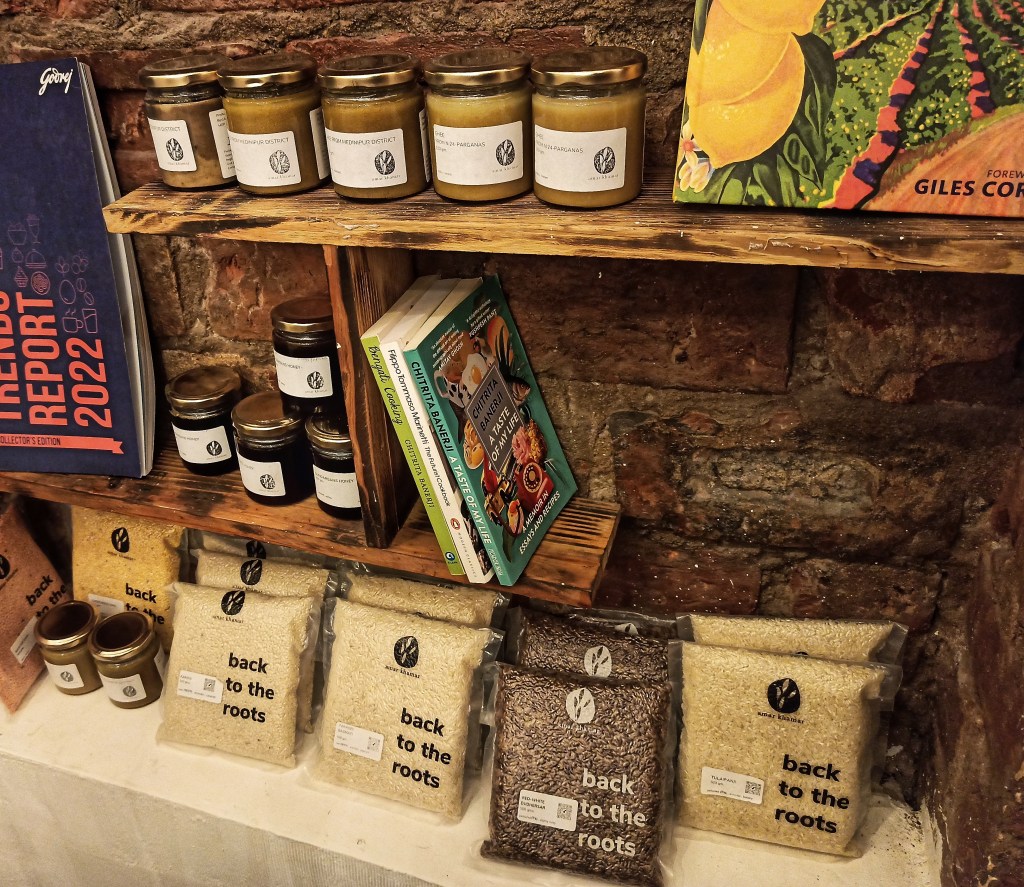
In August, Amar Khamar decided to start a pop-up, around twice or thrice a month, catering to a small table of six guests at a time. On offer is a tasting menu made with their amazing produce, a great way to showcase our culinary compendium, with a modern twist. Just yesterday, I visited the pop-up to try it out. It was small but inviting place, near Golpark. Initially intended to be a studio kitchen, the place was lit with a warm glow, and with an array of products in proud display.
We were seated around a table of eight, a cozy sort of affair, like dinner in a joint family, but with strangers. If the communal dining of Bangalore’s Vidyarthi Bhavan has a posher counterpart, it is this. There wasn’t much time or scope for talk, because the food did most of the talking. The meal comprised seven courses, structured according to the Bengali meal while taking a virtual tour around the world.

The first course was a shaak or greens course. The centerpiece of the dish was batter-fried shanti shaak, something I had never heard of before. But it was delicious. The batter was crispy and the leaves brittle, which made eating with a fork difficult, making most of us switch to eating with our hands, a rather unusual and welcome sight in a posh restaurant.
The shaak was drizzled with an emulsion of ghee and egg yolk, aggressively seasoned and wonderfully creamy, the perfect pairing for the shaak. It is customary to start the Bengali meal with something bitter, and this concoction that fused Bengali shaak, Japanese tempura and French hollandaise, set the ball rolling rather efficiently.

Course two was a tribute to South East Asia, with a “machher dim caramel custard”. The chef described it as a savoury caramel custard, very reminiscent of a Japanese dish called chawanmushi. The Asian theme continued with a drizzle of chilli oil and a hint of gondhoraj, our version of kaffir lime. The main flavour of the dish came from a “shutki garum”.
Garum is a fermented fish condiment dating back to ancient Greece and Rome. It is essentially a fermented fish sauce, another nod to Southeast Asia. The dish was lovely, with a silky smooth custard with a hint of sweetness offsetting the heat of the chilli oil. My only complaint was the seafood funk could have been stronger, and the dish didn’t tie into the menu as cohesively as the other courses. That being said, it was absolutely delicious.

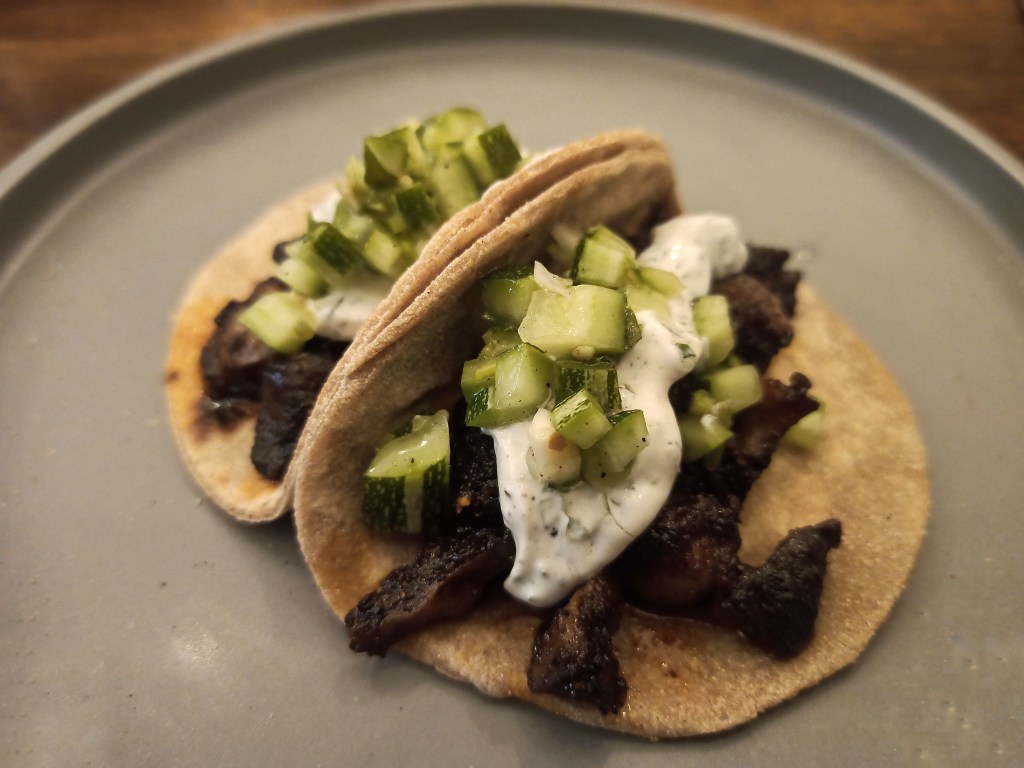
Course three took us to Mexico, with a “taco” of ruti made with whole wheat flour, stuffed with a filling of chopped offals: lungs, liver and heart (called gile-mete-kolje in Bengali) and other bits and pieces from a country chicken or deshi morog, all tossed in a spicy mole, a popular Mexican sauce made with smoked chillies and a multitude of spices and flavourings, which masks a lot of the offal funk. The taco is topped with a homemade sourcream and tiny cubes of chichinge, a variety of summer squash.
The dish was perfect. The spicy richness of the filling was counteracted by the earthiness of the whole wheat ruti, rounded off by the tang of the sourcream, and accented with the crunch of chichinge. The dish was an explosion of flavours and textures. The chef paired the course with a home brew made with aamra (hog plum) and ginger, which paired really well with the dish. As a fan of strong flavours, this course was my favourite.
Course four steered us off to a different flavour profile altogether. If the last dish was about masking the flavour of offal with spice, this one was about showcasing the pure flavour of chicken. Deshi morog, poached gently in a broth flavoured with the bare minimum of spices, shredded and mixed with kamini, a short grain aromatic rice cooked in the same broth. The dish was topped off with crispy roselle leaves.
Deshi morog is incredibly flavourful, which allows it to hold its own without the crutch of spice. The fat renders out into the broth, which lends the rice a delicious chicken flavour, reminiscent of Hainanese Chicken Rice, Singapore’s national dish. The roselle leaves were crispy and incredibly tart, adding an accent to the dish, both in terms of flavour and texture. The dish was a warm hug, the epitome of comfort food.

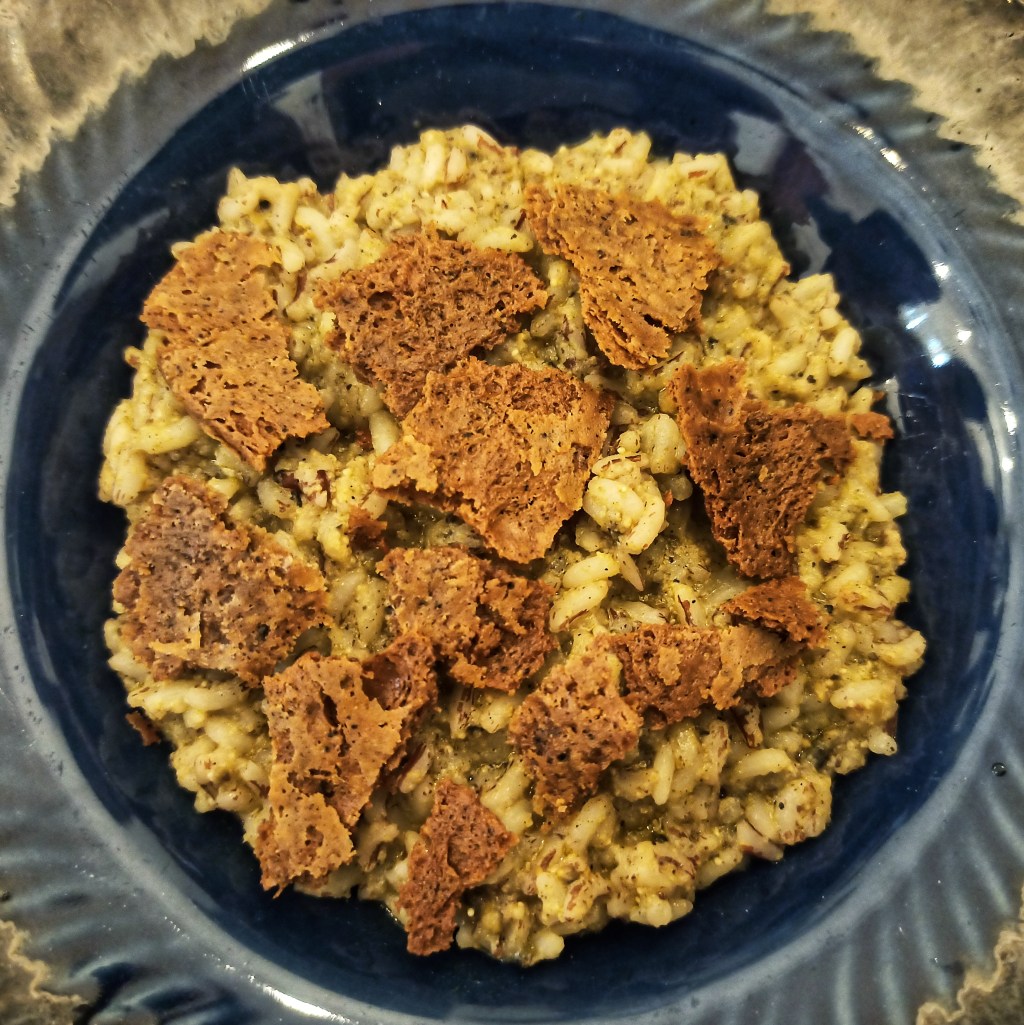
Course five was another rice dish, this one centered around red-white dudhersar, a variety of rice with flecks of red bran dotting the grains. This dish was reminiscent of risotto, flavoured with ground up geri-gugli, the tiny molluscs relished by Bengalis. The slimy chewiness of the gugli was bypassed by dehydrating it, grinding it to a dust and stirring it through the rice, which is also flavoured with poppy and mustard.
The rice was bold with a bite, enrobed in the creamy sauce. The dish was topped with the skin of the same deshi morog, turned into a sort of flaky cracker. This is nose to tail eating at its finest, spreading out the chicken across three courses, each time playing a different role. The use of humble ingredients like geri-gugli and chicken offals highlights an economic way of cooking, while simultaneously decluttering the kitchen of a multitude of different proteins, a rather efficient way of cooking.
The penultimate course comprised the mandatory sour course: the duo of chatni and papor without which no Bengali meal is ever truly compete. But once again, not everything is as it seems. Instead of chatni and papor, you get a granita, Italy’s answer to the humble gola, made with aamra, a callback to a previous course.
The granita is refreshingly tart with a background heat of chilli, just the thing you need after two heavy rice-based courses. But what about the papor? Well, the icy shards of granita shattering against your teeth is all the texture you need. The tartness of a chatni, the crunch of a papor, and the palate cleansing freshness of a sorbet course: this dish had it all.

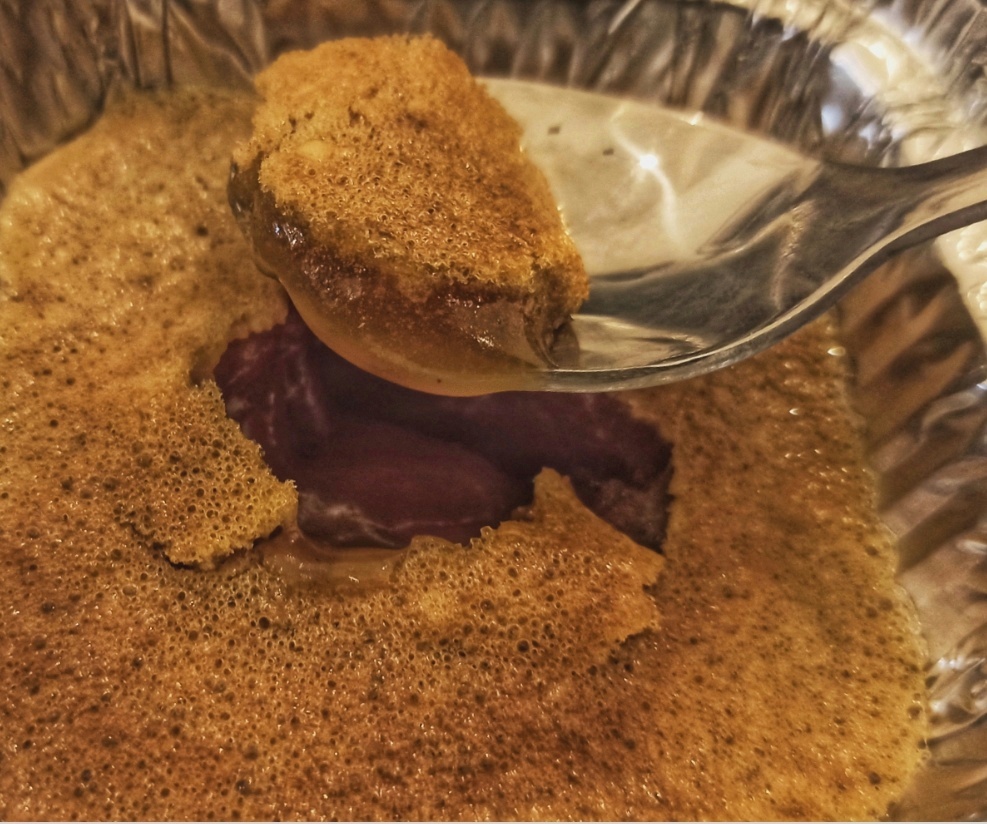
And then came dessert, a fat-free molten honey cake. The cake had a texture that was a cross between pudding and halwa, with a delicious center of a wonderfully floral Sunderbans honey. This dish was the perfect vehicle to showcase the beauty of a good, floral honey, a far cry from any mass-produced honey. Served directly in the aluminium foil container it was made in, it was simple yet elegant, bringing the meal to an unpretentious, satisfying finish.
Amar Khamar plans to change the menu every few months, focusing on seasonality and fresh produce to give our humble ingredients a modernist twist. While they’re operating on a small scale, they are definitely on to something. Kolkata needs a proud proclaimer of traditional, almost forgotten, sustainability sourced local produce, and a fancy tasting menu is a great vehicle for the purpose. Just sit back and let the experts do their magic. Let’s hope that this is the dawn of an new era of Kolkata gastronomy.

 The Gourmet Glutton