Bengal is the land of fish and rice. The fertile alluvial soil of the Gangetic delta means that rice is available in plenty, and is the basic food crop here. That being said, cultures intermingle, and the flatbread tradition of North Indian cuisine seeped into Bengal over the years, giving us a varied albeit limited range of flatbreads we can call our own.
The ruti takes second place to bhaat in Bengali home cooking. Many households prefer it to rice for a lighter dinner. It also pervades our culture, from prospective brides being tested on their skill to roll out the perfect disc of ruti, to the poet Sukanta Bhattacharya famously arguing in a poem that the blistered surface of a ruti that appeals more to the hungry than the full moon.
প্রয়োজন নেই, কবিতার স্নিগ্ধতা—
কবিতা তোমায় দিলাম আজকে ছুটি,
ক্ষুধার রাজ্যে পৃথিবী–গদ্যময় :
পূর্ণিমা–চাঁদ যেন ঝল্সানো রুটি॥
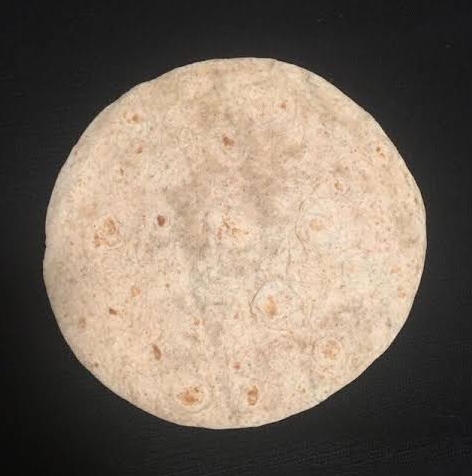
The ruti of course, comes from the North Indian roti, a word derived from the Sanskrit “rotika” meaning “bread”. This generic meaning of the Sanskrit source finds its way into rather un-”roti”like dishes like baida roti and roti canai, which we’ll come to later in the series. But the linguistic confusion doesn’t end there.
During my time in Rohtak, I realised that the rotis there are considerably heavier and thicker, slathered generously with ghee. The thinner rutis that I have grown up with are referred to there as “phulkas”, referring to the characteristic puffing up of the disc of dough as it is cooked directly over a flame. And then there is “chapati”, a word preferred to “roti’ here in Bangalore, derived from the root “chapta” meaning “flat”, referring to the traditional technique of slapping the dough back and forth between the hands to flatten it out.
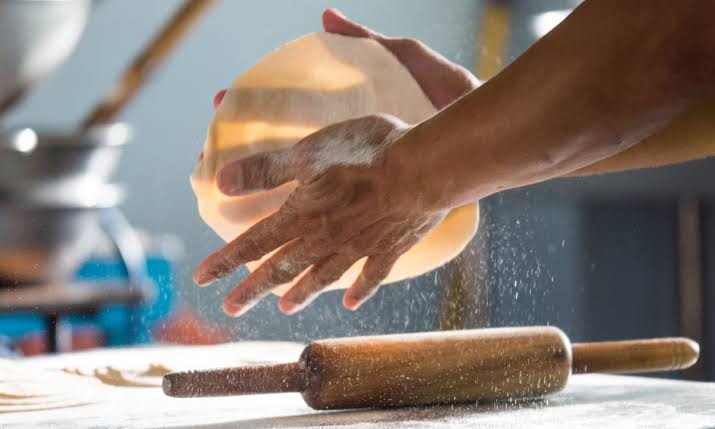
Back in Kolkata, we are content with the “ruti”, thin flatbreads made with atta, or unrefined flour. It is usually one of the only major uses of atta in a Bengali household, apart from maybe cleaning slimy fish. Atta is unrefined flour, and has a brownish hue compared to refined flour or maida, and is said to be healthier, since it additionally contains the nutritious germ and bran of wheat grains in addition to the endosperm, the sole content of maida.
Ruti-making is a simple on paper, but needs technique to nail. A dough is made using atta and water. Using hot water makes for a softer ruti, as it denatures some of the gluten, the protein that gives breads their stretchiness and allows the flour to imbibe water better, allowing them to puff up easily. The dough is allowed to rest to let the gluten relax; not doing so would create rutis that shrink back considerably during cooking.
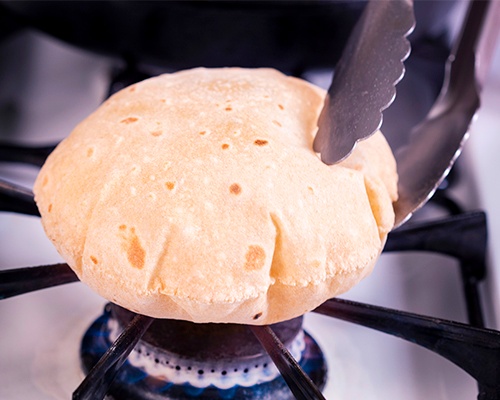
The dough is portioned into balls and rolled out using a belon-chaki, a staple of Bengali households. No oil is applied during rolling, just a little dusting of atta to prevent it from sticking. The ruti is cooked on a tawa first, both sides, before being placed on a direct flame, which puffs it up and blisters the surface beautifully. A freshly made, warm ruti, slathered some ghee, sprinkled with coarse sugar and rolled up, or with some season-fresh nolen gur, is one of the ultimate comfort foods.
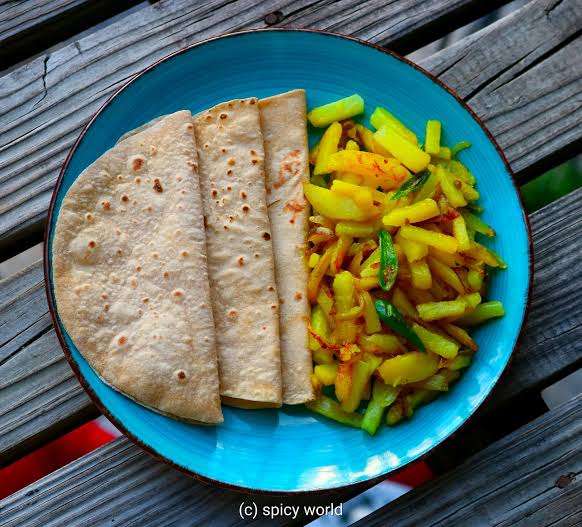
What else can you serve with ruti? Well, pretty much anything, from a dryish chorchori to a murgir jhol. One of the simplest accompaniments, one of my favourites in winter, is a dry fry of small cubes of potato, tiny cauliflower florets and young spring onion stalks in oil tempered with nigella seeds and stained light yellow with turmeric. Aloo-phulkopi-peyajkoli bhaja is simple to make and goes delightfully well with warm, freshly-made rutis on a cold winter’s night.
Speaking of winter night dinners, few vegetable dishes taste as good and pair as well with ruti as the humble begun pora. The minimalist cousin of baingan ka bharta, it starts off by roasting the eggplant on an open flame until the skin is charred. It is allowed to cool, the skin is removed, and the soft eggplant flesh is mixed with chopped onions, chillies, mustard oil, and seasoning. The subtle smokiness of the eggplant is reflected in the char of the ruti, making it a great pairing.
The curiously named “torka” is made with whole green moong dal, referred to here as torkar daal. Unlike the usual Bengali daals which tend to be lighter in flavour, torka is heavier and punchier in flavour, laden with onion, tomatoes, ginger, garlic and a whole lot of spices. It is considerably dry, almost porridge-like in consistency, and often finished with egg and a generous knob of butter for added richness.
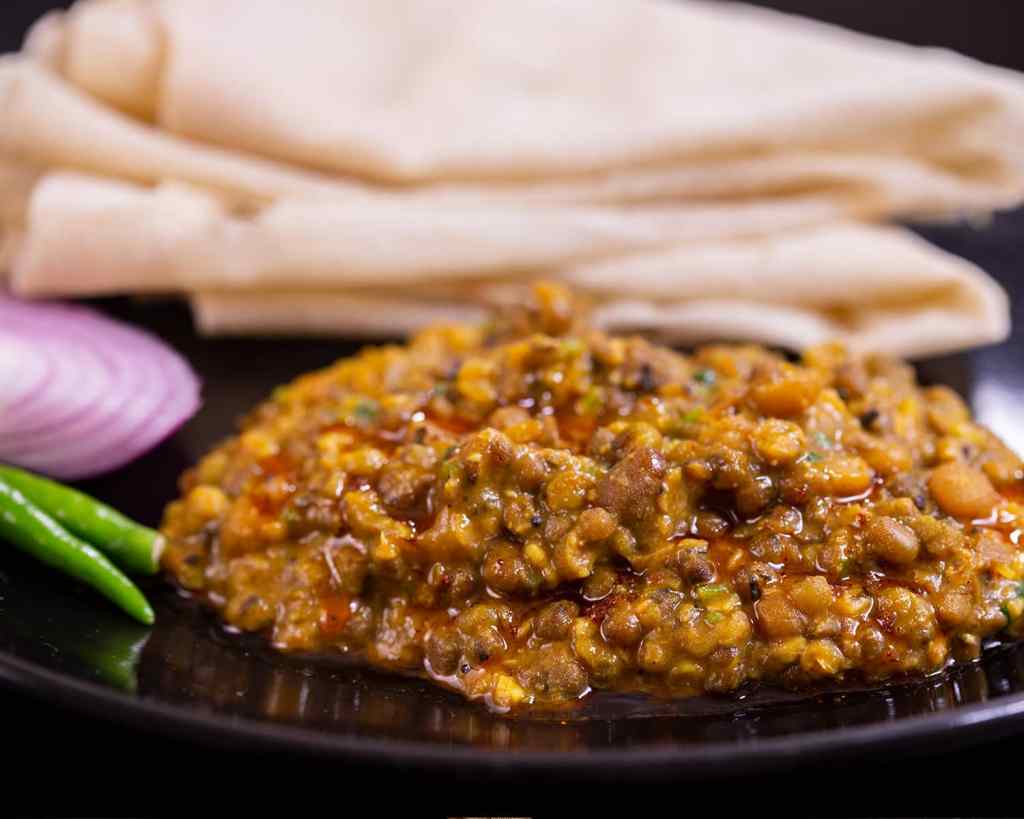
Ruti-torka is a Bengali favourite. Both words in that phrase derive ultimately from North Indian cuisine: the “tadka” in North India refers to the hot oil tempered with whole spices like red chilli and cumin seeds that is added to a daal at the very end to add another dimension of flavour. We have adapted the term for the technique to describe the dish itself, although the “tadka technique” itself isn’t all that common here.
While you can make torka at home, it is often bought from roadside food stalls. The rumali ruti on the other hand, is almost always store-bought rather than home-made. These are considerably lighter and thinner, and require more skill to make, with pizzeria-esque flinging of doughs and cooking on a reversed wok (the so-called “ulta tawa” technique, a staple of Awadhi cuisine, whose Galawati kabab and ulte tawe ka paratha is famous nation-wide.
Parathas are a whole different ball-game though, and something we’ll tackle in detail in the next part of our series. There’s a lot more to flatbreads than meets the eye so, stay tuned.

 The Gourmet Glutton