Last week, we began our exploration of the breads of Bengal with the humble, ubiquitous ruti. It’s time to throw some indulgence and calories into the mix, and talk about one of the more sinful versions of flatbread: the porota. Or is it paratha? Or parotta? Why so many names?
North India is famous for its savoury stuffed paratha, with a multitude of fillings ranging from aloo to gobhi to mooli. A hefty parantha, served with a side of achaar (pickle) and a refreshing glass of chaas (buttermilk) is a common breakfast all over North India, and it was quite a regular affair during my Rohtak days. Stuffed parathas are fairly popular in Bengal, most notably the chhatur porota, stuffed with a spiced chickpea flour filling, a direct influence from our immediate neighbour, Bihar.

In the South however, the parotta, as it is called, is not stuffed, but layered, similar to the lachchha paratha in the Northern states. However, there are two crucial differences. Firstly, like most North Indian paranthas, the lachchha paratha is made with atta, while the Malabar Parotta is made of maida. Secondly, the parotta is lighter, with more delicate lamination.
The Nool parotta is even finer in texture, made by cutting out the thinned out dough into thin strips and coalescing it into a ball before rolling. The layers are perfect to mop up a salna, a spiced gravy of onion, tomato and coconut, or a dry, spicy beef roast. Some dishes seamlessly incorporate flatbread and the curry, like the kizhi parotta, made by layering cooked parottas and chicken curry in a banana leaf and cooking it, or the kothu parotta, where thin strips of cooked parotta, chicken and gravy are cooked together into an almost bhurji-like consistency.

The dish most readily identifiable as “porota” in Bengal is more akin to the Southern style, in that it is made with maida, not stuffed, and is laminated, somewhat. The dough is rolled out and folded into a triangle to create a few layers, nowhere as close to the lattice-like nool parotta, but equally delicious. You could enjoy porotas with slightly richer preparations, but two of its most indigenous applications have found their way into the street food culture of the city.
The moglai porota, despite its name, is quintessentially Bengali, originating in Mughal Bengal, during Mughal emperor Jahangir’s reign. It was a creation of his cook Adil Hafiz Usman, who originally hailed from Bardhaman. Anadi cabin in Dharmatala is famous for its Moglai porota, served with a dry spicy potato curry, ketchup, and a simple salad of sliced onion and cucumber.

Moglai porota is essentially a flatbread stuffed with keema and egg filling and cooked in oil. Unlike the stuffed parathas of the North, it is more like a parcel than a round disc, and is made from maida, not atta. A similar dish is the curiously named baida roti from Maharashtra. Since the word roti initially meant bread, the word makes sense from an etymologically perspective, but the semantic shift makes its sound odd.
Two short linguistic asides before we move on, s’il vous plait. A “semantic shift” refers to the phenomenon where the meaning of a word changes over time. Roti is one such example. Although the word now refers to flatbreads made with atta and without fat, it had a more generic meaning originally. The term sweetmeat has that confusing name because once upon a time, the word “meat” referred to all food, and only later was it repurposed to describe animal flesh.

The famous roti canai from Malaysia is another example. The “roti” here refers merely to bread, while the “canai” is a modification of “Chennai”, alluding to its origins. Roti canai is a thin, flaky flatbread, served with a gravy. Sound familiar? Baida roti went down the same route. But the Ceylon parotta, a square, layered flatbread often stuffed with chicken, didn’t, and neither did its cousin from Bengal.
But moglai porota has seen another interesting linguistic phenomenon. When two words clump together, the accent slowly shifts to the first half over time. Linguist John McWhorter calls this phenomenon “backshift”. After that, the second, unaccented half, can often drop out of the word entirely. Did you ever wonder why Dean Martin sings “When the moon hits your eye like a big PIZZA PIE, that’s amore”? McWhorter, in his book “Words on the Move”, explains:
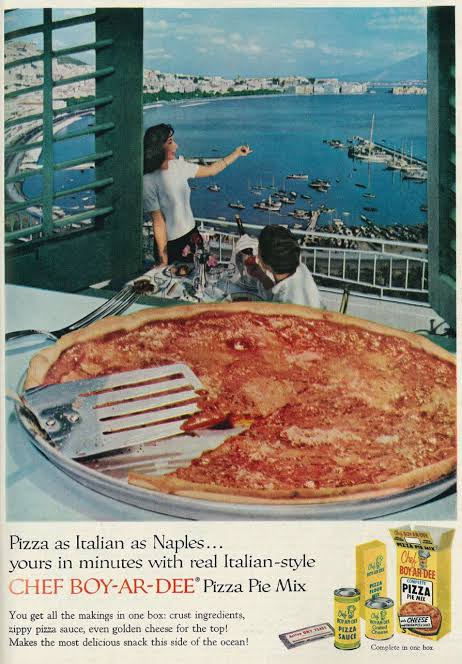
“In old movies and television shows, you can hear people referring to pizza as “pizza pie,” pronounced “PIZZA pie.”……This you can catch happening in 1956 on an episode of The Honeymooners when Alice refers once to pizza pie and then later to just pizza……If originally the idea was that pizza was a kind of tomato and cheese tart, which it is, then……we can know that at first, people must have thought of it as a pizza kind of pie as opposed to another kind, in which case they must have said “pizza PIE,” before the Backshift happened…… Therefore, one, pizza PIE, two, PIZZA pie, and three, pizza”.
We see this today with moglai porota. Although the second half hasn’t dropped out yet, a lot of people call it just “moglai”. Another street food example is the “chowmein”. Originating from the Chinese, the accent slowly shifted backwards. Then, the unaccented syllable started simplifying its vowel and dropping off. So one, chow MEIN, two CHOW min, three, CHOW. Okay, enough linguistics, back to delicious street food.

Just a minute’s walk away from Anadi Cabin, in the busy New Market area, is Nizam, the proud creator of the kathi roll. It’s origins, like almost anything that attains cult status, are hotly debated. Some suggest that hurried office commuters wanted something quick and portable to eat, some mention “babus”, Indian Earls of Sandwich if you please, who were too fastidious to touch the kabab. Either way, some illustrious cook wrapped the kabab in a porota The “kathi” part came years later, in 1964, when the iron skewers were replace by wooden ones, called “kathi” in Bengali.
With smoky, spicy, succulent pieces of chicken or mutton, wrapped up in a paratha, accented by the crunch of onion, the heat of chilli, and the tang of chaat masala, the kathi roll is the perfect handheld snack. (take that, tacos!) Of course, meat isn’t mandatory, as evidenced by the glorious egg roll. Some people like sauces in their roll, which I’m personally not a fan of. What isn’t personal however, is the opinion that only sauces that belong on a roll are ketchup and green chilli sauce. Anything else is an abomination.
It would be wrong to say that stuffed flatbreads like the North Indian Paratha do not exist in Bengali cuisine. They definitely do, but the big difference is that these are deep-fried in oil, creating something that is much more unhealthy, but a lot more delicious. More on them next week.


 The Gourmet Glutton
One Comment Add yours