Last time, we tackled the porota, comparing and contrasting our Bengali version with variants around the country, particularly the stuffed North Indian variety. It would be wrong to say that stuffed flatbreads do not exist in Bengali cuisine, for they definitely do. The big difference is that these are deep-fried in oil, creating something that is much more unhealthy, but a lot more delicious. These are the kochuris, of which there are multiple varieties.
The radhaballavi is stuffed with a lentil mixture, usually kalai or biulir dal, called urad dal elsewhere in the country. It is a staple of the biyebari feast, where it is served alongside a rich aloor dom or a North Indian style chana masala. A fried flatbread with a spicy accompaniment comprises the first course in any classic, old-school biyebari feast in Bengal. Sometimes, the radhaballavi may be replaced by a naanpuri, and if you’re lucky, you’ll be served koraishutir kochuri.
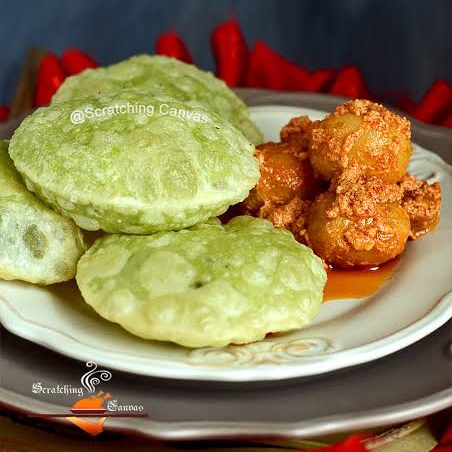
Koraishutir kochuri replaces the lentil filling of a radhaballavi with a mixture made of mashed pea. It is the taste of winter, especially when paired with its soulmate: aloor dom made using notun aloo, the small, waxy potatoes that pop up in the market around this time of the year. The niramish version of the dish ditches the onion and garlic in favour of hing or asafoetida, a commonly served dish in a Saraswati pujo bhog. Add into the equation the pop of fresh winter peas and, as Gershwin once said: “who could ask for anything more?”
But the simplest and most ubiquitous version of the kochuri can be found in every sweetshop in Bengal. Usually stuffed with a lentil filling and heavily scented with hing or asafoetida, it is dished out in epic quantities every morning and evening.I’ve had my fair share of kochuris from Putiram in College Street during my internship days in 2017. However, the mishtir dokan flatbread staple I’ve grown up eating is the curiously named naanpuri, called Bosnia porota in Bangladesh, a classic example of semantic shift. As an aside, Trinidad and Tobago have a dish, Dhalpurie, lentil-stuffed flatbreads which clearly derive its name and technique from India.

A curious portmonteau of two North Indiana flatbreads, naanpuri is quite aptly named, because it’s preparation combines the techniques of the two.The naan is the poster-boy of Indian breads, the fluffy, leavened bread cooked in a tandoor, the perfect mop for your butter chicken. The naanpuri starts off like the naan dough, with the addition of yeast to produce leavening. Of course, not all naanpuris and naans employ the slow fermentation of yeast, and could use a cheat’s formula of baking powder and yoghurt to create the lift.
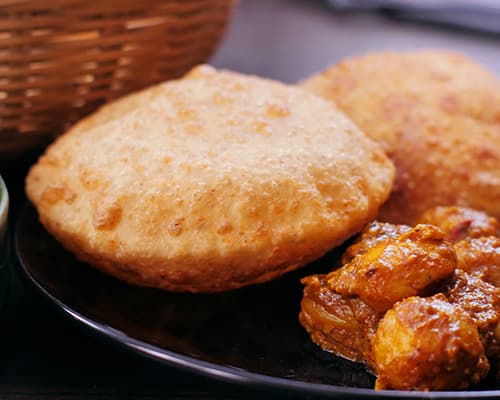
After the dough is ready, the recipes diverge. Instead of being slapped onto the side of a tandoor, the naanpuri dough, after being rolled out, is dunked into oil, like a poori, turning it nice and golden. It is a lot fluffier than a puri due to the leavening, creating a unique texture that is golden-brown and crisp on the outside, soft and fluffy on the inside. It is definitely not for the weight-watchers, but let’s be honest, they’re missing out on quite a lot in life.

The naanpuri near our house was served with a light curry of potatoes and yelllow chickpeas, the same kind used to make ghughni. In some places, the aloo outnumbers the motor, while in others, like puritam, it is made only with aloo. The spicing is usually lighter, much more so than the spicy chholey, which come alongside the bhature in North Indian. The bhatura, like the naanpuri, is leavened and made with maida, unlike the poori, which is unleavened and made with atta.
Infact, the Bengali flatbread that shares the most resemblance with the poori is our luchi. If that analogy makes you cringe, you’re not wrong. How can you compare those huge, heavy, brown pooris with the ethereal delicacy of a well-crafted luchi, you might say. And yes, you wouldn’t be far from wrong. While both poori and luchi are unleavened flatbreads deep fried in oil until puffy, the similarities end there.

It takes skill to craft the perfect luchi. The dough needs to have adequate moisture which can later convert to steam and cause the puff, the ball must be rolled into the perfect disc, and the oil must be hot enough for the unassuming disc to magically metamorphose into a crispy orb. Be quick though, because like the rise of a souffle, or wintertime in Kolkata the loochi puff is glorious but evanescent, gone before you even know it.
If served at just the right moment, it makes for a gastronomic experience that is difficult to beat. Gently break open the crust and out billows the steam. The exterior is brittle while the inside is still soft, providing a lovely textural contrast. All you need to do now is dip it into your favourite accompaniment, and savour the moment. What can you serve with loochi? Pretty much anything.

One of the simplest and arguably, best options is the simple yet profound sada aloor torkari, the unassuming quartet of potatoes, nigella seeds, green chilli and sugar that works perfectly with the thinness of the loochi. A sweet chholar dal, laden with cashews, raisins and bits of toasted coconut, is another great pairing. If you’re in the mood for something richer, a kosha mangsho is yet another classic accompaniment. Sweet tooth? Loochi-payesh and loochi-sooji are combinations to die for.
The loochi-sooji combo is a staple of the loochi bhog, an alternative to the khichuri bhog in many Bengali households. The bhoger loochi though, is rather different, owing to the long duration between the preparation and the consumption by us mortals, During this time, the glorious orb gradually deflates. “The crispy upper layer form a soft skin, while the lower layer remains supple”, says a friend of mine, a fan of the so-called bashi loochi.
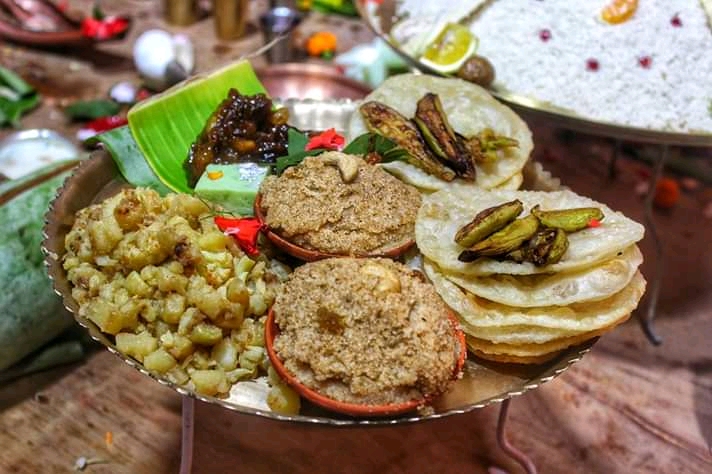
Although I’m not the biggest fan, I’ll have to agree that “bashi” or “stale” might be too harsh a term for something that tastes quite good. The bashi loochi and sooji combo, the former deflated into a soft disc, the latter agglomerated into boulders, is an absolute treat. “While phulko or puffed luchi, gravid with hot air, seems to get all the press, bashi or stale, deflated luchi, has a cult of its own. One of my great uncles was famous for his curious habit of eating bashi luchi mashed with milk and bananas for breakfast, almost daily. “, writes food writer Priyadarshini Chatterjee.
For a culture tagged with “machhi-bhaat” stereotype, Bengali cuisine offers a surprisingly diverse palette of flatbreads, from humble and hearty to flamboyant and flavourful. From the everyday rooti-aloo bhaja to the celebratory loochi-kosha mangsho, the brilliant breads of Bengal have got you covered.

 The Gourmet Glutton