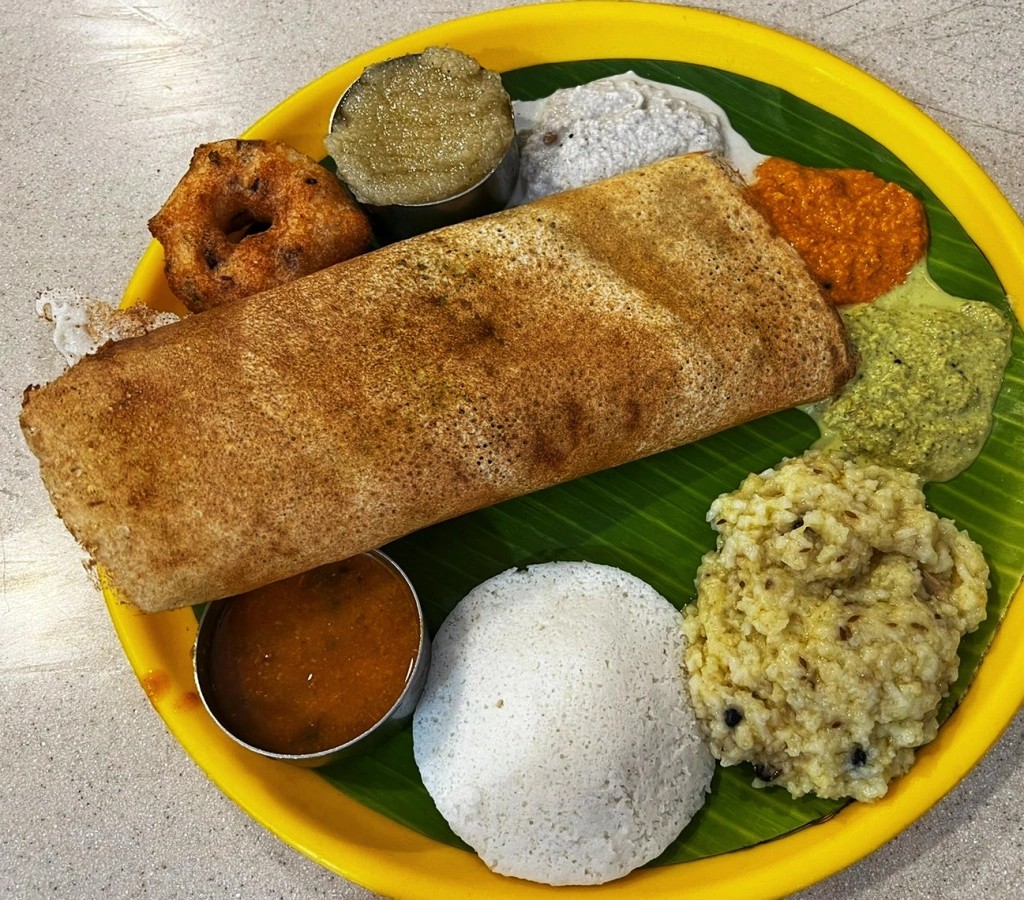
The vegetarian fare of South Indian cuisine is famous throughout India. In recent times, when the long-standing monopoly of the tikkas and kormas of North India is slowly being infiltrated by glimpses from the South, it is still mostly via these vegetarian dishes: the dosa, the idli, the vada, the sambhar. It is light, filling, and undoubtedly one of the great global breakfasts out there.
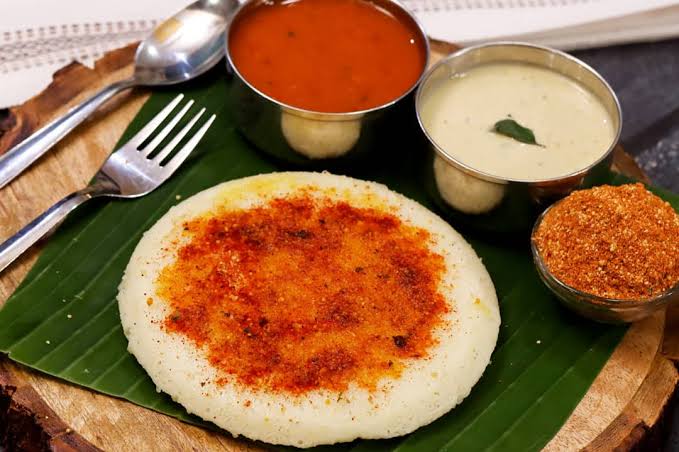
But that is exactly what it is: breakfast. The pillowy idlis and crisp dosas that people outside the Southern States hold so dear to their hearts as “South Indian food”. Before my first visit to Bangalore, I had resolved to try out the various iconic dosa places of the city. At the end, all I managed to sample from the compendium of dishes I had initially planned were the duo of breakfasts from Vidyarthi Bhavan and A2B, and a plate of thatte idli, steamed in a plate rather than the conventional idli steamer, topped with ghee and the delicious podi or gunpowder topping, made from toasted lentils and spices.
For lunch and dinner, I was introduced to a world of dishes that are criminally under-represented outside this part of the country. This is the lip-smacking world of South Indian non-vegetarian dishes, things you’d be hard-pressed to find in places like Delhi or Kolkata outside very selective restaurants which are pretty hard to come by and, if you’re in Gurgaon, ridiculously priced. My knowledge on the subject is rudimentary, and this is my best attempt at translating the massive compendium of dishes into a “For Dummies” guide, admittedly written by a self-confessed dummy himself.
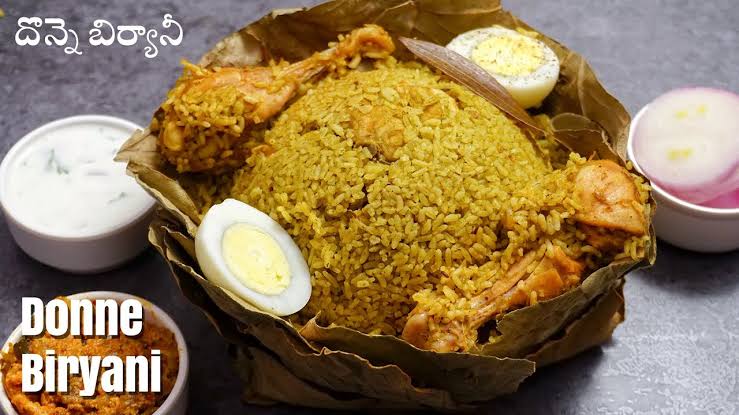
Let’s start with the biryanis, which are very different from the biryanis of the North. There is an insane mind-boggling variety of biryanis scattered throughout the South. There’s the Donne Biryani from Karnataka, named after the leaf container it is served in. It is characteristically green with a copious amount of coriander, mint and fenugreek leaves, Tamilian variants like the Dindigul and Ambur-style biryani, both named after regions in the state, and the Keralan variants like Malabar and Thalassery biryanis, liberally embellished with fried onions, cashews and raisins.
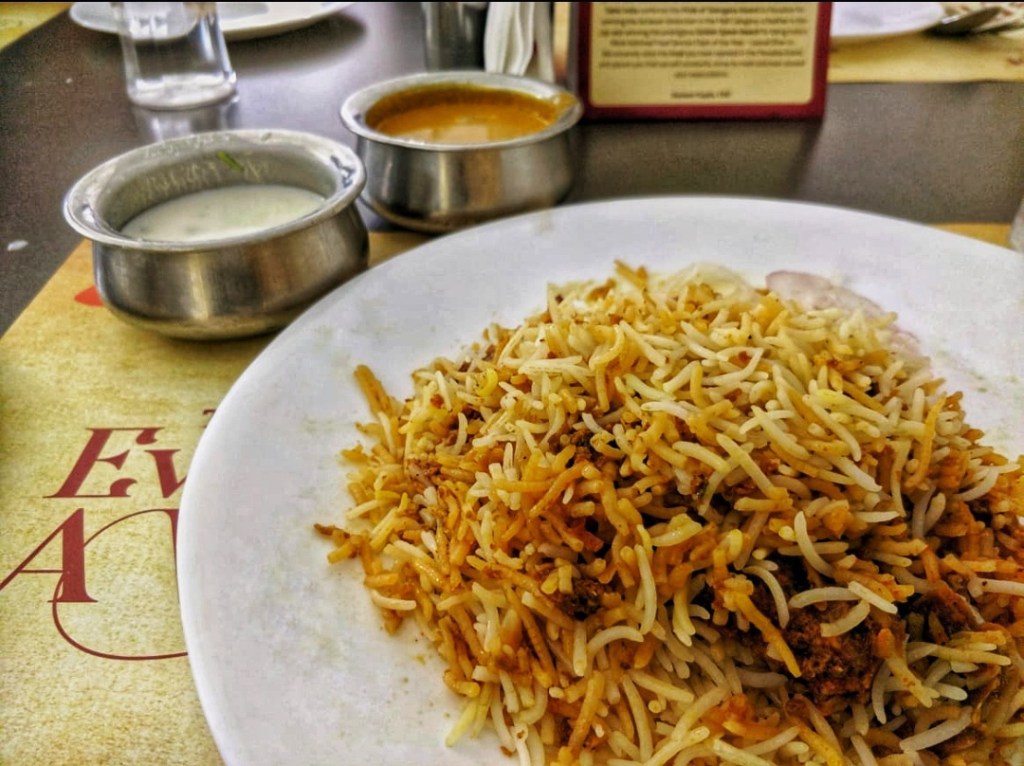
Then there are the Andhra style biryanis, notably the Hyderabadi biryani, along with lesser-known local variants like the Uvalacharu and Avakaya biryanis, flavoured with tamarind and mango pickle respectively, among other things. Although franchises like Paradise Biryani have toned down the spice levels quite a bit, the real Hyderabadi biryani, like almost all the biryanis mentioned above, are incredibly tangy and spicy, very different from the subtlety of the Kolkata biryani. Traditional accompaniments include sides to sponge off the spice, like raita or boiled eggs, as well as a side of salan or salna, flavoured with coconut, sesame and a whole array of spices.
Most of these variants are made with a short-grained variety called Jeera Samba, similar to our Gobindobhog, but the techniques vary widely. Unlike the Thalassery or Malabar biryani, where the rice and meat are cooked separately and then layered, the so-called “pakki style”, similar to Northern variants, the Hyderabadi biryani is made in the “kachhi style”, where the raw, marinated meat is layered with the cooked rice put on dum. The style most different from the Awadhi or Kolkata styles are the variants like the Donne and Dindigul, where the soaked rice is cooked directly in the spicy broth which the meat is cooked in, like a pulao, making the final consistency ever-so-slightly moist.
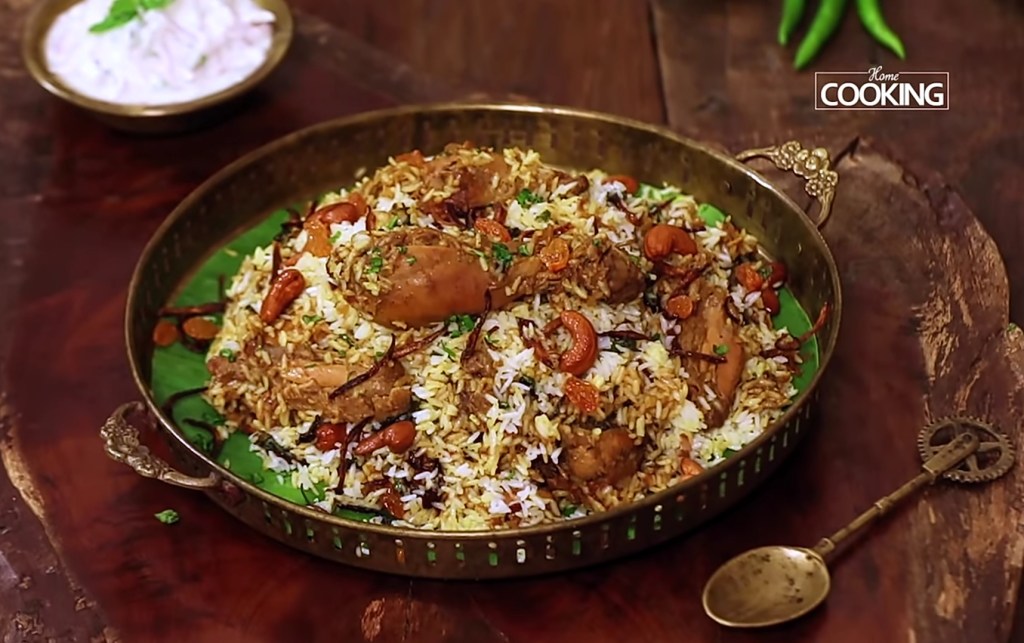
Most biryani places serve a delectable array of dry-ish sides to accompany the meat, loading spice atop spice, like the Chicken 65 and Mutton Sukka from Ambur Star’s menu, and the Guntur Chicken and Pepper Chicken from Donne Biryani House in Bangalore. Most of the dry-ish non-vegetarian starters have descriptions that might confuse the Westerner: the Keralan beef pepper fry is more akin to a stir-fry than a Kentucky fried chicken, while the Mangalorean ghee roast is a curry, not Christmas dinner.

Once you get over the linguistic incongruence, you slowly come to terms with the fact that these dishes are insanely delicious. Chicken 65, pieces of spiced and fried chicken liberally adorned with curry leaves is the ultimate bar snack, and the delectable pepper fry, heady with spices, sliced onion, and curry leaves. For seafood lovers, there’s the rava fry from Mangalore, which employs a thin, brittle coating of semolina that shatters in your mouth to reveal the seafood underneath, be it rings of calamari, steaks of seer or a whole pomfret. If you want the seafood to shine even more, you could go even more minimalistic with a butter-garlic sauce.
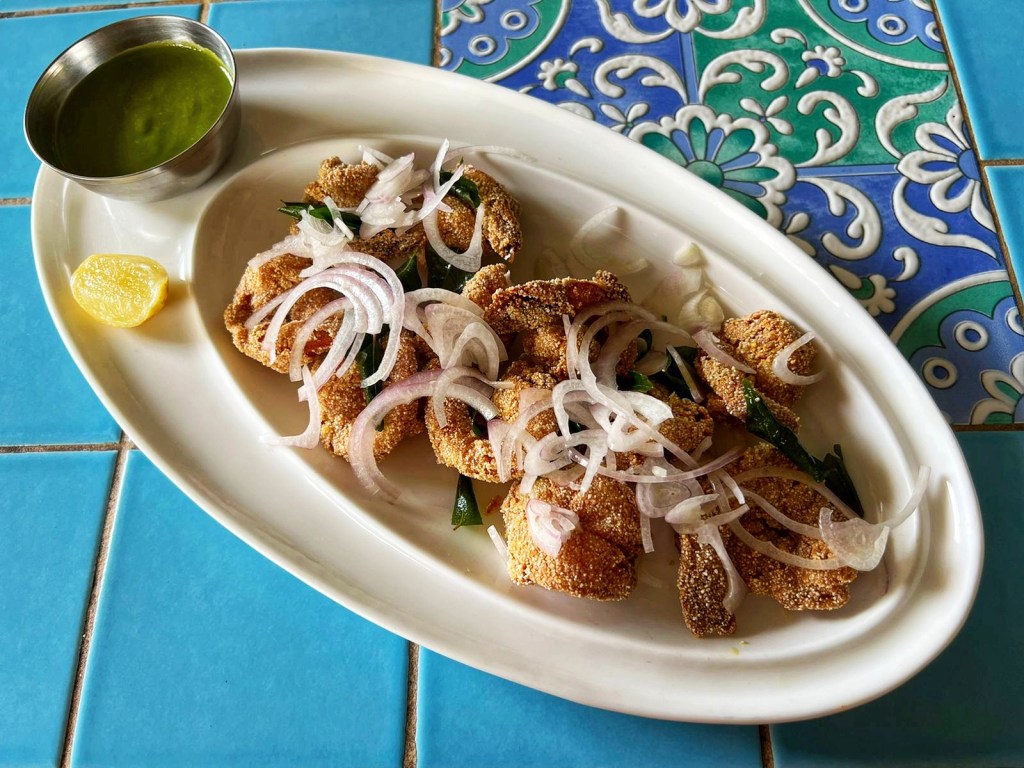
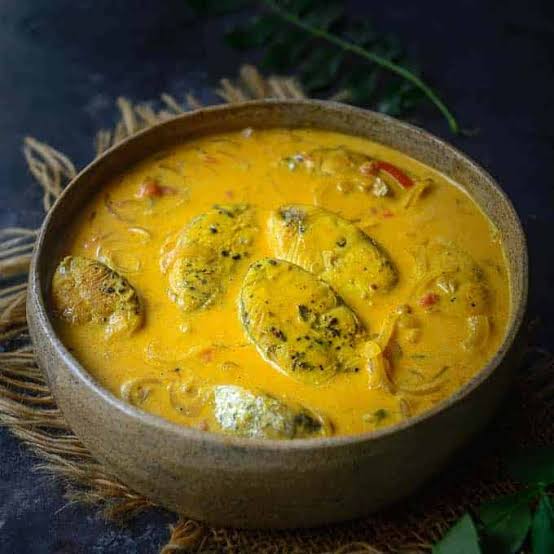
Another great fish starter is the “fish fry”, not to be confused with the deep-fried, breaded fish dish from Calcutta’s cabins. In the South, the term refers to pieces of fish, liberally covered in a thick spice paste and shallow fried, perfect with rice. However, with rice, you’d be better off ordering a fish curry too, a blanket term of the multitude of seafood preparations covering a wide array of flavours like the milder, coconut-milk based meen moilee from Kerala, or the tangier, tomato-based meen kulambu from Tamil Nadu. There are certain flavours typical of the region which recur in most of these dishes, like curry leaf, mustard seeds and coconut. Kokum is another souring agent typical of this region which imparts a unique flavour to its fish dishes.
Speaking of souring agents, mention has to be made of the Kamchampuli, a black vinegar made from a fruit of the same family as kokum. It is dark, syrupy, reminiscent of Italian balsamic, and a signature of the Coorg district of Karnataka. One of its most famous applications is the Coorg Pork curry, where the tangy vinegar cuts through the richness of the pork and adds a depth of flavour. It is a local specialty from the state, as is the now iconic ghee roast from Mangalore, with a deep-red colour thanks to a multitude of not-too-spicy Byadgi chillies, mellowed out with a copious amount of ghee. Mangalore also gave us the coconut-based sukka and cashew-studded uruval, both dryish preparations, usually made with chicken.
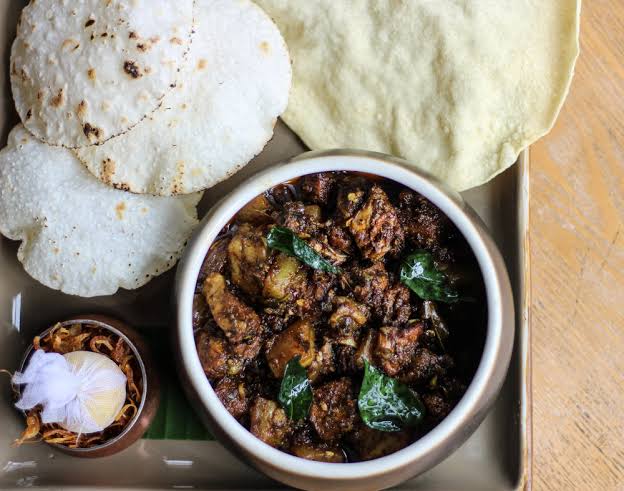
Like the ghee roast and Coorg pork, other iconic flavour profiles exist throughout the region. Some of the most popular include the Gongura chicken from Andhra Pradesh, made with sorrel leaves, the fiery Andhra chilli chicken, laden with green chillies, the chicken Varutharacha from Kerala, thickened and flavoured with a spicy coconut paste, and the deliciously complex Chettinad chicken which, like Dindigul and Ambur, is also named after a region in the state, which has its own styles of ghee roast and sukka. Indeed, the non-vegetarian dishes of South India form a complicated labyrinth which evades easy classification.
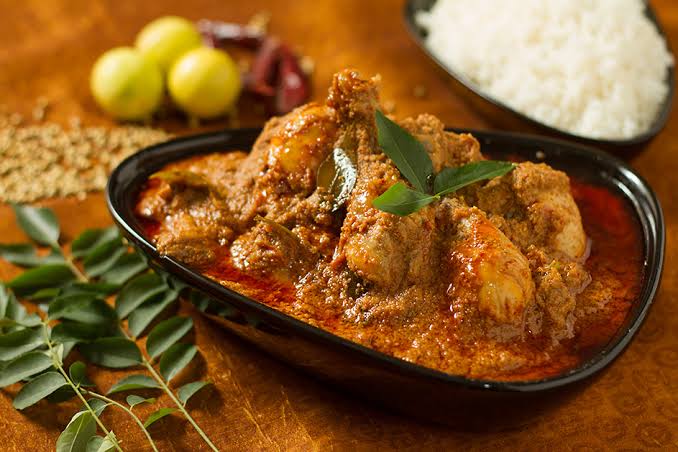
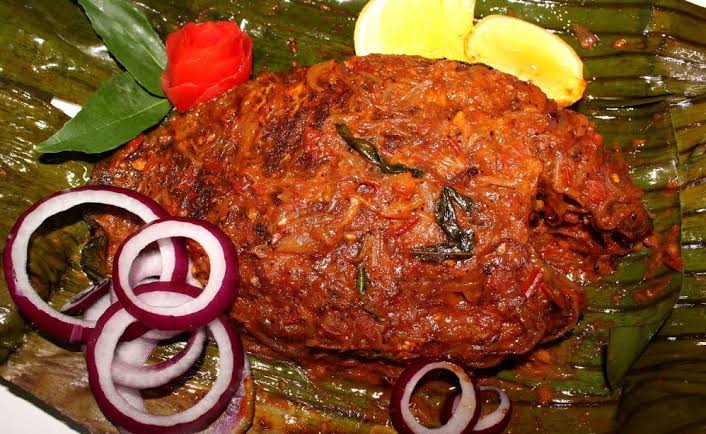
A lot of dishes bear superficial resemblances to dishes outside the region: the pichi potta or podimas from Tamil Nadu resembles the North Indian bharta, and the Keralan polichattu, classically made with the Karimeen or pearl spot fish from their lush backwaters, resemble the Bengali paturi. But the flavour profiles are entirely their own, sharp and punchy, aromatic with curry leaves, no cream mellowing out the intense flavours. Of course, not every dish is as intense, and there are a lot of milder dishes to balance out the spice over the course of the whole meal.
The dishes share a lot of common ingredients yet retain a geographical signature, and it is high time that this treasure trove of deliciousness crept out into the wider world to battle the malai murgh and kadhai chicken. Although I have barely scratched the surface here, I’m sure you’re convinced that South Indian food is a lot more than masala dosa and meduvada-sambhar, and it’s high time that we appreciate the culinary variety the South has to offer.

 The Gourmet Glutton