A Tale of Two Cities : Part 2
I am lucky to have spent my college days in the heart of North Kolkata, a place which still retains some of that old-school charm. Just five minutes away from my college was the iconic Dilkhusha cabin, one of those places which give you the feeling of going back in time as soon as you step in. It is one of the many cabins and cafes spread across the city.
Cabins date back to the British Raj, so-called because of their many divided compartments, intended to provide privacy to women who wanted to dine out at a time when respectable women were not supposed to be seen eating out in public. The confines of the cabins also witnessed secret meetings both during the freedom struggle and later during the Naxal era.
The cabins and cafes of North Calcutta have a set of dishes that are entirely their own, a crucial part of the Calcutta food heritage. Cutlets comprise pieces of meat, usually mince, that are breaded or battered followed by a dunk in hot oil. One of my absolute favourites is the famous prawn cutlet from Allen’s Kitchen. A single prawn, bashed out flat and cooked with a delicate eggy batter that multiplies in volume and crisps up into frills, producing a slightly greasy but delicious concoction.

Cutlets and their brethren, the chops, have come to mean something very different in Bengal. In the West, both terms refer to cuts of meat: the chop is a cut of meat perpendicular to the spine and contains the rib bone, the cutlet is a term for any thin slice of meat, classically used to refer to the pieces of pork or veal cooked into a schnitzel. Bengalis took the deep-fried connotations of the schnitzel and started to refer to any deep-fried piece of flat, breaded meat or mince as “cutlet”, while “chop” referred to more rounded concoctions, the equivalent of European croquettes.
Just across the street from Allen’s prawn cutlet we have Mitra Cafés fish fry, which uses a fillet of fish which undergoes breading instead of battering, with a double coat of flour-egg-breadcrumbs-egg-breadcrumbs. The resultant dish is crisp on the outside with beautifully flaky fish inside. The cabins of old Calcutta also have a battered fish dish up their sleeve. The word “kobiraji”, the word derived from a British modification of the English “coverage”, presumably because the English would ask for a fried fish dish with the “coverage”, has a unique batter which sets it apart from the British fried cod.
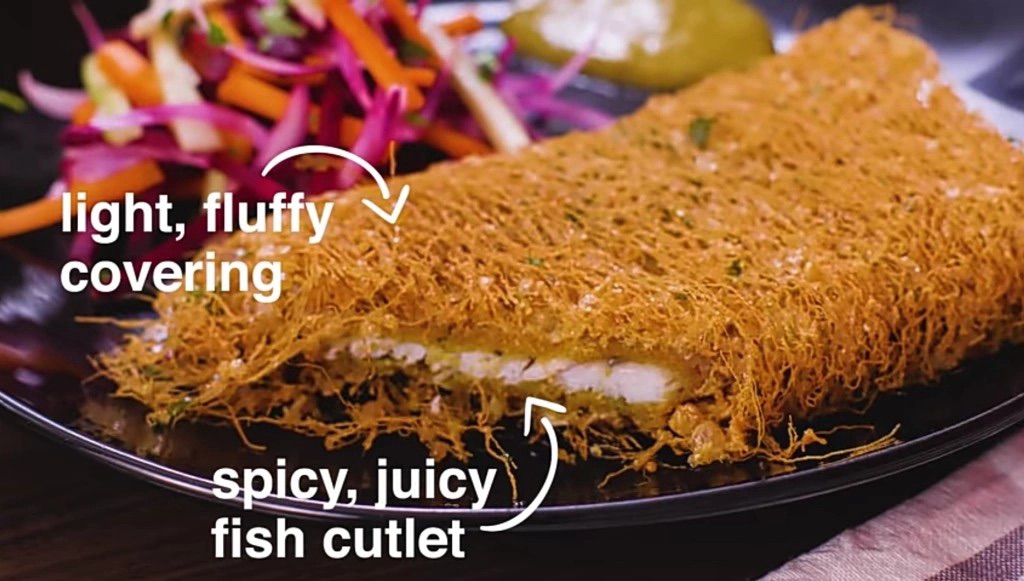
The batter, a mixture of seasoned egg and flour, is carefully drizzled over a lightly breaded fillet to produce a frilly mesh to encapsulate the cutlet. More surface area, more contact with oil, more crunch. The kobiraji is a greasy, guilty pleasure whose appeal is hard to beat. However, it isn’t just the batter which sets the two dishes apart. The differences start with the fish. While the fish fry uses a riverine fish, ideally bhetki, the Brits use sea fish, usually cod or haddock. All of these are white fish with a mild flavour and firm, flaky flesh.
While the British version uses no seasoning apart from salt in the flour batter, a good amount of flavour comes from the beer batter we talked about before. The kobiraji and fish fry, in true Indian style, receives a glorious marinade of ginger, garlic and green chillies, which imbues the fish with a more complex flavour. The marinade creates a world of difference, imparting the dish an unmistakable Indian touch. And dare I say, it tastes so much better than regular fish and chips thanks to it.
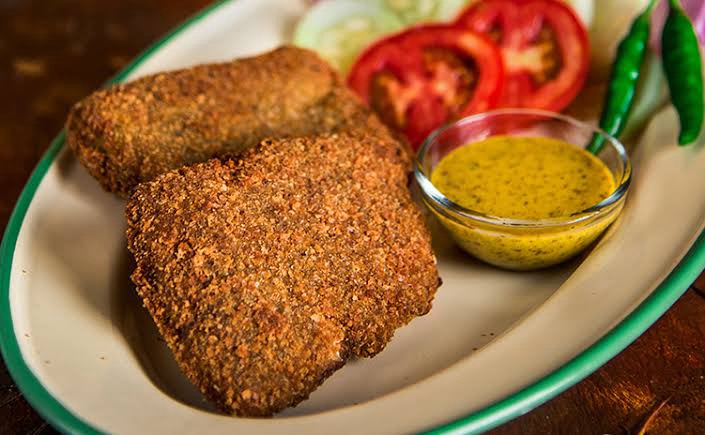
What really sets the two dishes apart are the sides. While the British pile fat on fat with a handful of fried spuds, the point of contrast being the trio of sauces we mentioned before, the Bengali version is a lot more minimalistic. All dishes in cabins are accompanied by a salad which comprises sliced onions and julinenned cucumber, with the occasional addition of matchsticks of carrot and beetroot, a fresh contrast to the greasy fish.
And then there are the sauces. There’s ketchup, which Bengalis often call tomato sauce or simply “sauce”, such is its ubiquity. But the king of cabin condiments is kasundi, that tangy condiment made with mustard and spices, stained yellow with turmeric and acidified with raw mango. Flecked with the black husk of the mustard seeds, kasundi is a condiment that would put most mustards to shame. Mustard pairs exceedingly well with riverine fish, from shorshe ilish to bhetki paturi, and the pairing of fish fry with kasundi is another case in point.

The cabins serve yet another classic which has clear British roots. The dim er devil or egg devil creates multicultural confusion, since it has nothing to do with devilled eggs, the dish that involves scooping out the yolks from hard-boiled eggs before mixing them up with flavourings and piping them back in. The dish is actually very different: a hard-boiled egg wrapped in a spiced goat mince or keema before being breaded and deep-fried.
The dim er devil is inspired by yet another British classic: the Scotch egg. Though traditionally eaten cold, I prefer to have to have it warmed up. Here, the meat in question is usually pork sausage and less often so, black pudding, that typically British product made by combining pork meat with pigs blood, which cooks to create a black, slightly crumbly end-product which is surprisingly savoury, a staple of a Full English breakfast.

Back to that drizzly London morning from last week. Before ordering their cod and chips, I opted for a rather unique appetizer. It was a twist on a scotch egg, called a “kedgeree scotch egg”. The dish comprised two halves of a soft-boiled egg wrapped in a casing and breaded, however this casing was different from the usual sausage casing I had eaten before. It is made with kedgeree, a dish that combines the Bengali love of fish and rice into one glorious package.
Kedgeree is a British dish that dates back to the Raj, made of cooked flaked fish (classically haddock) mixed with rice and hard-boiled eggs, all flavoured with curry powder, clearly inspired by an Indian khichdi. This restaurant took the eggs out of the mix and made it the centre around which was wrapped a deliciously spiced mix of rice and flaked haddock before being breaded and deep-fried. The curried casing was reminiscent of Indian flavours, further accentuated by the accompanying mayo, flavoured with aam er achaar and topped with kalojeere.

While we are enriched by fish fries and chicken cutlets, Indian cuisine has also made its impact in the UK, most notably in the form of the Madras curry powder and the countless curry houses littered across the country. And decades later, you end up with a Calcuttan on the streets of London, eating the progenitor of a popular dish back home, only this version is now coloured by the flavours of his hometown. If that isn’t cultural collaboration at its finest, I don’t know what is.

 The Gourmet Glutton