Anatomy of a Masterpiece (Part 1)
This year’s Christmas offering isn’t exactly Christmas themed, but a deep-dive into a dish that screams winter, among other things. I’ve dissected dishes on my blog before, but this one has to be the most elaborate. With generous forays into a variety of aspects that ultimately converge onto a single dish, this pair of articles is a good way to celebrate the season with a look back at my visit to the UK, one of the clear highlights of my 2024.
Every now and then, you end up stumbling across a dish that impresses you in terms of both flavour and concept, a dish that tastes delicious but also leaves you awe-struck at its stunning complexity, at the thought that goes into adding layer upon layer of ideas to create a final composition that is nothing short of a masterpiece. I had one such experience just a few months back when I visited London, in a chic restaurant called Fallow in the heart of the city. It features a chef’s table where you can sit and watch the magic unfold before your eyes.
The centerpiece of a Western meal is usually a large piece of meat, and Fallow does provide an amazing array of aged steaks and a whole cod head served with a Sriracha butter sauce, a dish that is one of their signature classics and really drives home the philosophy of no-waste cooking. This philosophy extends into the veggie domain as well with one of their bestsellers, the mushroom parfait which transforms mushroom trimmings into a luxurious concoction, a cross between mousse and pâté that really embodies the perfection which “parfait” literally means in French.

The problem with vegetables is that unlike meat, they often need help, since a whole head of cabbage does not pack as much flavour as a great sirloin steak. In India, this impediment is overcome by the use of an array of spices, a technique we apply to both fish and meat, very different from cooking in the West, where ingredients are allowed to shine of their own accord, something which is rather difficult to do with vegetables which usually lack a lot of intrinsic flavour.
And that is why vegetables are unfortunately relegated to the sidelines in a Western celebratory meal, from the humble mashed potato, a dish honey-roasted carrots for a British Sunday roast, or a green bean casserole, that iconic Thanksgiving classic comprising blanched green beans baked in a delicious mushroom-cream sauce and topped with a copious amount of crispy onions. Even then, dishes like these usually play second fiddle to the meat.

With the rise of veganism in the West, vegetables are getting more attention, and the way these are treated are taking multiple routes. One group tries to emulate the texture of meat in the form of lentil meatballs or pulled jackfruit tacos. Others try to look to other cultures, embracing traditionally vegan dishes from our own compendium, like the aloo gobi or palak paneer made with tofu. And then there are the innovators, who combine robust foreign flavours with traditional Western techniques which are commonly applied to meats.
Take confit, for example. It is a French technique of cooking food in fat at a low temperature, kind of like poaching in oil, and is traditionally applied to duck cooked in its own fat. The same technique can be applied to tougher vegetables. The centerpiece our dish is a piece of confit cabbage, cooked in butter. Unlike a cauliflower, which can often be cooked whole, think gobhi musallam or the Western whole cauliflower roasts, another example of treating vegetables like meat, the heterogeneity of the cabbage requires attention.
Cabbage has numerous layers of leaves, the outer thinner and drier, the inner thicker and more succulent. This dish takes an impediment ingrained into the main ingredient and turns in on its head, by treating the outer and inner heart differently. This provides opportunity to showcase multiple facets of an ingredient, like the iconic Five Ages of Parmigiano Reggiano created by chef Massimo Bottura, featuring five textures of parmesan: air, galette, foam, souffle and sauce, each made with a cheese of a different age.
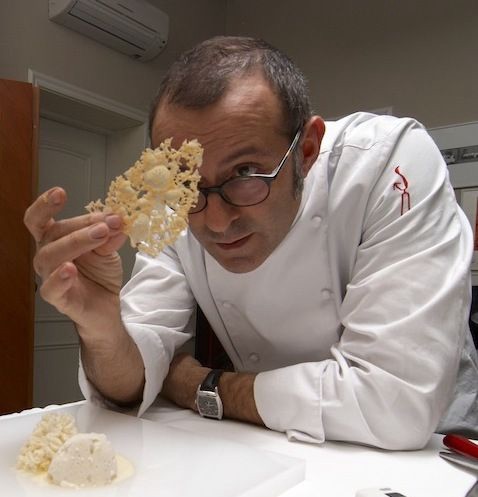
The outer leaves of the cabbage are taken off, shredded into fine strips (a technique the French call chiffonade) and deep-fried in oil. The thin, dry strips work especially well deep-fried, yielding crisp morsels that shatter like glass. The strips are then dusted with powdered kombu, a big source of umami. Umami, first identified in 1908 by Kikunae Ikeda, is that elusive fifth taste, that savoury, meaty flavour primarily attributed to glutamate and other molecules like inosine and guanosine. Ikeda discovered that glutamate was responsible for the flavour of a broth made with kombu, calling it “umami”, meaning “savouriness”.
Cooking meat breaks down their proteins to simple glutamate and other analogues which contribute to their umami flavour profile, which is why it is often described as “meatiness”. Umami ingredients can really make up for the relative dearth of meat in meals, the Japanese table is a great case in point. Umami makes another appearance in our dish, in the form of a butter sauce laced with miso, another Japanese ingredient packed to the brim with umami, drizzled all over the centerpiece of our dish: the cabbage heart.
Unlike the outer leaves, the inner leaves and heart of the cabbage are more succulent, more substantial, more conducive to a meat-like treatment. It is this part which gets slow-cooked in butter till it turns melt-in-the mouth tender and incredibly unctuous. The confit cabbages are then seared over a hot plate, much like a steak. After the cabbages are charred on the grill, the leaves are gently teased apart and studded with bits of walnut, which add a firmer bite, contrasting the succulent bite of the cabbage.

While both cabbage and cow develop a great crust of brown from a hot sear, the underlying chemistry is different. The Maillard reaction involves interactions between sugars and amino acids in meats at temperatures of around 140 to 165 degrees celsius, creating a ton of flavour. It imparts flavour to the crust of a steak, as well as slow-cooked dishes like the kosha mangsho. Vegetables lack proteins and so cannot undergo the Maillard reaction. What happens instead, is caramelisation.
Caramelisation involves just sugars, and occurs at much higher temperatures. Diacetyl, produced at the beginning of the caramelization process, results in a butterscotch-like flavour, whereas furans create a nuttiness. While this technique applies to dessert applications like caramel sauces, vegetables rich in sugar also undergo caramelisation, a great example being the crispy onions that adorn a biryani or the softer ones that form the foundation of a French onion soup.
Cabbage lies somewhere in the middle of the sugar-content spectrum of the veggie world, lower than sweet vegetables like carrots and parsnips which turn soft, sweet and burnished at the edges while roasted, but higher than other vegetables like the similar-looking lettuce or the botanically related cauliflower. The edges turn crisp and brown, charred and ever-so-slightly sweet. The thing with caramelisation though is, when taken too far, it causes blackening due to the burning of the sugars. And while burnt food is obviously a no-no, controlled blackening is a whole different ballgame.
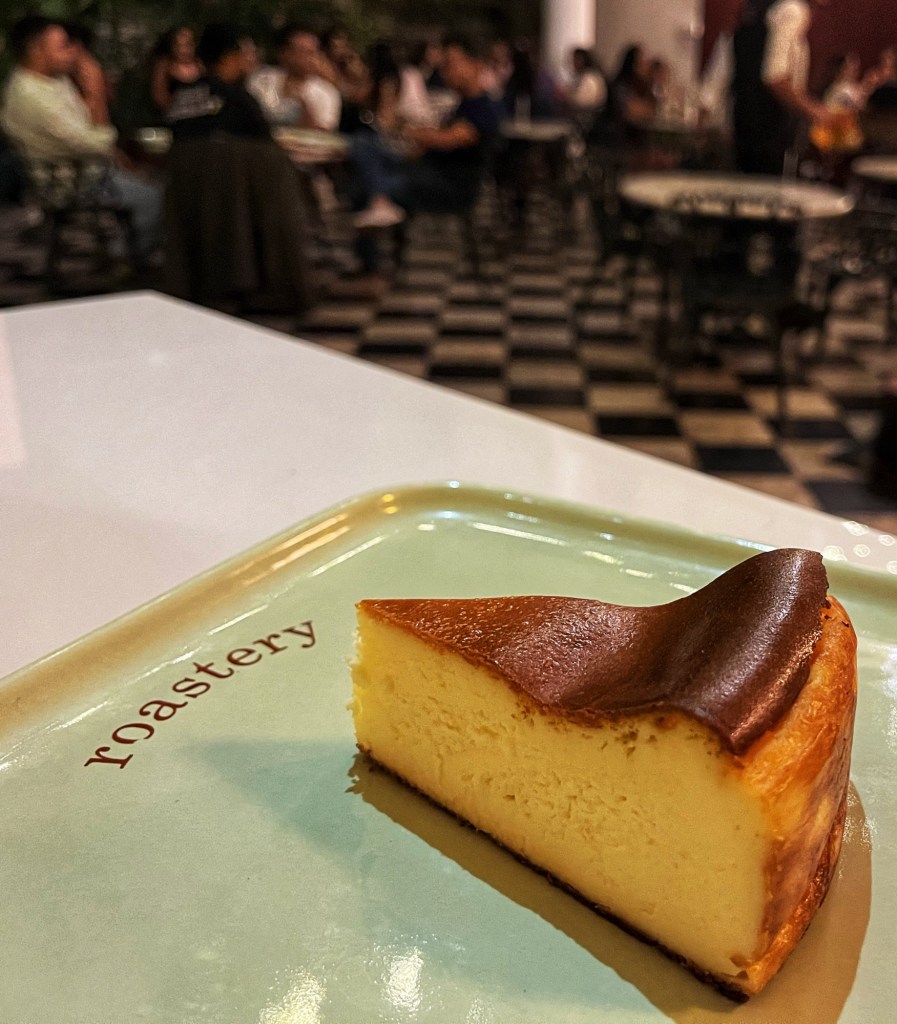
Accents of black add a certain “je ne sais quoi” to food, be it the smoky char of a Bengali begoon pora or the blackened bits of a streetside bhutta accented with chillies, lime and salt. In the West we have crème brûlée (literally “burnt cream”), the amber caramel with spots of black adding the perfect contrast to the cool, creamy custard underneath, much like the Basque or burnt cheesecake, with its charred crust and pillowy center.
While the cabbage on the plate looks dark and borderline “burnt”, accentuated even further by the crisp slivers that lie like burnt leaf litter on top, it is when you pry open that you realise the balance at work here, the acrid yin of the charred edges and fried bits perfectly complementing the rounded yang of the buttery leaves. However, the other components of the dish that go in later are what raise this dish from greatness to perfection. More on them next time, on Christmas Day.


 The Gourmet Glutton
yumm
LikeLike