Bengali Cuisine : The Traditional and The Trendy
The 21st century is an interesting time. The global village is shrinking, and we are reaching a situation where you can savour Venezuelan arepas in the heart of London and a bowl of Korean bibimbap in a cosy cafe in Kolkata. Fusion food is on the rise, and indigenous practices are on the decline. Kids these days would much rather hop over for potato chips or fried chicken rather than flock around the dada selling ghoti-gorom and jhalmuri, the art of painstakingly making phul boris by vigorously hand-whipping ground up kolai daal to create meringue-like, melt-in-the mouth marvels is on the decline.

The thing is, many cuisines are blessed with records that have preserved the intricacies for their cooking, like Marcella Hazan’s iconic book exploring regional Italian cuisines, or Maangchi’s online chronicle of the intricacies of Korean food. For a long time, we haven’t had any such thing. But things are slowly changing. There are channels on YouTube like Bong Eats that have achieved the unbelievable feat of chronicling and systematizing the recipes of everything from the homely shukto and shapla chingri to the more celebratory kosha mangsho and choshi pithe.

Then there are others who are taking things a step further, and looking into the past to retrieve recipes that would have otherwise been lost forever. They cover a lot of ground from the almost forgotten koura, a less popular category of vegetarian dishes that usually uses mustard and coconut, or the enigmatic sagar doi, a dish of kheer dumplings poached in milk. Some blogs and food shows are trying very hard to hold on to the heritage, showcasing the painstaking art of making a streetside petai porota, or shedding light on the gravely endangered Calcutta cabin and the almost extinct pice hotels.

The two contrasting ways in which people are trying to preserve the rich heritage of Bengali cuisine was perfectly encapsulated by two meals I’ve had this month, at a time when the city has been gearing up for Durga Pujo. The average Bengali restaurant serves up a set array of dishes which, though absolutely delicious, capture only a subset of the richness of our cuisine. These two places, a 10-minute walk away from each other, serve up a pair of set menus that employ very different techniques to achieve the same end-result: the preservation of the complex heritage of Bengali cuisine, from both West Bengal and Bangladesh, with particular focus on rural cuisine.
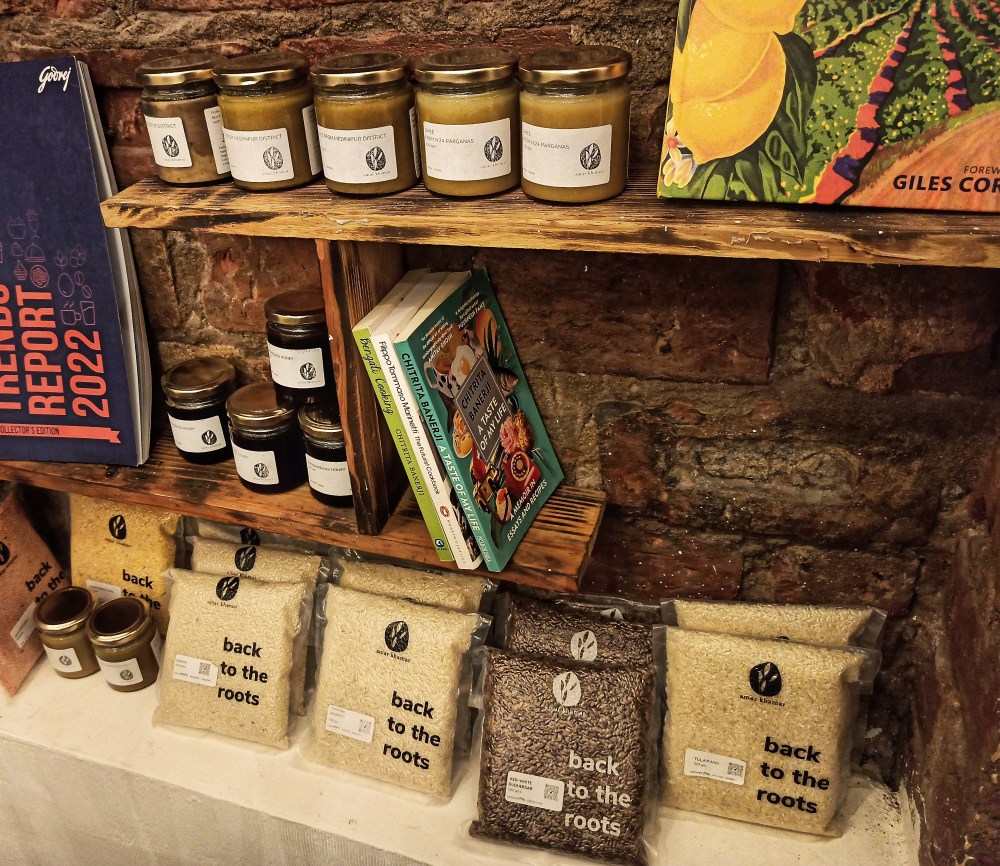
Amar Khamar’s lunch room is the restaurant counterpart of the larger Amar Khamar project which has been growing strong for years now, showcasing artisanal varieties of rice and other ingredients from all over Bengal. Their initial approach of applying these ingredients in an avant-garde menu has now been replaced by a bare-bones, no-frills, multi-course meal, served on a banana leaf. The weekend version of this, dubbed “chhutir bhaat”, is one of several offerings at their restaurant. The only choices you get in the chhutir bhaat are in the main course where you get to pick between a number of vegetarian and non-vegetarian options. You leave the rest to the experts.

The meal gets served in four “courses”, each comprising a different variety of rice with a number of dishes that pair well with it, from the aromatic chinekamini that goes brilliantly with a subtle, milky shukto, to the branny, chewy laal-sada dudhersar that pairs well with more robust flavours. The meal is served on a banana-leaf, and the stone table-top and heavy steel tumblers take you back to a different era. The meal was arranged into courses like teto (bitter), bhaja (fried) and so on, reflecting the French-like sequentiality to the Bengali meal.

The dishes use a variety of ingredients slowly disappearing from the modern Bengali kitchen, be it the kharkol pata (arum leaves) popular in rural Bengal, to the delicious kathal er bichi (jackfruit seed) that add an addictive crunch to their already delicious ghonto. There were several delightful discoveries for me throughout the meal, from the realisation that watermelon rind can be used rather effectively as an ingredient for shukto, a perfect example of no-waste cooking , to trying shaapla-bhaja for the first time, the succulent petals sheltered by a brilliantly brittle batter. Their mutton dish uses chui jhaal as a spicing agent, a kind of long pepper which was one of the oldest sources of spice in Bengal, long before the Portuguese introduced chillies to India.
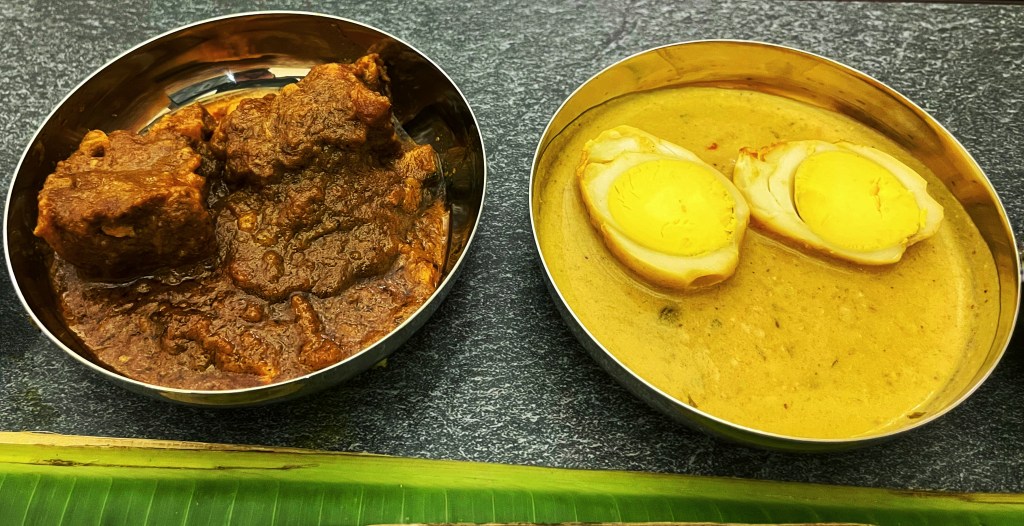
But my friend who had flown in from Karnataka was the one who had the real adventure during the meal. A strict vegetarian, he was completely at home with the extremely veggie-friendly meal. Meat has always been a rare luxury in this rather frugal cuisine. Bengali food is humble at heart, and this kind of meal, although spruced up, showcases that simplicity in the most honest way possible. Although it looked quite similar to the North Karnataka or Andhra-style banana-leaf meals I’ve had when I was in Bangalore, he too agreed that this was a different kind of vegetarian food, with flavour profiles hitherto unknown to him.

If Amar Khamar is a great introduction to no-frills, humble Bengali home-cooking, Sienna’s Rannaghor project, started about a month-ago, is an attempt to take familiar and forgotten flavours to new heights. Sienna began as a small store selling hand-made pottery and other artisanal products, which expanded into a chic cafe, a restaurant, and now this. There is animosity between the two places, with the Sienna store stocking up on Amar Khamar pantry staples which go into their dishes. But Sienna takes a completely different approach to the same style of food: a 13-course degustation menu reminiscent of European fine-dining, but with flavours firmly rooted in Bengal.

There is a lot of focus on forgotten ingredients: their second course features a sausage made out of shankar machh (stingray), while one of their courses featured offal, employing all off the mutton off-cuts including kidney, heart, testicle and stomach fat. Familiar ingredients are given an unconventional treatment, like the uchher achhar (pickled bitter gourd) that forms the heart of the opening bitter course, to the ingenious treatment of fatty katla (carp) like pork, which turns up as a bacon-y concoction in the charcuterie board and as an undercover “pork belly” in one of the main courses.

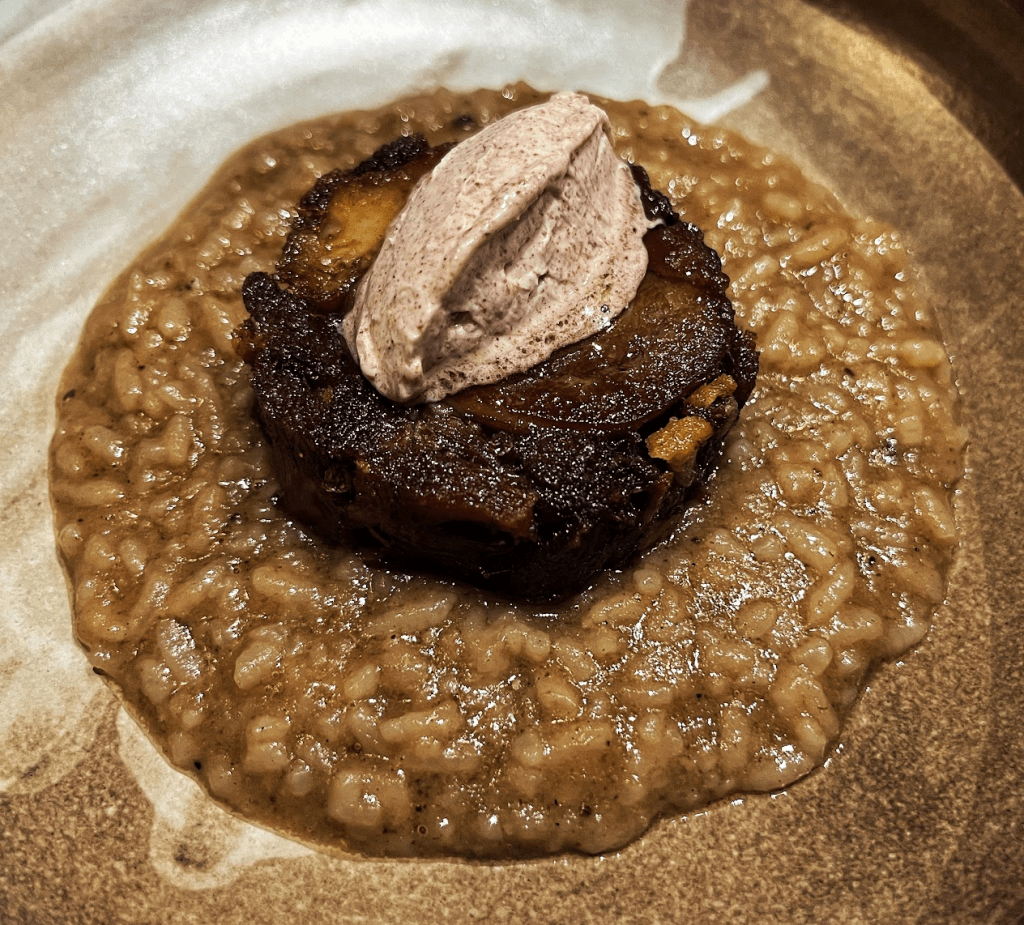
The fact that I decided to visit this place with a Bengali schoolfriend as passionate about food as me, made the experience even better. We have both grown up with these flavours, and teasing apart the strands of these European looking dishes to get to it’s Bengali heart was an absolute treat. We swooned over the vinaigrette that accompanied the katla “pork belly” which tasted uncannily similar to a light machher jhol, and relished the “rezala” main course which, with its perfectly spiced risotto-esque rice and fall-apart meat, crisp on the outside and succulent on the inside, was my favourite dish of the meal.
Both meals highlighted Bengal’s amazing produce, like the deeply nutty ghee to go with the first two courses of the Amar Khamar meal, to the aam shorshe that pairs amazingly well with the shaak. There were nods to nostalgia with a lebu-hojmi sorbet and a Horlicks ice-cream in the Sienna menu. A variety of local cheeses showed up in a variety of their dishes, from the subtle Bandel cheese that was turned into a foam for the first bitter course, to the funkier dhakai paneer that formed a part of the second “charcuterie” course, to the chhana that was a part of dessert.
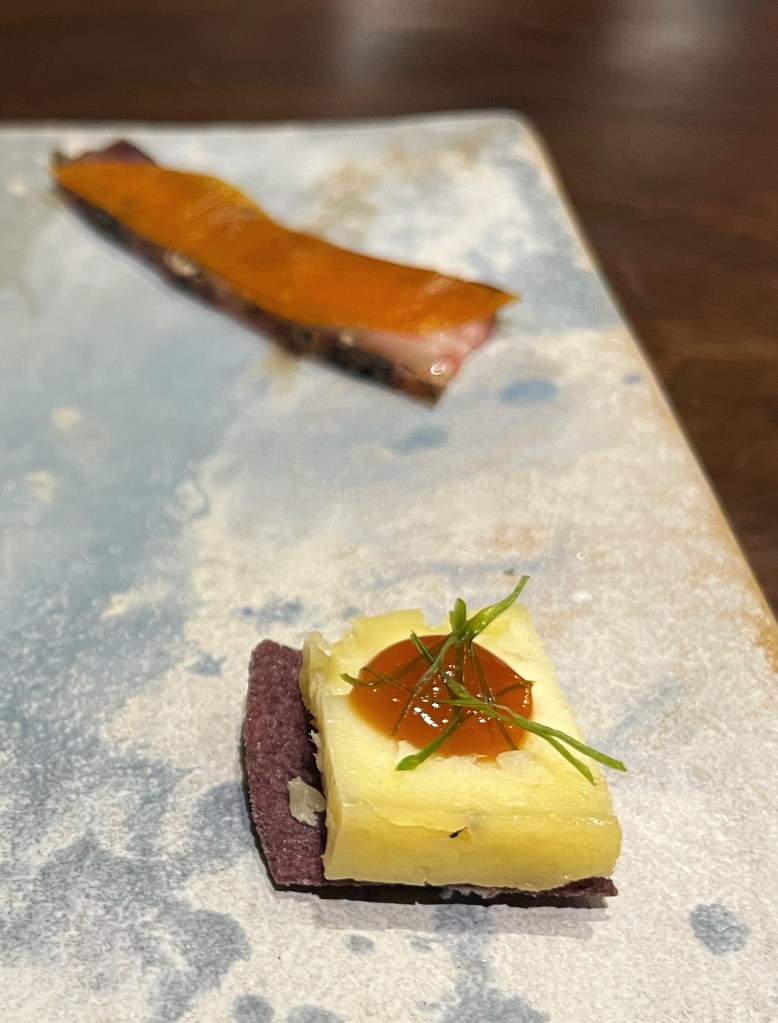
Cheddar and mozzarella is famous the world over, but Bandel cheese and Dhakai paneer aren’t. We all know about yuzu and maple syrup, but the world is oblivious to gondhoraj and nolen gur. Extra-virgin olive oil get’s all the limelight while the golden mustard oil, neglected, fumes in the corner. Chinese five-spice is ubiquitous while Bengali panchphoron is a curious novelty. You will find Korean gochujang in Kolkata now, but you’d be hard-pressed to find Indo-Chinese green chilli sauce in Seoul. As one of my friends always says, we Bengalis have never marketed ourselves enough. There is a criminal underappreciation of some of the products that Bengal has to offer, and the time is ripe for change.

I’ve had the pleasure of introducing some of my non-Bengali friends to our cuisine in some of the popular chain restaurants that have their branches in Bangalore. And while I have no complaints about such dishes, there is no denying that Bengali restaurants everywhere have a certain homogeneity to their menu, and do not quite reflect the more down-to-earth food of the everyday meal. There are dishes which Bengali restaurants never serve, like the bitter ucchhe bhaja or the simple sada aloor torkari. As the famous food writer Chitrita Banerjee writes, “This is partly the fault of the Bengalis themselves, for they cannot bring themselves to serve, much less flaunt, some of the simplest things which are also the best they have devised over time”.

One of the best examples of beauty in simplicity is the shada aloor torkari (white potato curry) which combines potato, green chilli, nigella seeds and sugar into a sum far greater than its parts. So why aren’t we serving up a sublime shada aloor torkari at restaurants? Because we think it’s too simple. Like Italian cuisine , Bengali cuisine stems from frugality and is very humble at heart, but while the Italians proudly showcase their simplistic charm through minimalistic masterpieces like spaghetti aglio e olio, we have always felt that it’s “not good enough to flaunt”. But simplicity has always been one of the biggest assets of our cuisine, and hiding behind daab chingri and kosha mangsho is showcasing to the world a version of our beautiful cuisine that is stripped of its very essence.
So, as the city is gearing up for its annual carnival, it’s the perfect time to flaunt the richness of our cuisine. Our rich culinary tradition has a lot more to offer, and it’s about time that we realized it ourselves and shared it with the world.
Wishing all readers of The Gourmet Glutton a very happy Durga Pujo!


 The Gourmet Glutton