Chocolate is a universal favourite, from 5 year olds pointing at the huge bar of Dairy Milk at the store to the pseudo-intellectual “foodie” picking up notes of coffee, tobacco and 23-year old leather from a ridiculously expensive bar of 99 percent dark chocolate. There is a lot to be said about chocolate. I’ve decided to take a slightly unconventional approach, talking about the variety in the world of chocolate by focusing on 7 classic flavour pairings with dark chocolate, starting with chilli. And the chocolate chilli combo takes us straight back to the Olmecs, 3 millenia back.
The scientific name for chocolate is Theobroma cacao. “Theobroma” translates to food of the gods (yes, that’s where the famous Indian bakery chain gets its name), a clear testament to the amount of reverence with which the Aztecs regarded the fruit of this plant, native to central and south America. Even before the Aztecs (1300-1521), the Olmecs (1200-400 BC) and the Mayans (250-900 AD) also used chocolate to make drinks, flavoured with local ingredients like wild honey, chilli, and achiote, a kind of red food colouring still popular in Mexican cuisine. A short etymological digression would drive this point home even further.
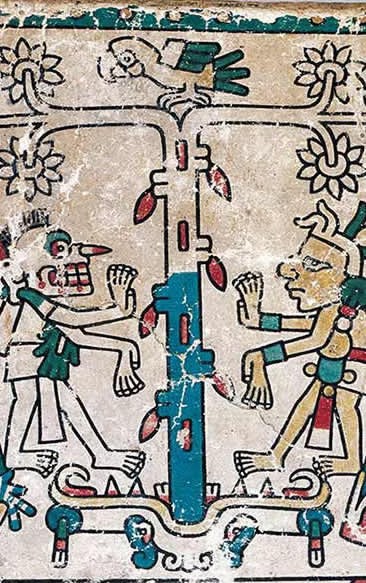
“The word cocoa comes via the Spanish cacao, which in turn came via the Maya and Aztec from a probable Olmec word kakawa coined 3,000 years ago.”Chocolate” has a more complicated history. The Aztec (Nahuatl) word for cocoa-water was cacahuatl, but the early Spanish coined chocolate for themselves. According to historians Michael and Sophie Coe, they may have done so to distinguish the hot Maya version that they preferred from the cold Aztec one — in the Yucatan, “hot” was chocol; the Aztec for “water” atl.”
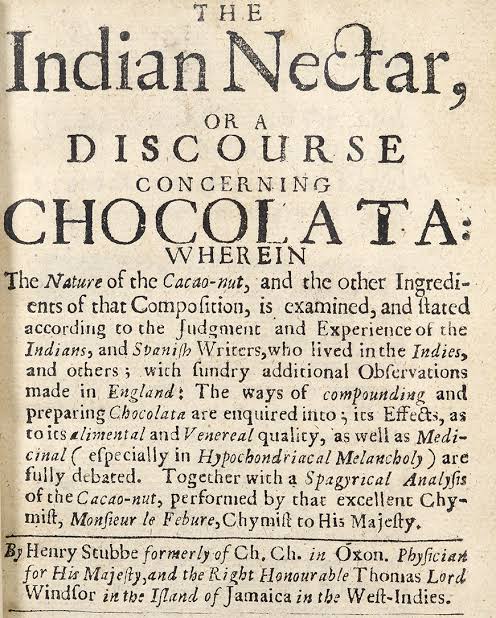
The Columbian exchange at the turn of the 16th century brought chocolate to Europe, and the Europeans started adding their own flavours like cinnamon, clove, anise and hazelnut. But for about 200 years, Europe knew chocolate almost exclusively as a beverage, and chocolate’s use in confectionery was limited. Then, things began to change. In “The Indian Nectar” (1662), The Englishman Henry Stubbe noted that in Spain and the Spanish colonies “there is another way of taking it, made into Lozenges”.
In the 18th-century French “Encyclopédie”, we find that chocolate was commonly sold as a half-cocoa, half-sugar cake flavored with some vanilla and cinnamon, and was “not so much a delightful confection as an emergency meal”. The main reason for this lack of interest in solid chocolate was probably the coarse, crumbly texture of the chocolate paste. To improve the texture, Conrad van Houten, in 1828 developed a screw press to compress the cocoa liquor made by grinding cocoa into cocoa solids and cocoa butter. These cocoa solids, devoid of the fat made a less greasy, more chocolatey, hot chocolate. We’ll get to the cocoa butter in a bit.
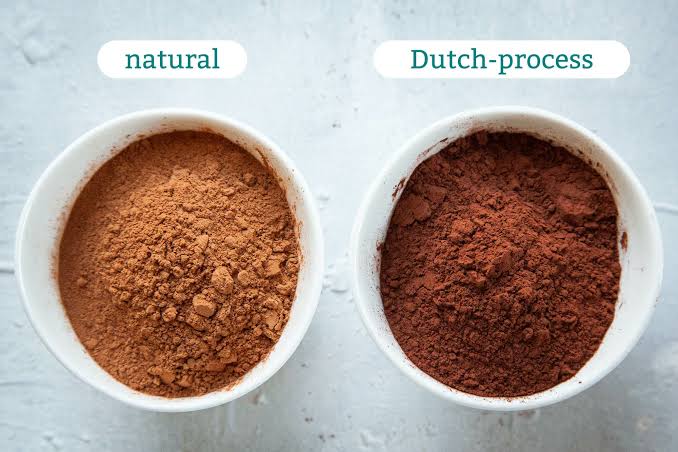
A quick aside on cocoa powder, the basis for hot chocolate and a lot of other chocolate confections. In India we mostly get natural cocoa powder, sold by companies like Welkfield and the American Hershey’s. Treating the cocoa powder with alkaline potassium carbonate takes away some of its acidity and deepens its colour, the so-called Dutch Processed cocoa. The difference in pH needs to be kept in mind while baking, especially when leavening with carbon dioxide is an issue. I’ve always used the natural processed myself, although the Dutch processed version produces a product with a richer, deeper colour.
Chilli works great in hot chocolate, since it adds another element of “heat”, the false sensation of heat generated when the capsaicin in chillies stimulated the TRPV1 receptors on the tongue that sense heat. Cinnamon works on a similar line, although cinnamon’s heat is less biting, more rounded, and with a touch of sweetness. Chilli also works brilliantly in a cold chocolate bar, and here the contrast of the cold chocolate and the “heat” of the chilli, which slowly creeps up on you as the chocolate melts in your mouth and the capsaicin starts to work, creates the same gustatory magic as a scoop of wasabi ice cream.
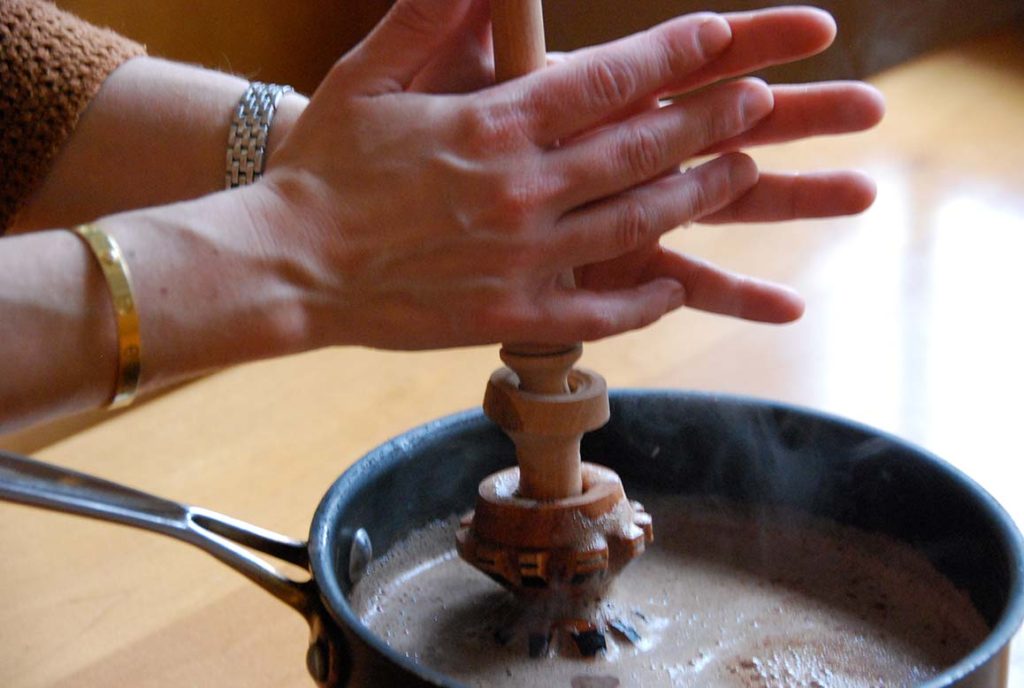
On the flip-side, bitter chocolate gets used in savoury dishes in Mexico, particularly the mole. A word that directly translates to sauce (think guacamole), a mole is a complex sauce with layers of flavours, predominantly from dried chillies like ancho, guajillo and pasilla. Bitter chocolate adds another layer of complexity to this sauce. The chocolate comes in round discs, meant to be roughly chopped and added to the sauce. Similar chocolate discs are also available for making hot chocolate in Mexico, just like the days of yore, before cocoa powder entered the scene: add spices to milk, followed by a slab of the chocolate. It is mixed with a traditional equipment, the molinillo, a wooden, hand-carved device that dates back to the Aztecs.
Let’s take a quick digression and talk about hot chocolate and marshmallow, shall we? The first time I heard of it was way back in a cartoon called Oswald, where Henry, the anthropomorphic penguin with a hint of OCD ordered his hot chocolate with two marshmallows, “no more, no less”. It wasn’t until i tried this combo almost a decade later that i understood its appeal. The marshmallow melts in the hot chocolate to create a sticky, sweet contrast to the bitter chocolate. Mini marshmallows melt away into a more homogeneous mass, while the bigger ones allow room for heterogeneity, with some sponginess still remaining in that inner core.
Personally, I prefer hot chocolate made with chocolate rather than just cocoa: I feel that the cocoa butter adds some body to the drink that makes it feel more unctuous, and less like a mug of Bournvita. Hot chocolates come in other flavours too: coffee, hazelnut, caramel and vanilla, many of which we’ll visit later. But for me it is the chilli which reigns supreme…..among the “Western” flavours atleast. While in spiceland, there is another spice that pairs so brilliantly well with dark chocolate, that it is a real shame that it isn’t much better known. I stumbled across it for the first time in 2014, when I visited the spice plantations in Thekkady, Kerala.
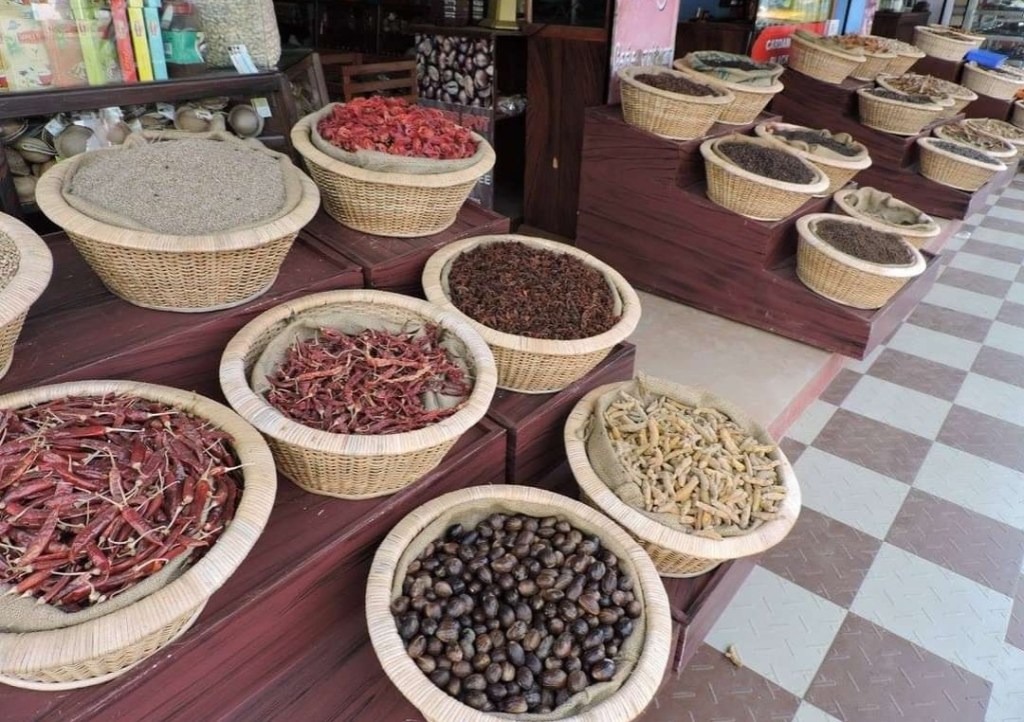
A shop outside the plantation was selling chocolate thins (we’ll get to thins later), flavoured with spices from the plantation. From clove and cumin to cinnamon and chilli, they had it all. But one of them stood out head and shoulders above the rest. Next time, we will talk about this spice, which works brilliantly with dark chocolate, but sadly doesn’t get the credit it deserves.


