Bangalore is a melting pot of cultures and communities, with enthusiastic celebration of everything from Durga Puja and Eid to Onam and Christmas. Having explored aspects of Christmas in my previous years, with the Calcutta Christmas Cake and the Western-style Christmas dinner, this time, I decided to focus on the Christmas food of the Mangalorean Christian community, with liberal detours into Mangalorean food in general.

Most Mangalorean Christians are infact, converted Konkan Brahmins who ended up migrating out of Goa in multiple exoduses to escape the Goan inquisition by the Portuguese, who forcefully converted the local Brahmins and disallowed them from performing their traditional rituals. Despite having been converted to Christianity, many of the migrants continued their Hindu rituals as usual, which is why beef is still quite a rarity in Mangalorean cuisine.
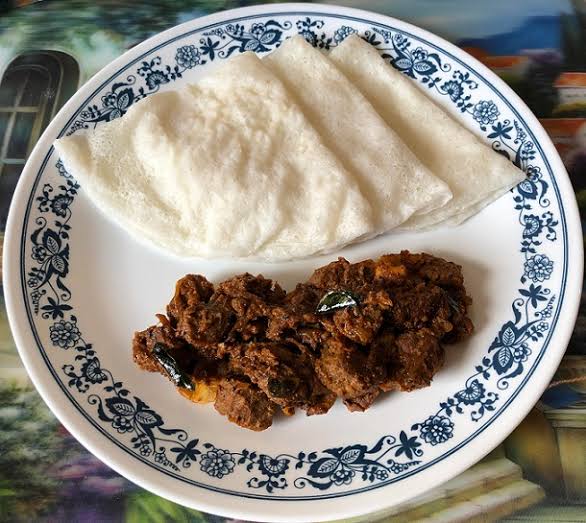
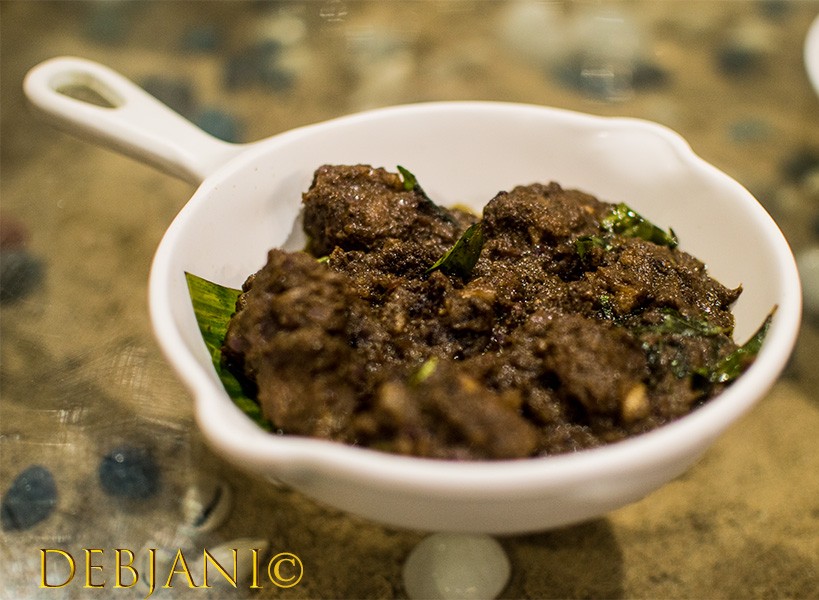
Despite the paucity of beef, pork reigns supreme, in the form of dishes like the pork bafat and the pork indaad. The spicing of a Pork Bafat, also called Dukra maas, is typically Mangalorean, soured with tamarind and flavoured with bafat masala, predominantly comprising red chillies like Kashmiri and Byadgi, coriander, cumin, mustard, poppy seeds and the usual whole spices like cinnamon, clove and cardamom.
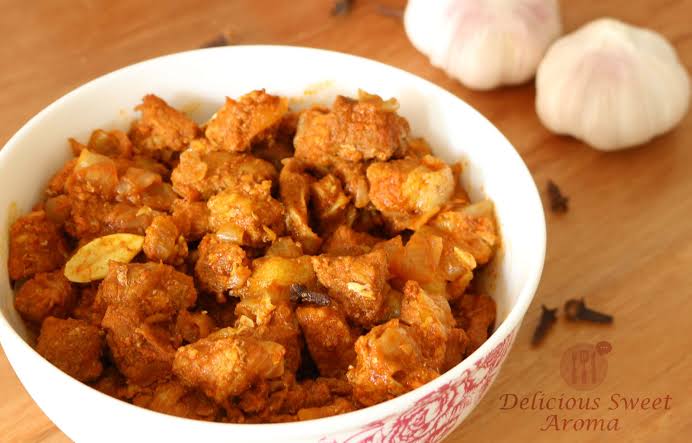
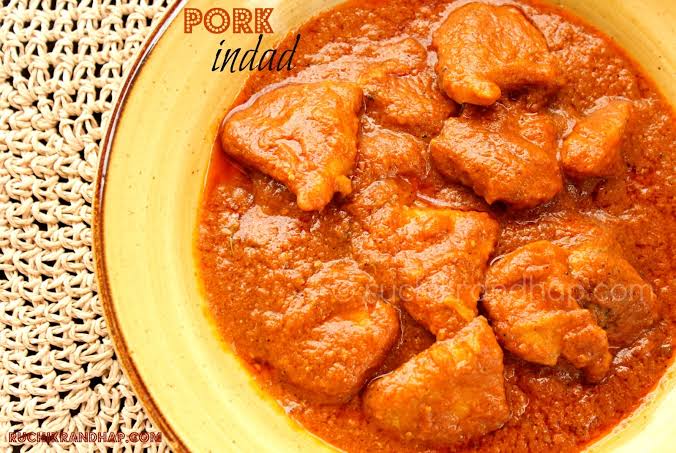
Pork indad on the other hand, is a special occasion dish, reserved for weddings and of course, Christmas feasts. In addition to the chilli heat and the tamarind tang, you have the addition of sweet ingredients: raisins, dates and jaggery. The resultant sauce is therefore very different and when made well, a perfect balance of sweet, sour, and spice. Think pork in barbecue sauce, but a hundred times more nuanced.
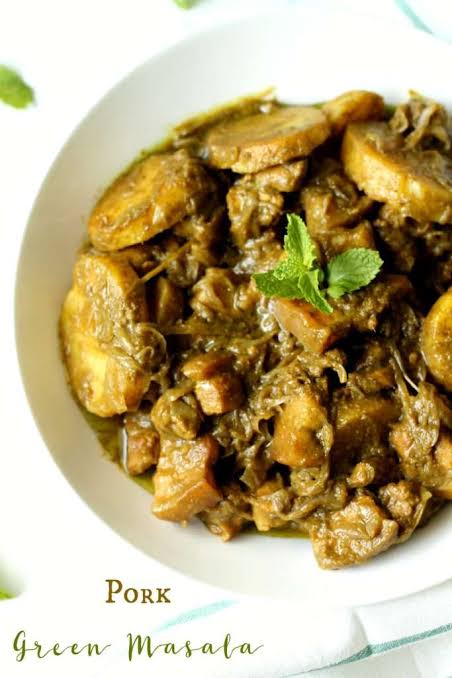
Other pork dishes include the pork salad made with fried pieces of pork served with slices of raw onion, as well as dishes that are imports from other cuisines, like the chilli pork, an exponent of Indo-Chinese cuisine, and the pork sorpotel, a Goan derivative which in Mangalore, often has offal added to the mix. Then there is the pork green masala, the greenery contributed by coriander, mint and green chillies, quite similar to chicken Cafreal from Goa.
Mangalorean cuisine has its fair share of chicken dishes too, like the sukka, made with grated coconut and a handful of spices, brilliant with boiled rice and dal, the pulimunchi or ambot thik, a tangy dish flavoured with tamarind, and the ubiquitous ghee roast, made with red Byadgi chillies and bearing the unmistakable flavour of ghee. Interestingly, the ghee roast was invented only as recently as 50 years ago at Shetty Lunch Home in Kundapur, a small town about 90 km from Mangalore.

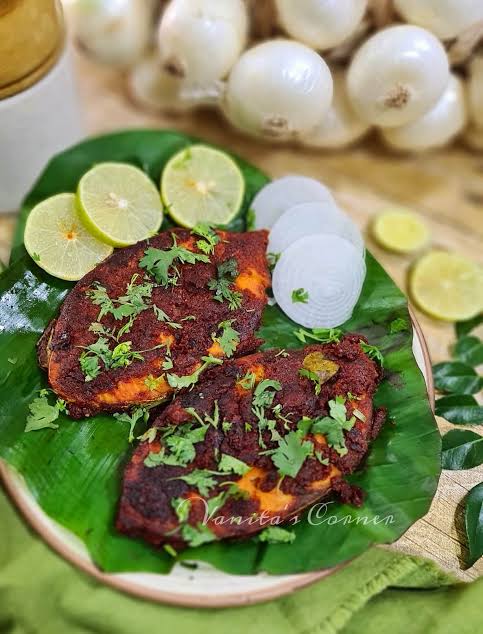
Of course, all of these dishes can be made with seafood as well, but seafood is not a part of the Christmas spread or infact, any celebratory spread in Mangalore, rather counter-inquitive considering the sheer ubiquity of seafood in Mangalorean cuisine, from the meaty steaks of Anjal or kingfish, flat discs of pomfret, or the incredibly flavourful bangude or mackerel, which can be cooked up into curries or served fried, either with a spice coating (tawa fry) or a brittle shell of semolina (rawa fry).

Why so? Well, the ubiquity of fish in the fecund Mangalorean shores has given it a reputation of a rather humble, down-to-earth ingredient, with no place for it in a celebratory spread. Infact, the only occasion in which seafood may be served is a funeral, where food isn’t a centerpiece but an unassuming component of the proceedings. Fried fish or fish curry with boiled rice is comfort food that is hard to beat though, and though the components sound remarkably similar to the Bengali machhi-bhaat stereotype, the flavour profile is completely different.

The rice is usually short-grained with a plump “bite” to it, and the fish come from the sea, unlike the riverine fish of Bengal, and sea fish like bangude (mackerel) and boothai (sardine) have a distinctive flavour, a salinity which is completely absent from the almost sweet Bengali fish like bhetki (barramundi) and katla (perch). There is no pairing with mustard; instead these dishes use flavourings like coconut milk and tamarind.
A quick aside, on souring agents in foods along the Konkan coast. The source of tang varies from region to region, from balsamic vinegar in India to black Chinkiang vinegar in the Sichuan province of China. Move from one place to another in the Konkan coast though, and you see the acid changing, from kokum in Maharashtra, to vinegar in Goa, to tamarind in Mangalore. Coorg, infact, has its own style of black vinegar called kachampuli, made from the ripe fruit of the Garcinia tree, used famously in a famous local preparation with pork or chicken.
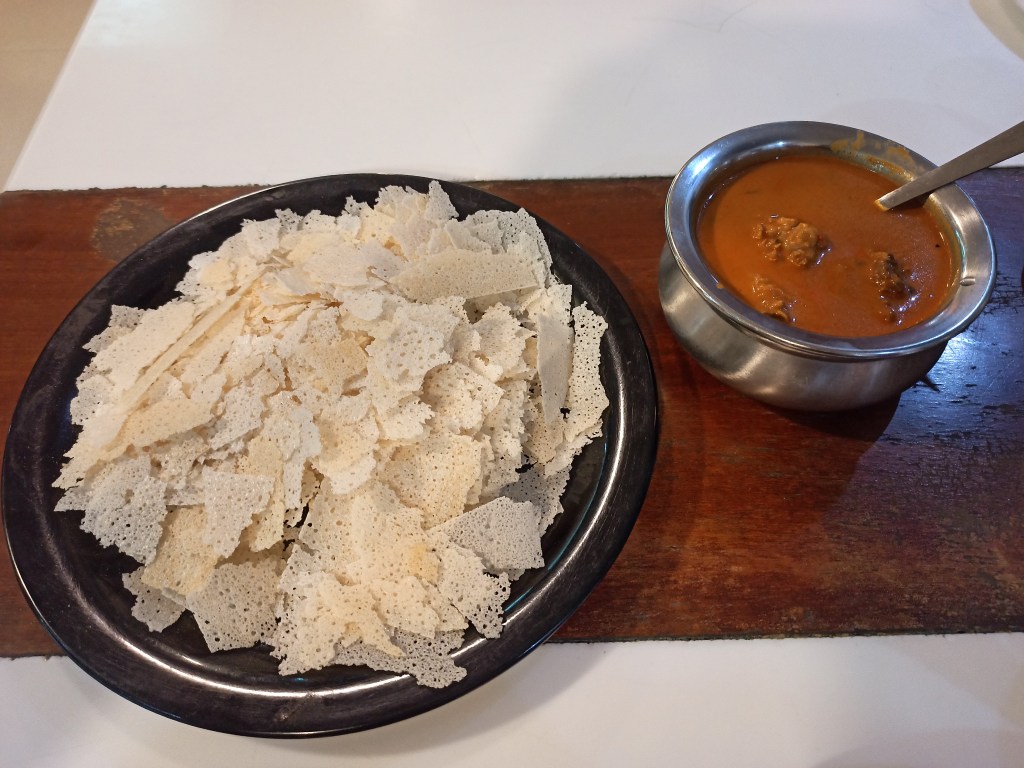
While the piscean versions of curries remain off the celebratory table, chicken is a welcome guest, in the form of the green masala and the roce curry, “roce” referring to coconut milk, one of the main ingredients in the dish, giving it an almost Thai curry-esque vibe. Roce, infact, is a traditional ceremony in Mangalore Catholic weddings, where the bride and groom are anointed with coconut milk and oil, called “roce”. And what do you eat it with? With kori rotti, of course.

For the uninitiated, kori rotti is a unique textural delight, essentially thin, brittle wafers made of rice. When the hot curry is poured over it, the wafers soak up the sauce and soften into a pliable texture, which can then be used to scoop up the chicken and sauce. Chicken roce curry or Kori gassi (the Tulu word for curry) with roti is Mangalorean food at its simplistic best.
Join me tomorrow on Christmas day for part 2 for our exploration of the Mangalorean Christmas. Happy Christmas Eve!

 The Gourmet Glutton
You got to try the food at mangalore pearl.
LikeLike