The Potato Chronicles: Part 1
The Gourmet Glutton is back….well, kinda. Although I will try to post on a regular frequency, I will limit it to the first Sunday of every month, in addition to the occasional off-schedule article here and there. The idea is to maintain a certain consistency, albeit spaced out. The agenda? A mammoth 10-parter on the humble potato. Excited? Let’s go!
The potato is as ubiquitous as it is humble. It is a blank canvas for a variety of flavours and is an integral component in a large number of dishes the world over. In this long, rather ambitious series, we will tackle the versatile potato in all its glory while taking a trip around the world, with stops along the way in order to take languid detours into science, history, and more.
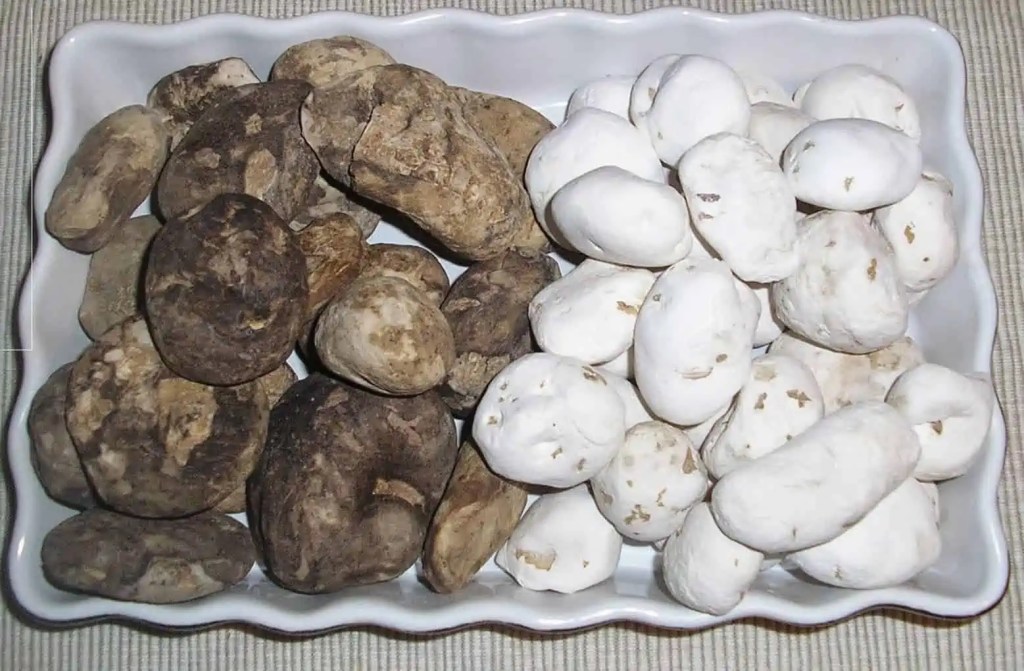
Let us start with a bit of historical background. The potato is a New World crop, first cultivated probably by the Incas. People living in what is now Peru and Bolivia used to freeze-dry them to last longer. These chuño, as they were called, lasted for years to even decades, and fuelled the rise of the Incas. It was introduced to Europe only in the 16th century. It is only apt that the first pair of dishes we feature in this series originates from the two places involved in this exchange.
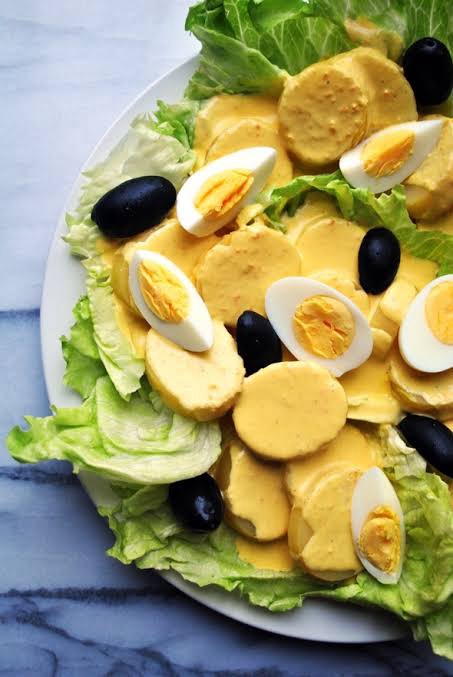
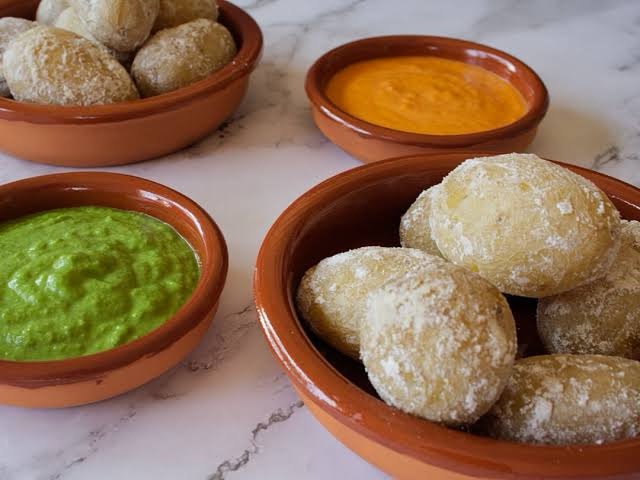
The Peruvian Papa a la Huancaina is a ridiculously simple dish of boiled potatoes draped in a chilli and cheese sauce, topped with hard-boiled eggs and olives. Patatas Arrudagas, literally “wrinkled potatoes”, is a dish from the Canary islands (a part of Spain) that simply involves cooking washed, skin-on potatoes partly submerged in salted water until the waters dry up and the potatoes are cooked through. These are then ruffled slightly in the pan to wrinkle up the skin, and served with a punchy mojo verde (cilantro, cumin, garlic, vinegar, olive oil), or mojo rojo (red bell pepper, cumin, paprika, garlic, vinegar, olive oil).
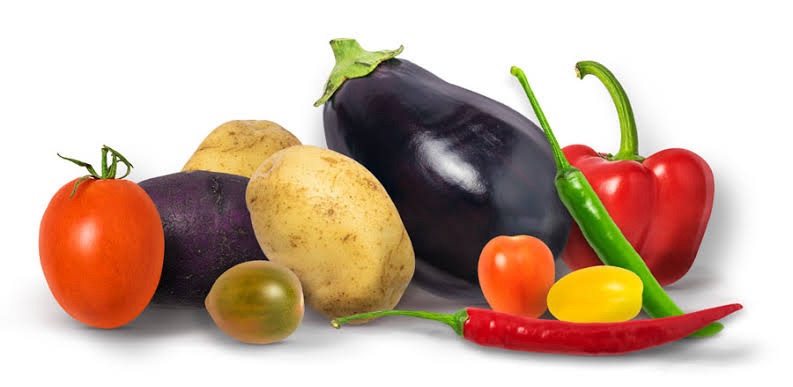
But the initial reception of the mighty spud in the Old World was rather lukewarm. It was a weirdly shaped, dirt-covered thing from a faraway land, that you pulled out of the ground. It has no mention in the Bible and doesn’t grow from seeds but from bits of the same thing buried back into the ground (“Dust thou art, and unto dust shalt thou return”?). What’s more, it belongs to the deadly nightshade family, making it a cousin of tomatoes, eggplants and bell peppers. People were initially wary of it and even called it “The Devil’s Apple”. So, what do we do with these dirt-covered second-cousins of Belladona? It starts with the washing.
“The potato is a tuber, the tip of an underground stem that swells with stored starch and water”, says Harold McGee. And since spuds grow underground, they need to be thoroughly washed to get rid of the dirt before the cooking begins. The next step, peeling, is optional, with many recipes call for skin-on potatoes, as in the Canarian dish we just saw. Many recipes however, involve peeling the potato, with the peels usually chucked in the bin, which is a shame, because it can be used to make some great dishes.
On the fancier end of the skin spectrum, hollowed-out potato skins can be topped with cheese, bacon bits and other goodies and baked off to make loaded potato skins, perfectly epitomizing the American indulgence. Put on your creative cap: I’ve seen Jaime Spafford from Sorted Food use them as miniature burger buns because, why not? Although this is technically a no-waste dish, it isn’t exactly minimalistic. For that, we need to step into a Bengali kitchen.

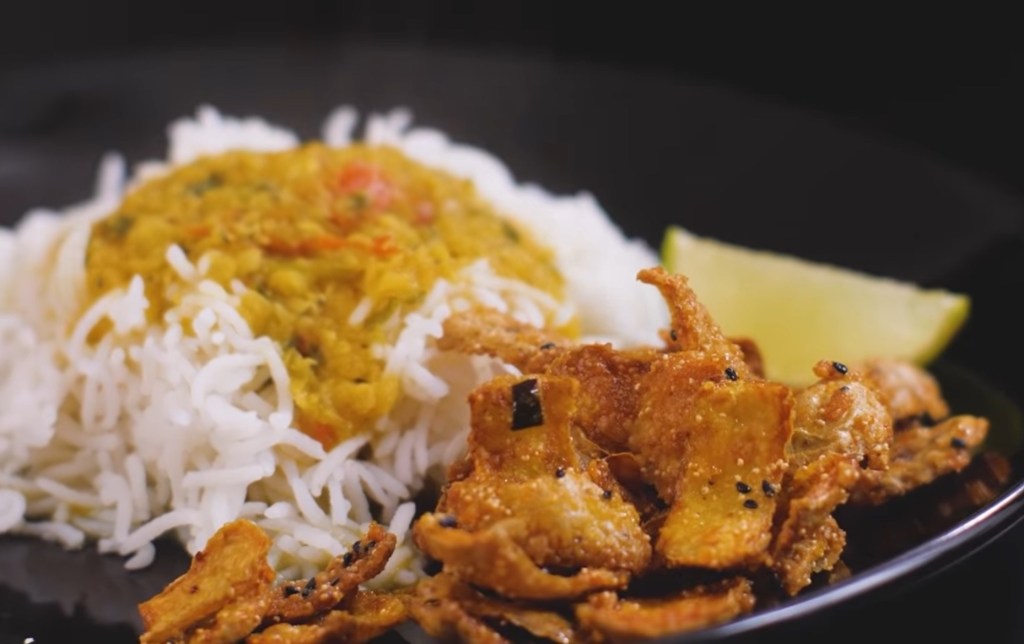
Potato skins are really thin, and can fry up super crispy and delicious. Just toss squares of washed and dried potato skin with salt, a tiny bit of red chili and turmeric, and deep-fry them in oil to make yourself a delicious snack. You could coat them with some poppy seeds and some flour to amp up the crispiness. This so-called aloo khosha bhaja, a delicacy in Bengal which pairs excellently with plain rice and daal. It is the perfect example of an economical, frugal style of cooking that aims for minimal waste and maximum utilisation of an ingredient. This is the nose to tail philosophy of food at its simplistic finest. And frugality is a crucial theme in the spud’s history.
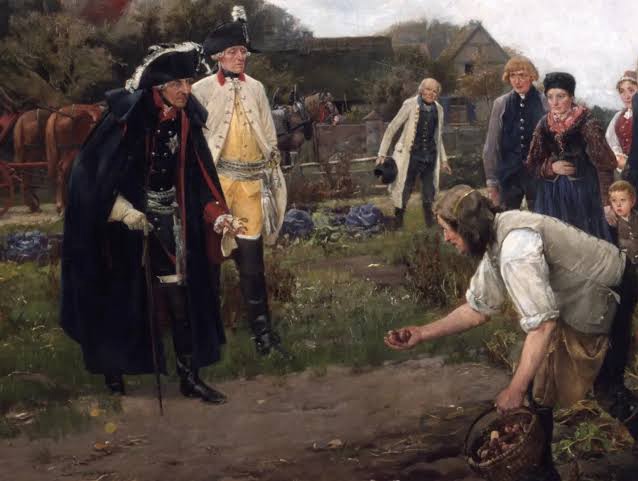
With the advent of the Little Ice Age (1300-1850), the advantages of the potatoes became evident to some. Potatoes can grow in very harsh environments and require very little tending and post-harvest processing, no threshing or winnowing required. A highly calorific, more nutritionally balanced food, the potato is a true miracle crop. Which is why Frederick the Great of Prussia (present-day Germany) mandated the cultivation and consumption of potatoes in 1756 through an official proclamation. This so-called potato revolution played a huge role in improving the potato’s public image which earned him the title of “Potato King”. To this day, his grave is adorned with potatoes. To this day, the potato plays a pivotal role in German cuisine.
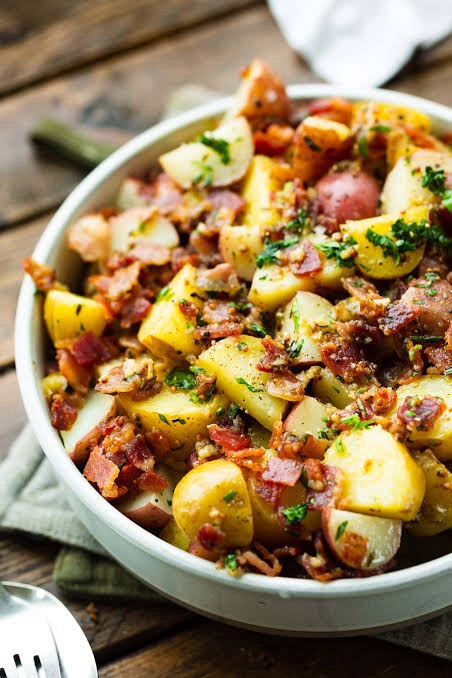
The simplest and one of the most popular of these uses peeled, boiled potatoes. Boiling potatoes with its skin on has some distinct advantages. For starters, potatoes are a lot easier to peel after they have been boiled as the skin slips right off. Also, skin-on potatoes tend to break down less in the water. Once peeled and boiled, the potatoes can then be cut up into smaller pieces and mixed with other stuff und voila, you’ve made potato salad, a true German classic. South Germany’s version tends to have a lighter vinaigrette dressing and inclusions like onion and bacon, while North Germany tends to go for a richer mayo-based dressing with addition of sausage, herring, egg, radish and the like.
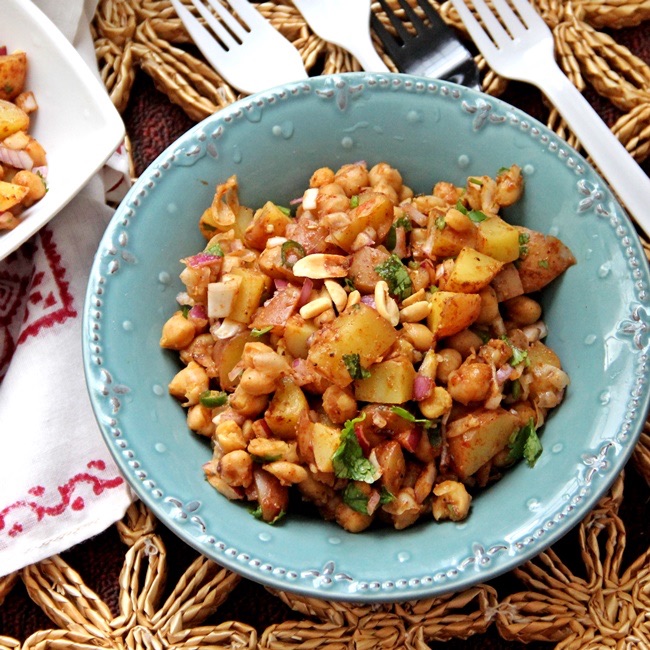
The salad formula can be played around with, creating a multitude of flavour possibilities. Think of the aloo kabli from the streets of Kolkata. Sliced, boiled potatoes, boiled Bengal gram and yellow pea, with a handful of freshly cut onions, cucumbers and tomatoes, it is a flavour-packed, multitextural delight. An open-minded gourmand might put forward the claim that it is merely a variant on the potato salad formula. Think about it: Boiled potatoes mixed with boiled lentils and fresh veggies, all tied together with a tangy, punchy “dressing” of tamarind pulp, lime, rock salt and other spices. So there you go: aloo kabli is a salad. And the papdi chaat is a potato salad with crunchy elements and a yoghurt dressing. I rest my case.
There is something else you can do to cut, peeled potatoes though. More on that next time.


