Anatomy of a Masterpiece (Part 2)
Last week, we commenced a long, meandering journey through the intricacies of a particular dish from a particular restaurant in central London, a dish that put the vegetable front and center: a piece of cabbage that is cooked in butter and charred on the grill. The charred piece of cabbage is then studded with bits of walnut, drizzled with the miso butter sauce and topped off with the crispy shards of deep-fried cabbage, and a sandy dusting of chestnut, smoked over hay and thyme. Let’s unpack all of that slowly, starting with the miso butter sauce.
In chemistry, an emulsion is a type of colloid, an imhomogenous mixture of two media, unlike crystalloids, where the mixture is homogenous, like salt in water. Foams and gels, the cool kids on the food block, are examples of emulsions. But not emulsions are fancy. Butter is a gel, a suspension of solid (milk solids) in liquid (butterfat and water), while whipped cream is a foam, a suspension of gas (air) in liquid (cream). However, the cream is technically not a liquid, but an emulsion of two liquids: fat and water.
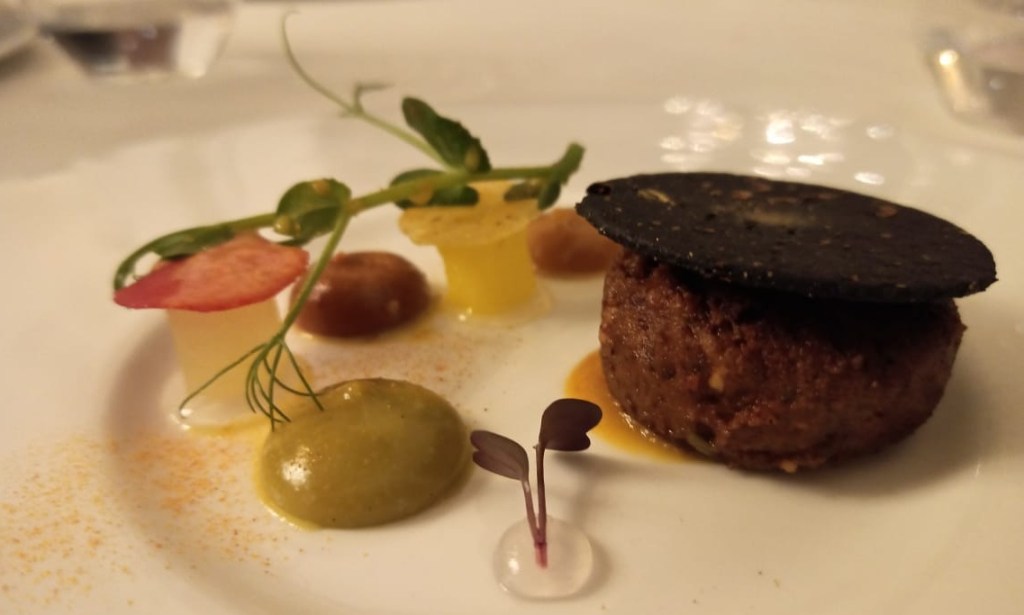
The great thing about emulsions is that when one of the liquids is broken down enough to get suspended in the medium of another, you end up with a very glossy liquid, a similar example being the basic salad dressing or vinaigrette, an emulsion of vinegar and oil that is just the right consistency to cling to the leaves without rolling off. The miso butter sauce at Fallow is an emulsion of butter and water, accented with confit garlic for a complex sweetness, lemon juice for a much-needed hit of acid, and miso which, along with the kombu dusting on the crispy cabbage topping, really amps up the umami factor.
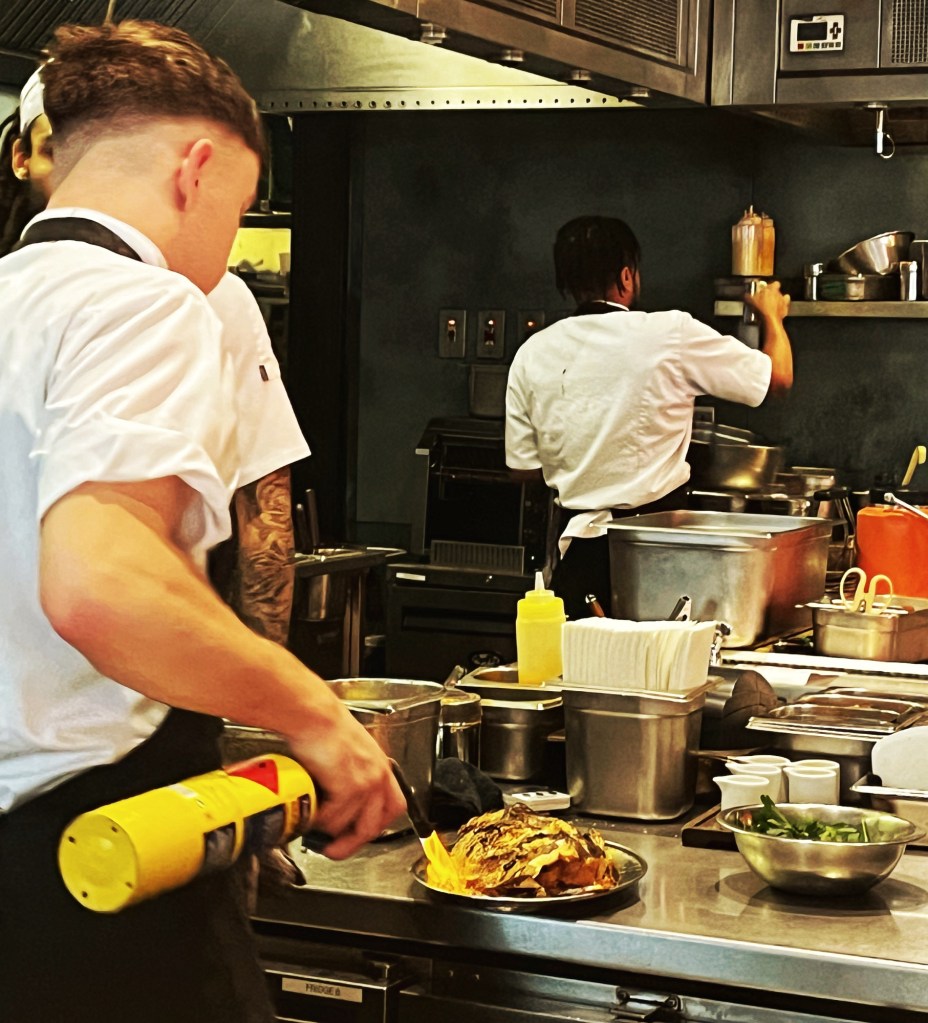
The entire dish comes alive in front of your very eyes thanks to the concept of the open kitchen and chef’s table, a great concept on its own and even more perfect for solo diners. The hustle and bustle of the kitchen transforms into theatre, with ten things happening at once, creating order amidst chaos. You place your order and watch as your dish along with those of several others get concocted in front of your very eyes. One chef is preparing sauces at the stove, while another is using a heavy-duty blowtorch to char a whole cod’s head. The head chef is at the pass, orchestrating everything and ensuring that every plate that goes out is perfect.
Back to our dish. The sauce seeps in between the layers of foliage, adding to the luxuriousness of the butter-poached cabbage. This is accented by the bite of the walnuts, the crunch of the fried cabbage leaves and the smoky earthiness of the grated chestnuts, all tied together by a silky, savoury sauce. The dish is a smorgasbord of textures in addition to flavour. But there’s more. The browned cabbage almost looks like glowing embers peeking from under the burnt leaf-litter of the fried toppings. This vibe of a fireplace, accented by the subtly smoky chestnuts, conjures up a very specific world.
“Chestnuts roasting on an open fire” conjures up memories of Christmas in the West, thanks to Nat King Cole’s iconic 1961 song that is so recognisable that it is simply referred to as “The Christmas Song”. Foods have a strong seasonal association all over the world. The Aussie Christmas, in the middle of summer, is all about the pavlova, a light meringue topped with whipped cream and fresh summer fruit. Back home, there’s gondhoraj and mangoes in the summertime, or the nolen gur or phulkopir shingara of the winters, the latter made with the best-quality, in-season cauliflower.

Ingredients at their seasonal prime are best treated with respect, and our dish is a perfect example of seasonality. Cabbage season lasts from late summer to early spring in the UK, similar to India, where it is at its best in the winter. Seasonality applies best to vegetables, which tend to spoil easily, and the best of the season is exactly what you are looking for if the vegetable is meant to be the star of the show. One of my favourite bits of food writing is Michael Pollan’s description of a dish he had in Chez Panisse, a place known for showcasing the peak of the season: two perfect peaches wreathed with the freshest of raspberries.
“Ralph Waldo Emerson… wrote, in reference to a very different fruit, “There are only ten minutes in the life of a pear when it is perfect to eat.” In the case of a peach, that window is probably closer to seven minutes, and in the case of raspberries, maybe five. The wonder of it was that the kitchen had somehow arranged for those peaches and raspberries to land on our table not a moment sooner or later than that narrow interlude of perfection.”
I visited the restaurant on the first Monday of October, the day when they switched over from their spring-summer menu to their autumn-winter one. The leaves had just started to turn, and there was that slight nip in the air. While cabbages and chestnuts might not encapsulate the epitome of perfection that Pollan experienced, the addition of chestnuts and the fireplace vibe scream winter. And while the dish sounds amazing already, there is yet another element on the plate, sitting beside the cabbage heads that elevate it from greatness to perfection.

I remember the first time I had black garlic in a friend’s restaurant in Hyderabad. He had stocked up on a few bulbs for a pasta dish he was making for an upcoming pop-up menu, and offered me a clove to nibble on. It is shaped like a garlic clove but jet-black, with a slight stickiness to it. Curious, I bit into it. I did not expect the flavour which hit me: tangy, with a dominant note of balsamic and tamarind, and just a subtle background hit of garlic.
Black garlic is yet another product of fermentation that likely originated in the Far East as a preservation technique, created when garlic is subjected to low heat over a long period of time. Like miso which is produced from soybean, the end-product is forged in the cold fire of fermentation, where microbes work their magic and metamorphose mundane ingredients into divinity. Unlike miso, which packs a salty, umami punch, black garlic loses its innate abrasive heat and mellows into a sticky, tart concoction.
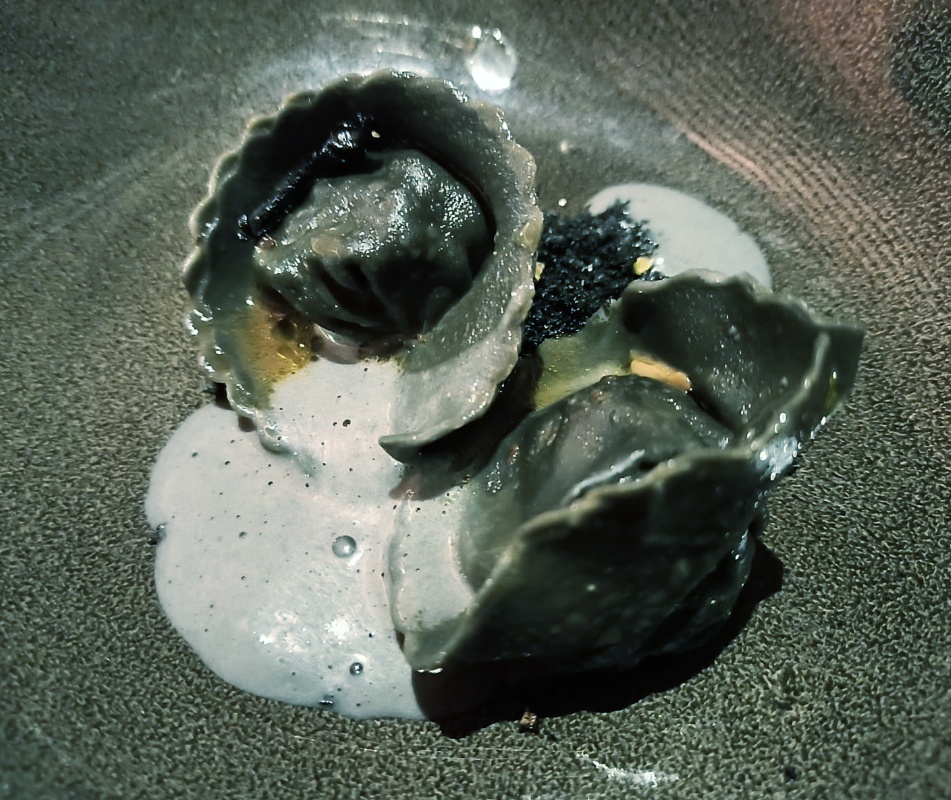
Two fermented products yielding two entirely different sauces, creating a smorgasbord of contrasts. The jet-black dollop of black garlic sauce is set off by the the off-white hue of the miso butter sauce, the black-white duality echoing the charry-buttery contrast within the cabbage itself, with its charred exterior and buttery interior. While the butter sauce enrobes the layers of cabbage in voluptuous umami, the black garlic, the more well-behaved of the two, sits patiently in a corner, ready to be added to mouthfuls in varying proportions to add a sweet-sour respite to all the salt and umami. While the white sauce enhances the butteriness of the cabbage, the black sauce undercuts it. Yin and yang at its most delicious.
I did not realise until the end of my meal of mushroom parfait, confit cabbage and whey caramel tart, another ingenious, no-waste dish that utilises the oft-discarded whey, that I had eaten a completely vegetarian meal. And while all three were delicious, the main course stood out as something special. Showcasing an ingredient in multiple forms, East-West fusion, seasonality, contrasts of colour and taste and texture, this dish takes on all the cool stuff in the food world today, with a dish as near-perfect as possible.

Merry Christmas to all readers of The Gourmet Glutton!


Never had any of the dishes mentioned in the blog. Looking forward to have those.
LikeLike