So far in our chocolate series, we’ve looked at the fruity heat of chilli and the piney fragrance of cardamom. This time, we will explore two more flavour pairs, the first of which shares a lot of similarities with chocolate and chocolate making.

Compared to chocolate making, coffee making has fewer steps, and two of these are pivotal in determining the flavour of the final brew. Let’s start with roasting, one of the final steps. Unlike chocolate, which are almost always roasted all the way, the roast level of coffee can be varied, from the almost grassy green coffee with no roasting whatsoever to the almost excruciatingly bitter dark roasts which if taken too far, tastes of very little but soot (atleast to me. Somewhere in the middle lie the more popular roast levels, from the floral, fruity light roasts to the medium to medium-dark roasts with notes of hazelnut, dried fruit and of course, chocolate.
Another crucial step that determines coffee flavour is processing. Unlike cocoa, the coffee fruit or cherry are much smaller, and producers have the option of drying the entire fruit, bean and all. This style, often called natural or dry-processing, imbues the bean with fruity, notes from the outer pulp. The commoner washed or wet-processing style involves de-pulping the fruit before fermenting, washing and drying them, just like cocoa beans. Honey-processing is an intermediate of the two, where the fruit is depulped but dried without washing, the bits of sticky, golden mucilage left behind reminiscent of honey, hence the name.
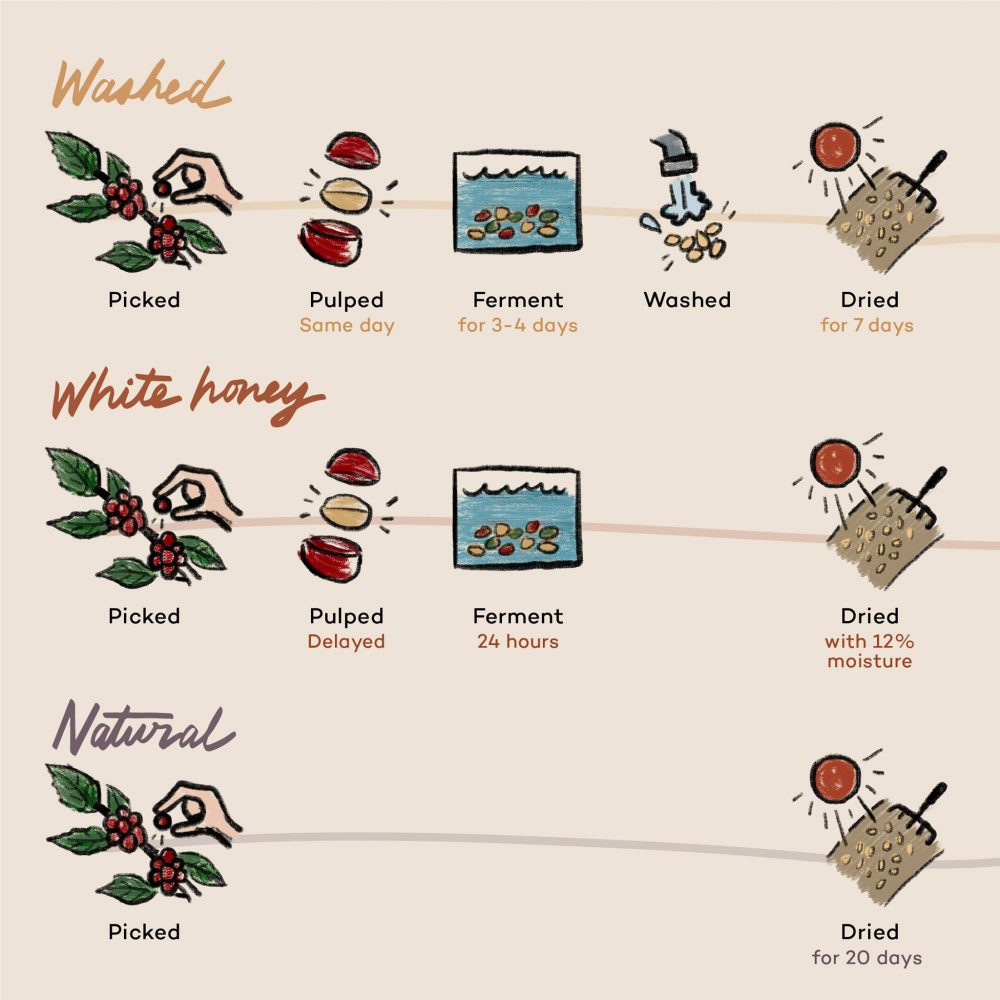
My coffee of choice is a washed, medium to medium-dark roast since this is the style that is closest to the chocolate making process and hence resembles most closely the nutty, roasty flavour profile of a good dark chocolate. A naturally processed, light-roasted bean is a whole different ballgame, and produces a lighter, more floral brew, more akin to green tea than hot chocolate, and does not pair well with chocolate or even milk, and is had on its own, preferably sans sugar.
Coffee has a much broader flavour spectrum compared to dark chocolate, but bring the whole chocolate family into the game and you get more variety in the flavour notes, from red berries in Ruby chocolate to the butteriness in White (more on these some other time). Infact, good chocolate has as much variety in flavour nuances as wine, beer or coffee. Callebaut’s chocolate sensory wheel describes the multi-sensory delights of a good bar of chocolate: from the look of its hue and sheen to the sound of the snap to the feel of the texture, both in your hands and your mouth, and finally, the flavour of the chocolate, a combination of taste and aroma.

A medium to medium-dark roast coffee pairs exceedingly well with chocolate, and for obvious reasons. Both start off as beans which undergo fermentation, drying and roasting. It is because of these similarities that mocha is a thing, why a spoonful of instant coffee powder adds that extra something to any chocolate dessert, and why an adorable two-year old, trying her first bar of dark chocolate in a YouTube video, says that it “smells like daddy’s coffee”.
The coffee and chocolate pairing is almost like a duo of two violins: two gorgeous melody lines intertwining with each other to create intricate patterns, to the extent that is sometimes difficult to differentiate the two strands. Replace one of the violins with a viola or cello, and the two strands can be more easily separated, but the sound is still pretty homogeneous. And that is precisely what happens when you pair chocolate with nuts.

Like chocolate and coffee, nuts are also had roasted, although the roasting process is optional for nuts (and also green coffee, but we can forget about outliers for now). But roasted nuts and chocolate pair amazingly well. From the almonds in a Dairy Milk fruit and nut to the peanuts in a Snickers, there is no doubt that the combo works. But there is one, slightly exotic nut that for me, takes the cake when it comes to chocolate pairing.
Ever since childhood, Ferrero Rocher to me has been a decadent treat, way too expensive for regular consumption, and fit only for special occasions; the edible golden snitch that tastes divine and embraces you with a myriad of textures, from the nutty, chocolatey exterior to the light crunch of the wafer-thin wafer, to the rich, creamy center and the bite of that nut in the center. For a long time i thought that it was a round peanut nestled at the heart of this amazing sweet, although the texture was different, more rich and creamy.

It was years later that I realised that it was infact what is now my number one nutty candidate when it comes to chocolate pairing: the hazelnut. And it was just 5 years ago, when I discovered the word “Ferrero” written on my first ever jar of a certain famous chocolate spread, that I had infact tasted Nutella years ago, in the form of that decadent, creamy center of my favourite edible snitch. And we have the Italians to thank for it. Italy Magazine says:
“Following the end of World War II, cocoa was in short supply. Pietro Ferrero, a pastry maker from Alba, Piedmont, decided to use the abundant hazelnuts available in the area to make a sweet paste which would use just a little of the precious cocoa. He named it Giandujot, after a popular local Carnival character. Initially, this paste was a solid block.
A few years later, Ferrero transformed Giandujot into a creamy version that could be spread on bread, and named it SuperCrema – the precursor to Nutella. In 1963, Ferrero’s son Michele introduced an improved recipe for Supercrema, with the intention of marketing it throughout Europe. The new hazelnut and cocoa cream was named Nutella.”

Hazelnut on it owns tastes fine, but when paired with chocolate, it blends seamlessly with the chocolate flavour and then elevates it somehow, adding another dimension to the chocolate flavour that takes it to the next level, like the cradling bass of a cello line that allows the violin melody to scale the greatest of heights. Hazelnut is also the perfect source of textural crunch in any dessert that places chocolate front and center, like a flourless chocolate tart or a dainty square of chocolate ganache.
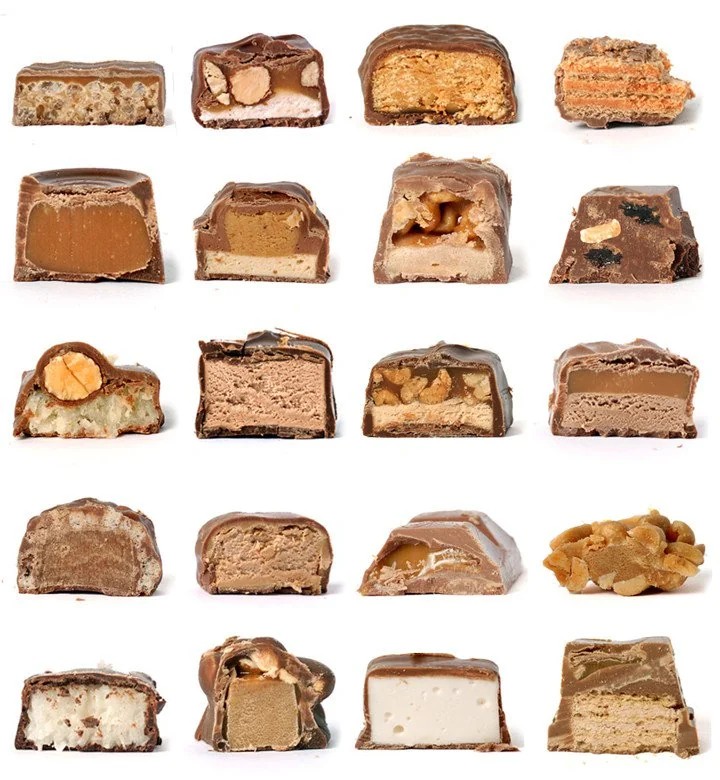
The Ferrero Rocher is a sophisticated version of the candy bar, showcasing four different textures while highlighting the glorious chocolate hazelnut flavour pair. Indeed, the candy bar is the perfect vehicle to showcase some chocolate pairings that highlight textural contrast. from the crumbly shortbread of a twix to the nutty bite of a coconutty Bounty bar, from the crunch of peanuts in a Snickers to the chew of nougat in a Mars bar, from the sticky caramel of our very own 5 star and Bar one to the crunchy wafer of a Perk or Kitkat, candy bars are a textural as well as a flavour delight. This is the actual bandish that starts after the alap, with the melody of complex flavours interplaying with the texture of the harmony to create a whole much, much greater than the sum of its parts.
Next time, we will conclude our chocolate series by exploring three more iconic flavour pairs.


Informative
LikeLike