Yesterday, we began our Christmas Odyssey in Mangalore, exploring some of the special dishes of the cuisine in general. We talked about the array of porcine delicacies, and chicken dishes like the kori gassi. Another simple and delicious chicken preparation is the sukka, although it can be made with any protein.
The USP of a good sukka is a generous handful of grated coconut and a delicious blend of Mangalorean spices, a perfect dish to pair with some plain rice and dal or, more traditionally, with the thick flatbreads still popular in the states slightly more upstream notably North Karnataka and Maharashtra. As always, these chicken dishes shine the most when made with country roosters, but even if you can’t get your hands on one of them, the dish is packed with enough flavour to satiate one and all.
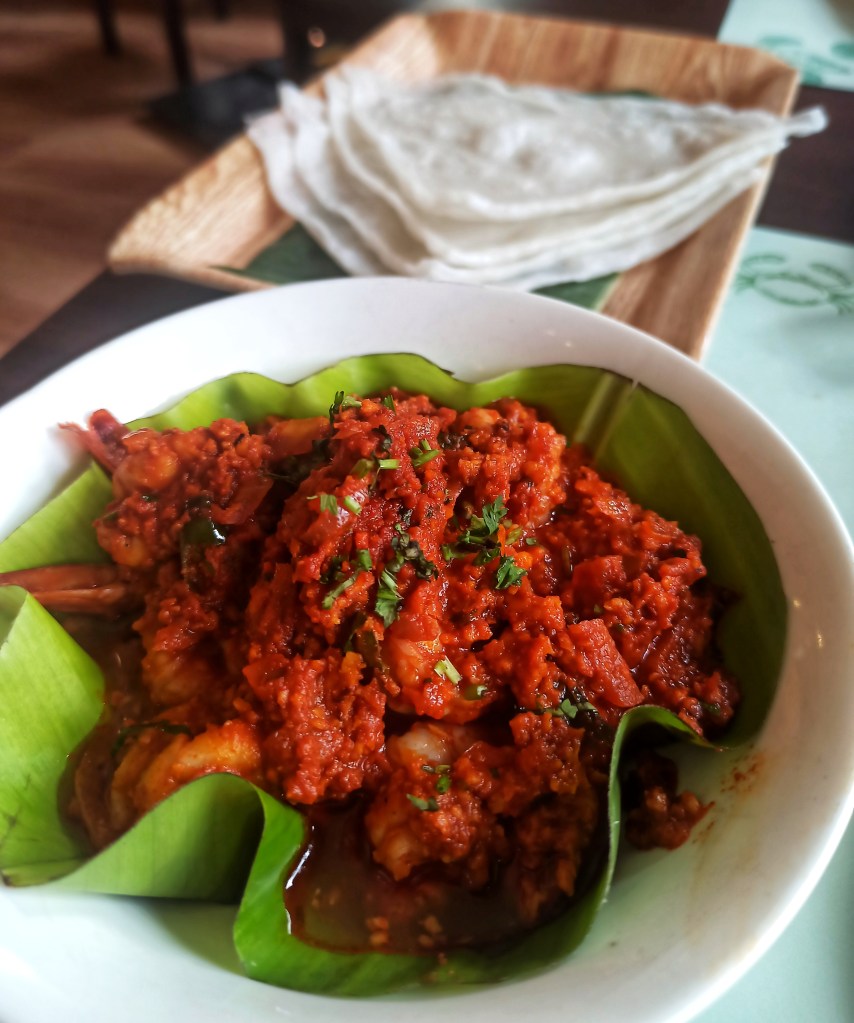
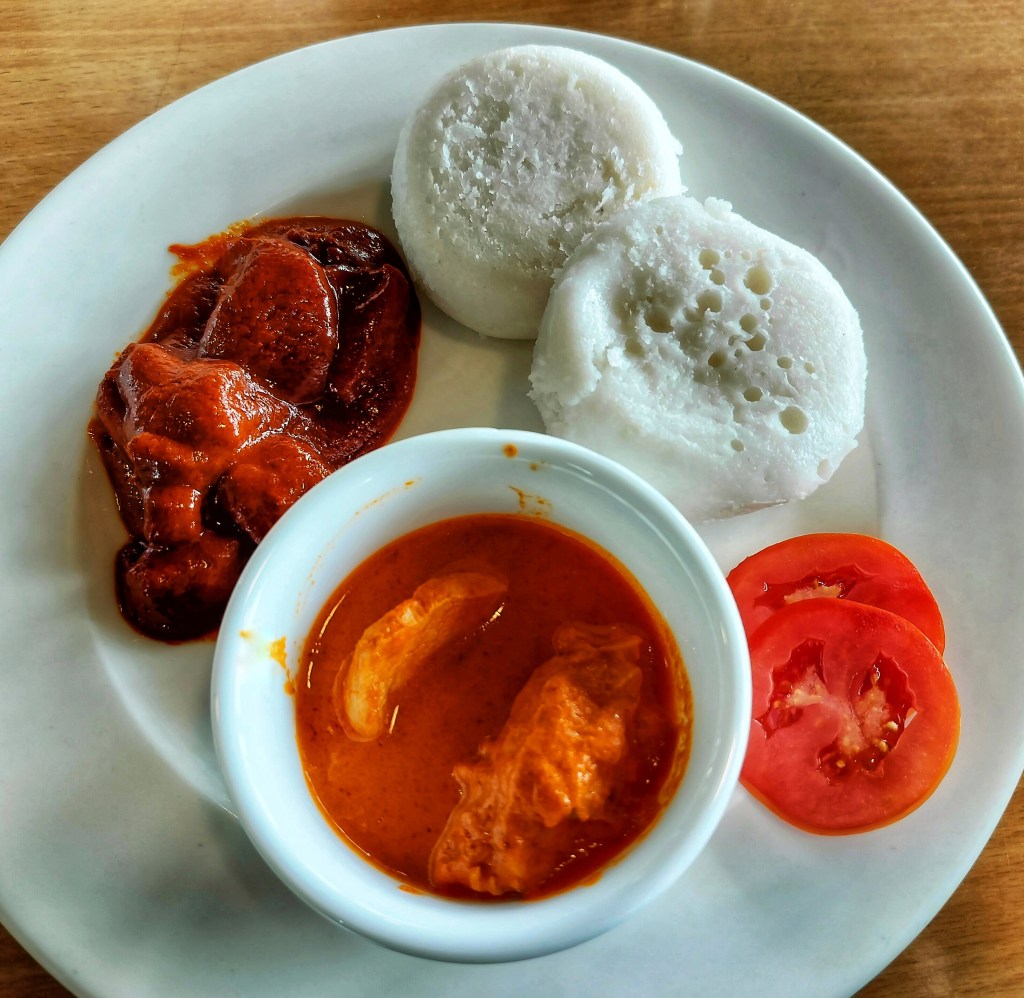
Go to a Mangalorean restaurant though, and you’re more likely to pair it with neer dosa or panpole, paper-thin crepes made with a rice flour batter that is silky yet with a slight spring to it, perfect to mop up sauces. An even better sponge is the shevio or string hoppers, called idiyappam in Kerala, the multiple crevices in its lattice-like structure adeptly holding on to any gravy you dip it into. And then there is the sannas, the less-popular but equally great cousin of the idli, fermented with toddy and steamed in a small bowl or katori that gives it its signature shape, fluffy texture and the signature smooth skin on top.

So, what can you expect to find on the spread in a Mangalorean Christmas meal? There is definitely going to be a celebratory pork dish, indaad or bafat for example, perfect with neer dosa or sannas, along with a lighter curry, maybe of chicken in a silky and golden roce curry, or a brighter green masala. Maybe there’s mutton, cooked up in the same green masala or in the form of a polov, a coconut milk based curry with the addition of ash gourd.

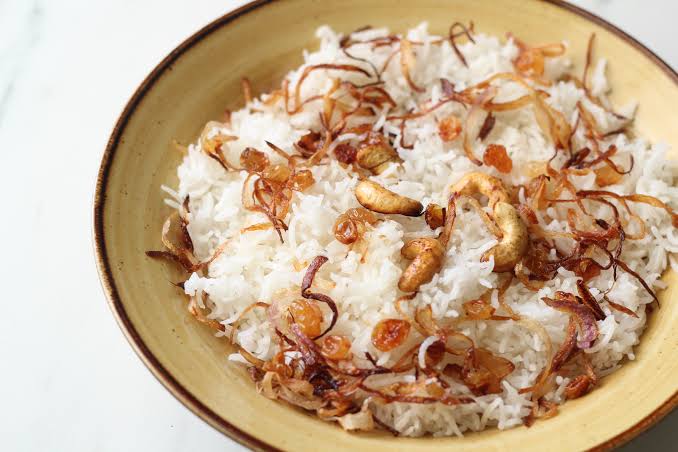
There will definitely be enough staples to mop up all the deliciousness, from the lattices of shevio to the pillowy sannas, as well as the sweet pulao, decked with cashews and raisins. This dish is rather similar to the Bengali-style basanti polao, except for the fact that it uses basmati instead of the Bengali gobindobhog, and the colour is kept white instead of staining it with turmeric. Sweet pulao is very much a celebratory dish, different from the local palav, a savoury concoction eaten with raita, more similar to a biryani. Pulao is sweeter and subtler, perfect for a feast.
Of course, there will be the slightly Western fare, with roast chicken, a gravity or jus to accompany it, accompanied by an array of sides, from the usual mash and roast veg to maybe something more off-road like a green bean casserole or baked potato concoction. A roasted suckling pig called leitao, a clear nod to the Portuguese influence on the local cuisine, may replace the chicken as the centerpiece on certain occasions.

Sweets! Well, of course. Expect the usual boozy plum cake, which for me is the flavour of the season (I had a combo of whiskey and chocolate-ginger gelato yesterday that completely floored me with its flavour and seasonality). And then there are the more local offerings, from payasam bejeweled with the fresh bite of tender coconut, to purna pole, neer dose rolled up with coconut and jaggery, a dish curiously similar to our own patishapta pithe.

And then there are the kuswar, an array of sweet treats that are usually given as presents to friends and family, like truffles and peanut brittle in the West. From sea-shells of kulkuls to diamonds of shakkarpare, from the marble-like guliyo to the too-beautiful-to-eat kookisan or roce cookies, most of these dishes are fried treats that are a part and parcel of the seasonal festivities. The batter is usually rice flour, often mixed in with a bit of wheat flour, flavoured with coconut and cardamom.

Interestingly, this meal needn’t happen exactly on Christmas day in Mangalore. The Christmas festivities begin from the first of December with the start of Advent, and continues till the 7th of January, with the feast of the three kings. In this period, you can expect multiple spreads and celebrations, a myriad of occasions for friends and family to meet over good food, wine and conversation. And isn’t that what Christmas is all about?
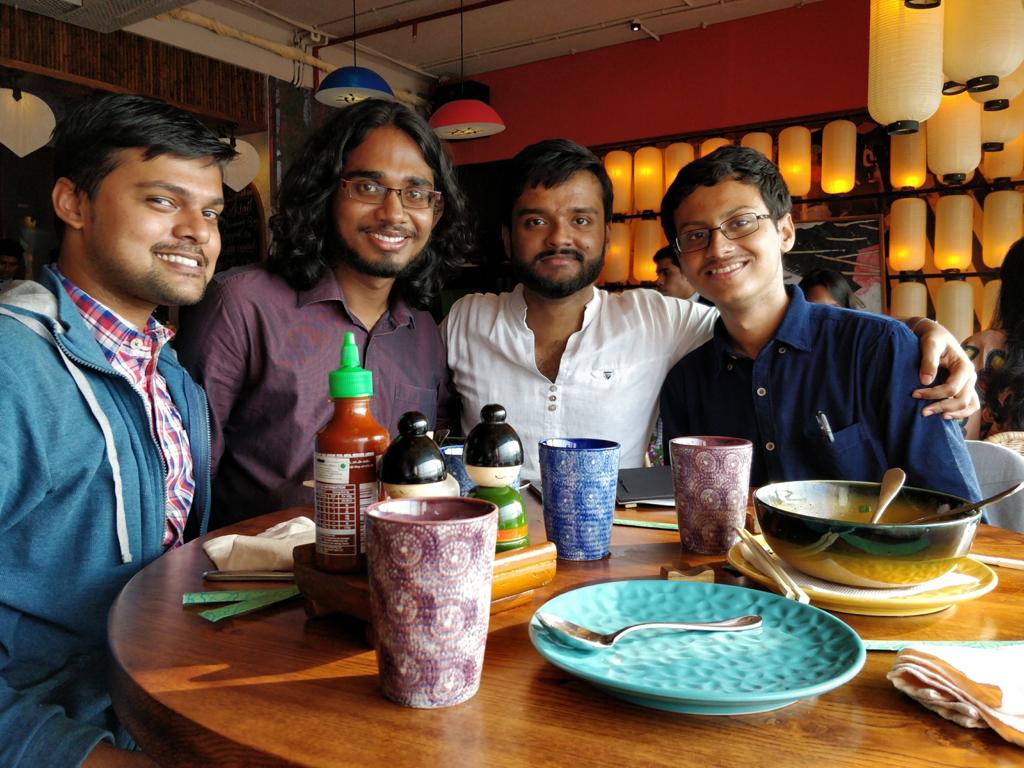
My sincerest gratitude to Mr. Neil Prabhu from The Konkan in Bangalore’s bustling Church Street for providing me an insight into their culture and patiently tackling my endless battery of questions. I’ve been to a Christmas spread hosted by his team earlier this month, which offered an array of Mangalorean Christmas delicacies, a clear testimony to just how fluidly these traditions morph from one place to another.
Wishing all readers of the Gourmet Glutton a very Merry Christmas!!!

 The Gourmet Glutton
A booze can’t match up the high as this blog can give in a festive morning 🌞
LikeLike